


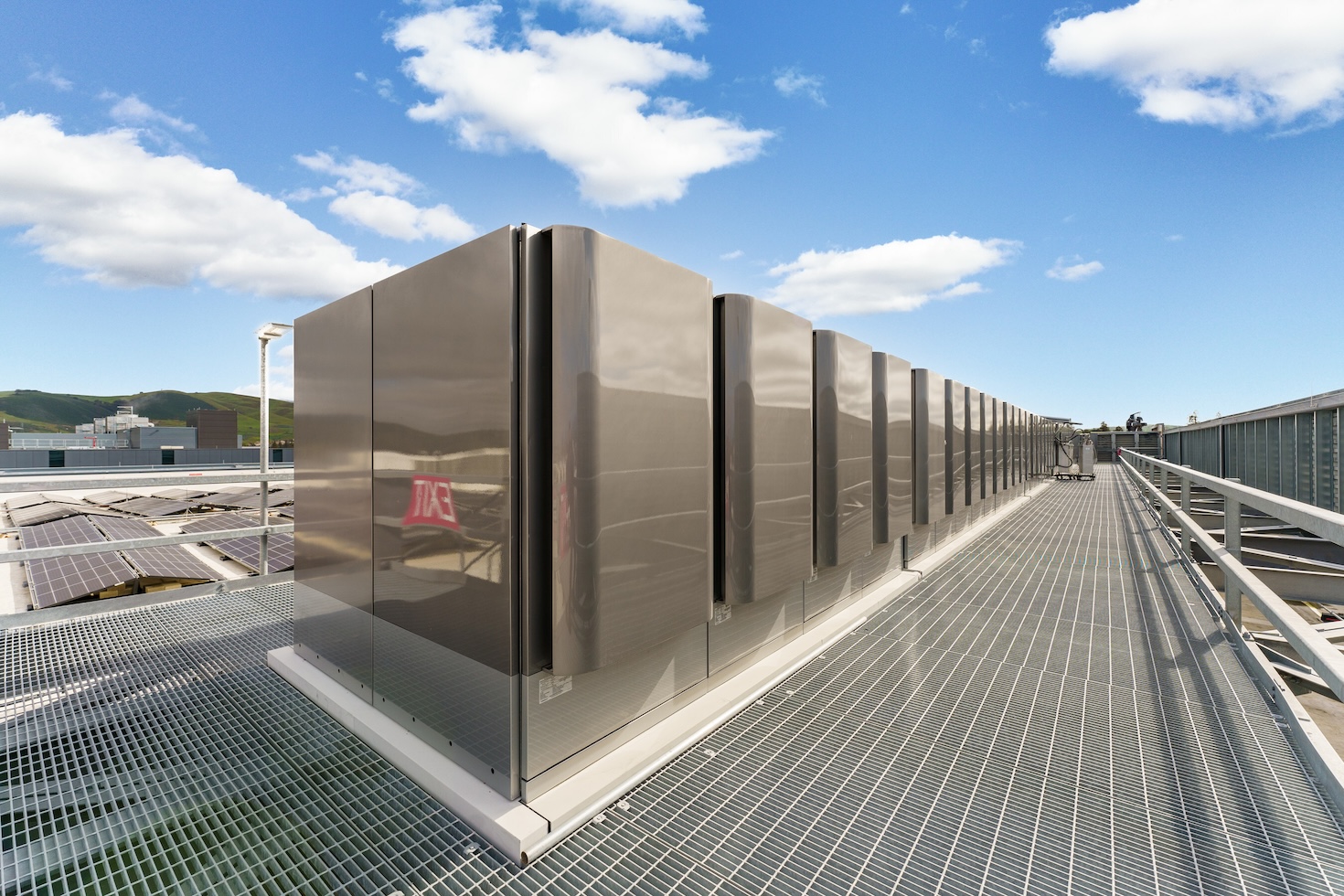
The rapid expansion of artificial intelligence (AI) and cloud computing has triggered a desperate race for energy. As hyperscalers and data center operators struggle to connect to aging, capacity-constrained electrical grids, a new solution is emerging from the industrial shadows: on-site fuel cells. Led by firms like Bloom Energy, this technology is transforming how the world’s most power-hungry companies manage their "speed to power" ambitions.
The Convergence of AI and Energy Demand
The digital economy is hitting a physical wall. The sheer volume of energy required to train large language models and maintain global cloud infrastructure is outstripping the pace at which utilities can upgrade traditional transmission lines. This bottleneck has forced data center giants to seek "behind-the-meter" power solutions—independent energy generation located directly on their properties.
At the forefront of this shift is Oracle, which recently committed to a massive infrastructure expansion, contracting for up to 2.8 gigawatts of capacity to support its AI services. In a testament to the agility of fuel cell technology, some of these projects have transitioned from ground-breaking to operational in as little as 55 days. This speed is revolutionary in an industry where traditional power plant development often takes years, if not a decade, to navigate regulatory and construction hurdles.
Chronology of a Power Revolution
The adoption of fuel cells in the data center sector has followed a steady, deliberate trajectory, accelerating sharply over the last 24 months:
- Pre-2022: The Pilot Phase. Companies like Equinix and other Tier-1 data center operators begin testing fuel cell arrays as a secondary, cleaner alternative to diesel backup generators.
- 2023: Proof of Concept. Equinix proves the reliability of solid oxide fuel cell (SOFC) technology, scaling its operations to 73 megawatts of operational capacity. The focus shifts from "backup" to "baseload."
- Early 2024: The AI Boom. With the explosion of generative AI, the energy gap widens. Major vendors like Bloom Energy see demand skyrocket, with Bloom surpassing $1 billion in revenue for the first time in a single quarter.
- June 2024: Competitive Diversification. Recognizing the market potential, competitors like FuelCell Energy secure massive contracts, including a 380-megawatt deal with AI infrastructure firm Fit Energy, signaling that the market is moving beyond a single-provider ecosystem.
- Late 2024/2025: Integration at Scale. Data centers begin designing facilities around fuel cells as the primary energy source, with the grid relegated to a secondary, backup role—a complete inversion of historical power architecture.
Supporting Data: Why Fuel Cells Are Winning
The math behind the fuel cell pivot is compelling. According to Goldman Sachs Research, fuel cells are positioned to meet up to 15 percent of new power demand in the coming years. Projections indicate that at least 8 gigawatts of additional generation capacity will be provided by behind-the-meter fuel cell resources by 2030.
The efficiency of these systems is derived from their chemistry. Unlike gas turbines, which rely on combustion, fuel cells generate electricity through an electrochemical reaction. This process is inherently cleaner and more efficient.
Key Performance Metrics
- Installation Timeline: Less than one year, compared to 3–7 years for grid-scale renewable or fossil-fuel power plants.
- Environmental Impact: Equinix’s 2025 sustainability report indicates that their use of Bloom technology has avoided 285,000 metric tons of CO2e and saved 382 billion gallons of water—a critical metric for data centers that traditionally rely on water-intensive cooling and power systems.
- Operational Silence: Because they lack moving parts and combustion, fuel cells are significantly quieter, allowing them to be installed in urban settings or directly adjacent to server racks without the noise pollution associated with traditional power generation.
Official Perspectives: The Sustainability Nexus
For data center operators, the transition to fuel cells is not just about power; it is about corporate citizenship and operational resilience. Christopher Wellise, vice president of sustainability at Equinix, highlights the "energy-water nexus" as a primary driver for the adoption.
"You don’t have the transmission and distribution losses, you don’t have actual combustion, you don’t have nitrogen oxide (NOx) and sulfur oxide (SOx) emissions, and you’re using far less water," Wellise stated. By removing the need to pull electricity from a congested, fossil-fuel-heavy grid, Equinix is fundamentally changing its carbon footprint.
From the research side, Michele Della Vigna, head of natural resources research at Goldman Sachs, notes that the current market is still in its infancy. "Expansion of fuel cells is currently constrained by its small manufacturing capacity, given its limited historical use, but we believe this is about to change, both in the U.S. and Asia, with major manufacturing expansion," Della Vigna observed. This suggests that the current supply chain tightness is a temporary hurdle that, once cleared, will allow for a massive influx of fuel cell adoption globally.
The Competitive Landscape
While Bloom Energy remains the most visible player, the market is quickly attracting a diverse range of specialists:
- FuelCell Energy: A Connecticut-based firm utilizing molten carbonate technology. Their focus on providing large-scale capacity (as evidenced by their 380-megawatt contract) positions them as a direct challenger for industrial-sized data center projects.
- PowerCell Group: A Swedish hydrogen specialist. By leveraging partnerships with industrial giants like Bosch, they are targeting the specific needs of AI infrastructure providers like ECL, focusing on hydrogen-ready, emission-free generation.
- Ballard Power Systems: Traditionally a leader in transportation-based fuel cells, Ballard is now pivoting its technology to address stationary, off-grid power applications, leveraging decades of experience in proton exchange membrane (PEM) technology.
Broader Implications: A Paradigm Shift for the Grid
The rise of on-site fuel cells has profound implications for the global energy transition.
1. De-risking the Grid
By taking massive loads off the local grid, data centers are reducing the pressure on aging transformers and substations. This "de-loading" effectively increases the available power for residential and commercial customers, potentially lowering the total cost of energy for the general public.
2. The Hydrogen Economy
While many current fuel cells utilize natural gas as a feedstock, they are fundamentally designed to be fuel-agnostic. As the green hydrogen economy matures, these units can be converted to run on carbon-free hydrogen without needing to replace the underlying infrastructure. This provides a "future-proof" bridge for companies aiming to hit Net Zero targets by 2040.
3. Decoupling from Geography
Historically, data centers were forced to locate near major power generation hubs—usually near coal or gas plants, or large hydroelectric dams. On-site fuel cells break this geographic tether. Companies can now locate their AI clusters in proximity to talent or end-users, rather than being forced into remote locations solely to access sufficient electricity.
Conclusion: The Path Ahead
The "speed to power" mantra has become the defining characteristic of the 2020s tech industry. As Oracle, Equinix, and others demonstrate, the traditional utility model is no longer sufficient to keep pace with the computational requirements of modern life.
Fuel cells are not merely a backup plan; they are becoming the primary engine of the digital age. By integrating these systems into their facilities, data center operators are achieving a trifecta of benefits: operational independence, environmental compliance, and the ability to scale at the speed of software. As manufacturing capacity catches up to the surging demand, the sight of hydrogen or natural gas fuel cell arrays humming silently beside massive data centers will likely become the standard architecture of the future global network.
