

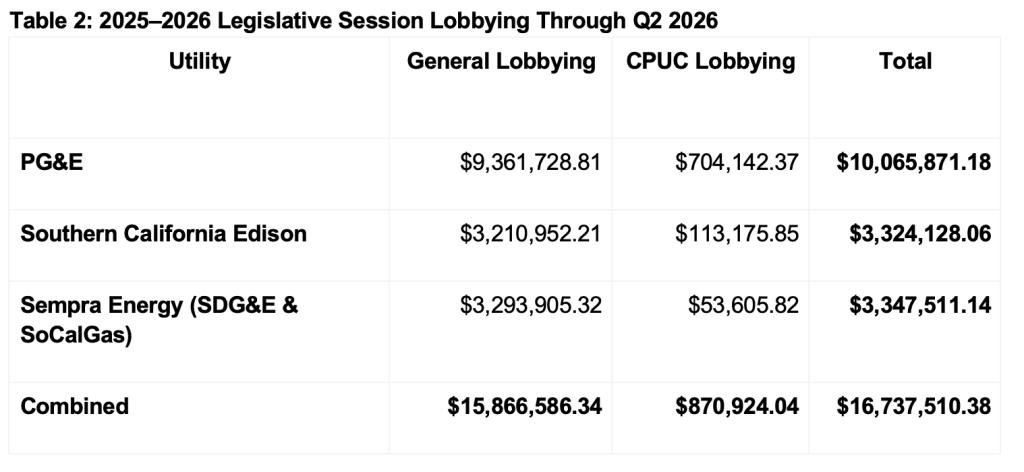
SACRAMENTO, CA — In a display of political muscle that has set a new high-water mark for corporate influence in the Golden State, California’s three largest investor-owned utilities—Pacific Gas & Electric (PG&E), Southern California Edison (Edison), and Sempra Energy (Sempra)—have deployed an unprecedented $16.7 million in lobbying efforts during the first six quarters of the 2025–2026 legislative session.
As lawmakers enter the high-stakes “end-of-session” scramble, where legislative deals are often struck behind closed doors, this record-breaking expenditure has ignited a firestorm of controversy. The massive financial outlay, confirmed by a Consumer Watchdog analysis of CAL-ACCESS records, arrives at a critical juncture: Governor Gavin Newsom’s administration and the state legislature are currently debating the parameters of a potential utility bailout that could fundamentally shift the financial burden of future catastrophic wildfires.
The Anatomy of Influence: A Chronology of Spending
The scale of the current campaign is unprecedented. According to data dating back to the 1999–2000 legislative session, the current lobbying push has already surpassed all previous records, despite two full quarterly reporting periods remaining before the session concludes.
A Rapid Escalation
The trajectory of this spending reflects an increasing reliance on direct influence to shape state policy. The previous record, set during the 2023–2024 legislative session, reached $16.1 million over its duration. The fact that the 2025–2026 session has already eclipsed this figure underscores the urgency with which the utility giants are operating as they navigate the current regulatory and legislative climate.
- Q1–Q5 (2025): The foundation was laid early, with utilities consistently ramping up their presence in the halls of the State Capitol.
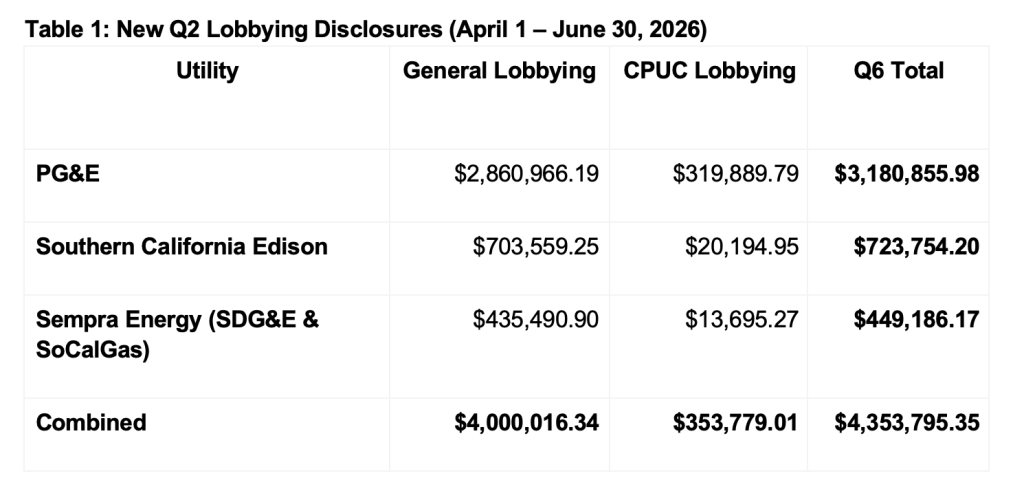
- Q6 (2026): The second quarter of 2026 alone saw an expenditure of over $4.35 million. Of this, nearly $353,000 was directed specifically toward lobbying the California Public Utilities Commission (CPUC), the body responsible for setting rates and overseeing safety compliance.
- PG&E’s Dominance: Among the “Big Three,” PG&E stands out for its aggressive stance. During the second quarter of 2026, the utility accounted for nearly 75% of total industry lobbying, spending approximately $3.2 million in a single three-month window.
The “Wildfire Victims First” Strategy: Disinformation or Advocacy?
Perhaps more controversial than the dollar amounts is the tactical shift in how these utilities communicate with the public. Increasingly, corporate spokespeople have stopped responding directly to media inquiries, instead directing journalists to a shadowy organization known as “Wildfire Victims First.”
The Illusion of Grassroots Support
Despite its name, “Wildfire Victims First” is not a coalition of survivors. It is a utility-funded entity designed to provide a veneer of grassroots support for a legislative bailout. Critics argue this is a calculated attempt to manufacture public consent for policies that protect utility shareholders at the expense of ratepayers and actual wildfire victims.
The Newsom Connection
The influence operation is further complicated by its personnel. The coalition’s spokesman, Nathan Click, previously served as Governor Gavin Newsom’s communications director and chief spokesman before transitioning to the private sector. Furthermore, the television advertising for this group is being placed by Polaris Campaign Media, the media-buying arm of Bearstar Strategies—the same firm that has served as Governor Newsom’s long-term political consultancy.
This circular loop of former administration insiders, political consultants, and utility funding has raised significant questions regarding the integrity of the decision-making process in Sacramento.
Supporting Data: The Cost of Doing Business
The $16.7 million figure is composed of two primary categories: general lobbying expenditures and targeted advocacy at the CPUC.
- General Lobbying: $15.9 million has been funneled into influencing the legislature and the Governor’s office.
- Regulatory Pressure: More than $870,000 has been spent specifically on the CPUC, a critical area given the commission’s power to approve rate hikes or pass on wildfire-related costs to consumers.
These figures, when viewed alongside the historic trends, reveal a clear trend line: as the regulatory environment becomes more hostile toward utilities due to the rising frequency of climate-driven disasters, the utilities are responding by increasing their investment in political capital to buffer themselves against financial liability.
Official Responses and Stakeholder Outcry
The reaction from consumer advocates and victims’ organizations has been scathing. The sheer disparity between the resources available to these corporations and the individuals they have harmed has become the central focus of the “No Utility Bailouts” campaign.
Consumer Watchdog’s Assessment
Carmen Balber, Executive Director of Consumer Watchdog, did not mince words regarding the implications of this campaign. “Utilities aren’t just spending record amounts lobbying Sacramento,” Balber stated. “This is the largest utility lobbying campaign in modern California history, unfolding as Governor Newsom considers another end-of-session utility bailout. While utilities marshal lobbyists, political consultants, and public relations campaigns, wildfire survivors are fighting to preserve their legal rights. That’s the worst of California politics.”
The Voices of the Harmed
Joy Chen, founder of the Every Fire Survivor’s Network, emphasized the human toll behind the political maneuvers. “They burned down our homes. Now they’re spending millions pretending to be wildfire survivors while real survivors fight to get home,” Chen said. Her organization is part of a coalition representing over 3.5 million Americans urging the Governor to reject any bailout package that shields utility companies from the consequences of their infrastructure failures.
Implications: Who Bears the Burden?
The outcome of the current legislative session will have profound, long-term consequences for the state of California. As the climate crisis intensifies, the frequency and severity of wildfires continue to pose an existential threat to the state’s energy infrastructure.
The Central Decision-Maker
Governor Newsom now sits at the center of a complex political web. The legislative language currently being drafted for an expected end-of-session bailout will effectively determine who pays for the next wave of catastrophes:
- Utility Shareholders: Who are currently protected by the status quo.
- Taxpayers: Who may be asked to fill the gaps in funding.
- Ratepayers: Who are already facing some of the highest energy costs in the nation.
- Survivors: Who are seeking restitution for lost homes and livelihoods.
The Question of Embedded Influence
The optics of having the Governor’s former top staff and current political consultants involved in the promotion of a utility-backed bailout are difficult to ignore. When the same networks that help a politician win office are also managing the messaging for the very industries that politician must regulate, the public’s trust is naturally tested.
As Balber noted, “Californians have every reason to ask whether utility influence has become too deeply embedded in the state’s decision-making. Wildfire survivors deserve transparency, accountability, and confidence that these decisions are being made in the public interest, not the utilities’.”
Conclusion: A Turning Point for Sacramento
As the clock ticks down on the 2025–2026 legislative session, the eyes of the public are fixed on the State Capitol. The $16.7 million spent by PG&E, Edison, and Sempra represents more than just a line item in a quarterly report—it represents a test of California’s democratic institutions.
Whether the state chooses to protect the financial stability of the utilities or the legal rights and financial security of its citizens will define the legacy of the current administration. For now, the “No Utility Bailouts” campaign continues to grow, fueled by a sense of urgency that transcends the usual partisan divides. The question remains: in a system where money can buy record-breaking access, does the voice of the survivor still have a place at the table?
For those seeking to review the historical context of these expenditures, the full 2019–2026 lobbying disclosures are available via the CAL-ACCESS public records portal. Additionally, documentation regarding the Every Fire Survivor’s Network’s ongoing advocacy can be found at DearNewsom.org.
