

In an automotive landscape where the average monthly new car payment has surged to a record-shattering $777 as of Q2 2026, the prospect of securing a reliable vehicle for under $500 a month feels increasingly like a relic of a bygone era. For the average American consumer, the intersection of rising interest rates, inflationary pressure on vehicle MSRPs, and the industry’s shift toward premium technology has effectively pushed the entry-level market into a precarious position.
However, "affordability" is not entirely dead; it has simply become an exercise in disciplined financial calculation. By leveraging a standard down payment, favorable loan terms, and a strategic selection of models that balance utility with cost, it is still possible to park a brand-new vehicle in your driveway for less than $500 monthly.
The Financial Framework: How We Calculated Affordability
To arrive at a realistic figure for our analysis, we moved away from the "best-case scenario" of massive down payments. Instead, we established a benchmark based on current market data from the second quarter of 2026:
- Average Down Payment: $5,815
- Average APR: 7%
- Loan Term: 72 months (a nod to the industry trend toward longer financing periods)
- Exclusions: Taxes, registration, and additional dealer-installed accessories are excluded, as these vary significantly by region.
By applying this methodology, we found that while the pool of candidates has shrunk, the survivors offer a compelling mix of hybrid efficiency, rugged utility, and pure driving joy.
Chronology of a Market Shift
The journey to the current $777 average payment was not sudden. It has been a decade-long climb characterized by three distinct phases:
- The Pre-2020 Stability: Low interest rates and a wide availability of sub-$20,000 economy cars kept payments comfortably below the $400 threshold for most buyers.
- The Supply Chain Crisis (2021–2023): As microchip shortages halted production, automakers prioritized high-margin, feature-heavy SUVs and trucks. Dealer markups became common, and the average transaction price began its meteoric rise.
- The "New Normal" (2024–Present): With interest rates stabilized at higher levels and vehicle complexity reaching new heights—due to mandatory safety suites and electrified powertrains—the barrier to entry has moved north of $30,000 for even base-model vehicles.
The Electric Contender: 2027 Kia EV3
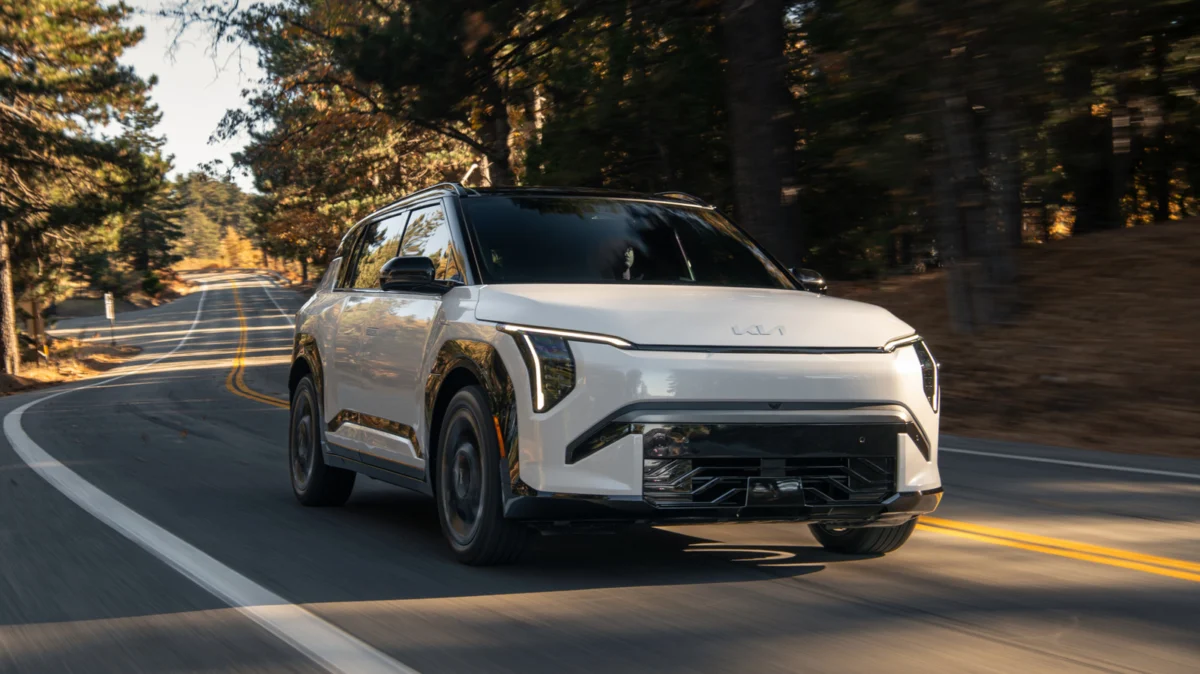
The most notable surprise in our search is the 2027 Kia EV3. As the automotive industry pushes aggressively toward full electrification, price parity with internal combustion engines has been a major hurdle. The EV3, however, breaks this trend.
With a starting MSRP of $31,385 (including destination fees), it lands at a monthly payment of $436. Beyond the numbers, it provides a functional range of 221 miles (EPA) and an efficiency rating of 115 MPGe combined. When compared to the Tesla Model 3—which commands a $555 monthly payment—the EV3 represents a pragmatic choice for the budget-conscious EV adopter who refuses to compromise on modern tech.
New Trucks Under the $500 Ceiling
The pickup truck segment is perhaps the most difficult to penetrate on a budget, as manufacturers have largely abandoned the "work truck" segment in favor of lifestyle-oriented luxury haulers.
The Unibody Advantage: Ford Maverick
The 2026 Ford Maverick has become the gold standard for budget-conscious truck buyers. By opting for unibody construction rather than a traditional body-on-frame setup, Ford has created a vehicle that is more fuel-efficient and easier to drive in urban settings.
- Hybrid XL: With all-wheel drive, the total cost of $32,905 results in a monthly payment of $462.
- XLT EcoBoost: For those requiring more power, the 2.0-liter turbocharged variant remains within reach at roughly $467 per month.
The Hyundai Santa Cruz: Premium Utility
The refreshed 2026 Hyundai Santa Cruz SE sits at the edge of our $500 threshold. By choosing the SE or even the well-appointed SEL trim—which features heated leatherette seats and a 12.3-inch touchscreen—buyers can secure a highly versatile vehicle for approximately $489 per month. Both the Maverick and the Santa Cruz carry strong recommendations from Consumer Reports, validating that affordability does not necessitate sacrificing reliability.
Sedans and SUVs: The Mainstays of Practicality
The sedan market may be contracting, but the survivors are stronger and more cost-effective than ever.
The Toyota Camry’s Enduring Dominance
The 2026 Toyota Camry remains the best-selling sedan in America for good reason. With sales up 11.2% year-over-year, its combination of legendary reliability and price-to-feature ratio is unmatched.
- Camry SE (FWD): $470 per month.
- Camry SE (AWD): $496 per month.
The ability to get an AWD-equipped sedan for under $500 is a significant win for buyers in colder climates.
The Honda CR-V: The Sales Champion
The Honda CR-V has cemented itself as the leader in the light-duty vehicle segment. Despite average new car prices hovering near $52,000, the CR-V LX keeps the dream of a family-sized SUV alive. At $490 per month, the 2026 AWD CR-V offers the space and safety features that most modern families require, making it one of the few SUVs that successfully defies the industry’s inflationary trend.
The "Miata Answer": Mazda MX-5
For the driving enthusiast, the 2026 Mazda MX-5 Miata proves that life doesn’t have to be entirely utilitarian. With a total cost of $32,045, this roadster can be financed for just $447 per month. It is a stark reminder that even in a market obsessed with scale and SUV dimensions, there is still room for a lightweight, driver-focused vehicle that fits within a modest budget.
Supporting Data: The Impact of Interest Rates
The primary driver of these high monthly payments is the cost of borrowing. A 7% APR over 72 months adds thousands of dollars in interest over the life of the loan compared to the 3-4% rates seen in previous years.
Automakers are responding by offering "subvented" rates—promotional APRs—on specific, slow-moving inventory. Consumers are encouraged to look for manufacturer incentives, as a 3.9% rate on a $35,000 car would drop the monthly payment by nearly $60 compared to the 7% average, potentially opening up more expensive trims or models.
Official Responses and Industry Outlook
Industry analysts suggest that the "record high" payments are a temporary peak caused by a backlog of demand and the transition to expensive EV platforms.
"We are seeing a bifurcated market," says a representative from a leading automotive research firm. "On one hand, we have the $60,000-plus luxury segment that is largely immune to interest rate hikes. On the other, we have the ‘budget-conscious core’ where manufacturers are fighting tooth and nail to keep entry-level prices low enough to retain market share."
Implications for the Consumer
What does this mean for you?
- Prioritize the "Out-the-Door" Price: Don’t be seduced by the monthly payment alone. Always negotiate the total price of the vehicle, including all mandatory fees, before calculating your monthly commitment.
- Avoid Long-Term Traps: While 72-month loans are common, remember that a longer loan increases the risk of being "underwater"—owing more on the car than it is worth—for a longer period.
- Cross-Shop Segments: As shown by the inclusion of the Mazda Miata alongside the Honda CR-V, the best deal for your budget might come from a segment you hadn’t originally considered.
While the days of the $200 monthly car payment are likely gone, the list above proves that with careful research and realistic expectations, you can still find a brand-new vehicle that fits your lifestyle without breaking your monthly budget.
