

In a city where the median sales price often defies the gravity of economic logic, finding a home for under $1 million has become the ultimate urban scavenger hunt. For many prospective New Yorkers, this price ceiling is not just a budget constraint; it is a hurdle that separates the dream of ownership from the reality of the rental market. Whether one is scouting park-adjacent studios, converted industrial spaces, or the occasional historic gem, the current market offers a fascinating cross-section of the city’s architectural and social history.
From the prewar elegance of Brooklyn Heights to the rugged, surf-swept edges of the Rockaways, the hunt for "value" requires a blend of pragmatism and vision. This week, we examine a portfolio of listings that prove that, even in a hyper-competitive landscape, New York City still holds secrets for those willing to look beyond the obvious.
The Architectural Legacy of Brooklyn Heights: 70 Remsen Street
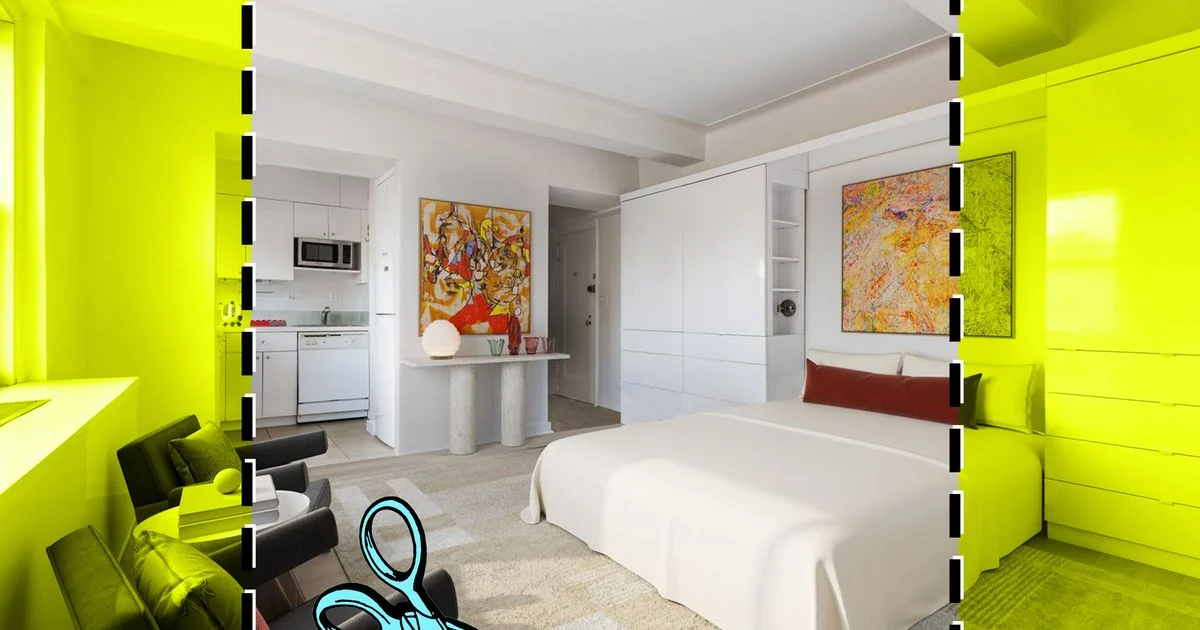
The pursuit of a foothold in Brooklyn Heights often ends in sticker shock, but 70 Remsen Street, Unit 10J, offers a compelling alternative. Built in 1929, this co-op is a masterclass in prewar romanticism. Even before stepping inside, the building commands attention with its street-level marble columns, leaded glass, and intricate facade carvings—featuring lions, shields, and the likeness of the architect himself.
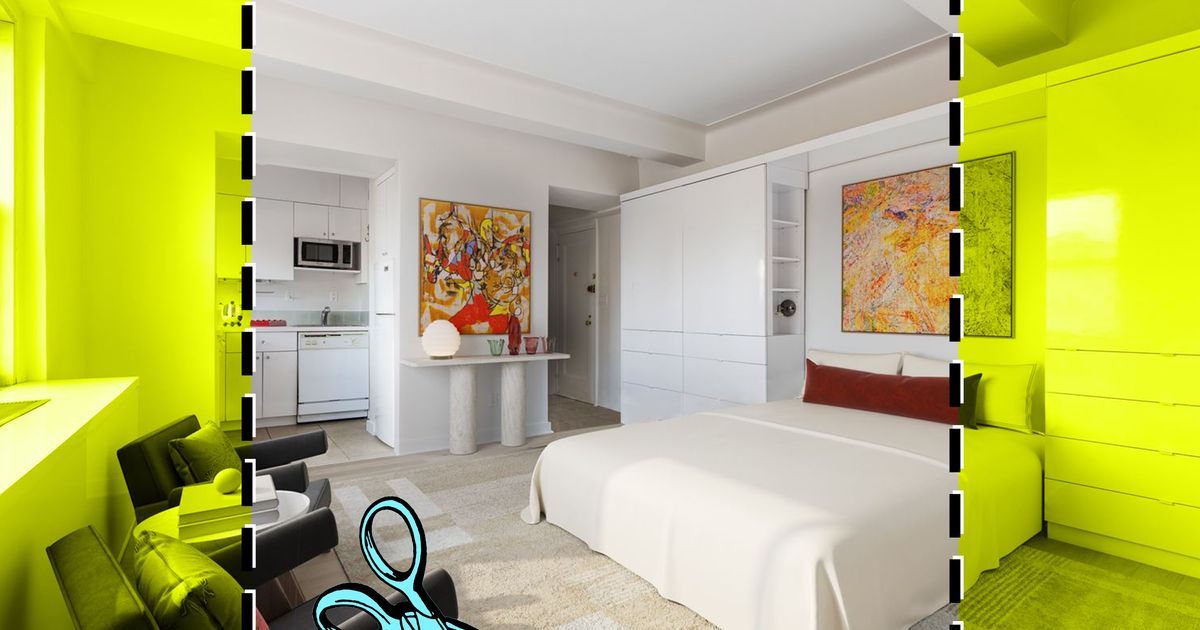
Inside, the unit is presented as a "minimalist dwelling," an efficient 14-by-14-foot space that maximizes every square inch. A wall of custom white cabinetry, which houses a hidden Murphy bed, dominates the main living area, effectively allowing the room to transform from a bedroom to a living space at a moment’s notice. The kitchen, while compact, maintains the aesthetic cohesion of the unit with matching white cabinetry and a slim, functional window.
Broker Nick Gavin, who has built a reputation for handling the lofts of art-adjacent downtowners, markets the space as "comparable to a luxury hotel." It is a description that rings true; the unit feels less like a traditional apartment and more like a high-end pied-à-terre for a gallery director or a professional seeking a streamlined city retreat. With southeast-facing windows providing an abundance of light and a potential sliver of river view, this studio captures the essence of refined, small-scale living in one of Brooklyn’s most storied neighborhoods.
Mid-Century Glamour near Billionaires’ Row: 333 West 57th Street
Just blocks from the frenetic energy of Columbus Circle, "The Westmore" stands as a testament to 1939 architectural foresight. While much of 57th Street has been transformed by the towering, glass-curtain-wall skyscrapers of "Billionaires’ Row," the Westmore retains a distinct, maritime-inspired charm. Its lobby—a sanctuary of glass brick, curved walls, and patterned terrazzo floors—is a visual echo of an era that is once again finding favor with modern designers.
Unit 504 offers a generous 900 square feet, a rarity for a one-bedroom in this zip code. The interior layout feels grand, featuring chevron parquet floors, iron balustrades, and a sunken living room that descends two steps into a space anchored by a massive curved bay window. The bedroom, at 16 feet long, is cavernous by Manhattan standards, and the monthly maintenance fees of $2,463 provide access to a gym and dedicated bike parking. While the kitchen remains a modest, utilitarian space—likely unsuited for the ambitious home cook—the apartment’s overall footprint and vintage pedigree make it a formidable contender for those who prioritize space and location over modern, open-concept renovations.
Coastal Living in the Rockaways: 162 Beach 92nd Street
For those who prioritize lifestyle over proximity to the subway, the Rockaways represent a unique frontier. 162 Beach 92nd Street is a three-bedroom, stand-alone house that sits just one block from the legal surfing zone. This property is designed for the active owner, evidenced by an outdoor shower in the side yard specifically intended for rinsing off wetsuits and stowing surfboards.
The home’s layout is a network of interconnected balconies and decks totaling roughly 750 square feet of outdoor space. A back deck, perfectly suited for al fresco dining, creates a seamless bridge between the kitchen and the outdoors. While the interior finishes are functional, white-box style, the presence of three bedrooms and three bathrooms suggests a home capable of hosting guests or serving as a high-end rental property. With an attached garage capable of charging an electric vehicle, the property offers a bridge between the laid-back surf culture of Queens and the professional demands of the Financial District.
Tudor Revival and Tuscan Dreams: 20 Continental Avenue, Forest Hills
Forest Hills Gardens has always felt like a displaced corner of England, and 20 Continental Avenue is no exception. This 550-square-foot studio, located in a Tudor Revival co-op, leans heavily into the romanticism of the neighborhood. The unit features a wood-burning fireplace and casement windows, though the current decor—sponge-painted burnt-sienna walls and heavy sconces—evokes a "Tuscan villa" aesthetic that contrasts sharply with the building’s traditional exterior.
The bathroom is a highlight of 1940s design, boasting black and yellow tile and period-appropriate striped wallpaper. While the corner kitchen remains dated, the unit’s true value lies in its atmosphere. As a "penthouse" unit on the sixth floor, the views of the surrounding tree canopy are, as the listing suggests, "exquisite." With monthly fees of $1,170, the co-op offers a comprehensive suite of amenities, including a private garden, a gym, and a doorman, making it an ideal sanctuary for those looking to escape the concrete density of the inner boroughs.
A Historic Restoration Project: 190 Meisner Avenue, Staten Island
Not every property under a million dollars is move-in ready. 190 Meisner Avenue is an Italianate villa built in 1856 on Staten Island’s Lighthouse Hill. This is a house with a pedigree: it was once home to Graham Marr, an opera singer who recorded with Columbia Records, and it has since been recognized as an official LGBTQ+ historic site.
The property is currently in a state of delicate disrepair. With sections of the ceiling collapsed and natural elements encroaching on the interior, it is a project for the bold. However, beneath the decay, the bones of the house are remarkable. Original wide-plank floors and marble fireplaces remain intact, and the central staircase—a winding masterpiece—leads to an octagonal cupola and a widow’s walk. For a buyer with the capital and the vision to restore a landmarked property, the three-quarters of an acre of grounds and the carriage house with its mansard roof represent an opportunity to steward a significant piece of New York City history.
Posh Convenience: 65 East 76th Street
Finally, we return to the Upper East Side, where 65 East 76th Street offers the quintessential "location, location, location" proposition. Situated between Park and Madison Avenues, just a short walk from the Carlyle Hotel, this unit provides nearly 1,000 square feet of living space.
The layout is efficiently divided, with a kitchen acting as a central spine that separates a home office nook from the dining area. The classic four-finger parquet floors add a touch of traditional Manhattan elegance, and the bedroom’s walk-in closet is a welcome luxury. While the windows look out toward the backs of neighboring buildings—offering little in the way of a "view"—the proximity to Central Park acts as the building’s true front yard. It is a home for the urban dweller who views their apartment primarily as a quiet, well-located base of operations.
Market Implications
The common thread among these properties is the trade-off inherent in New York City real estate. In each instance, the buyer is choosing between space, history, location, or lifestyle. As interest rates fluctuate and the inventory of "affordable" homes remains tight, these listings serve as a reminder that the definition of a "good deal" is highly subjective.
Whether it is the restoration of a 19th-century Staten Island villa or the minimalist efficiency of a Brooklyn Heights co-op, the market for homes under $1 million continues to challenge buyers to define what they value most. In a city of eight million stories, these apartments represent the starting chapters for those ready to plant their roots, provided they are willing to look at the city with an eye for potential rather than just immediate polish.
