

By Viknesh Vijayenthiran | March 21, 2025
The 2025 Formula 1 World Championship intensifies this weekend as the paddock descends upon the Shanghai International Circuit for the second round of the calendar: the Chinese Grand Prix. After a dramatic season opener that shuffled the established order, the return to China promises to be a pivotal test of engineering endurance, strategic ingenuity, and driver precision.
The Technical Challenge: Shanghai’s Unique Demands
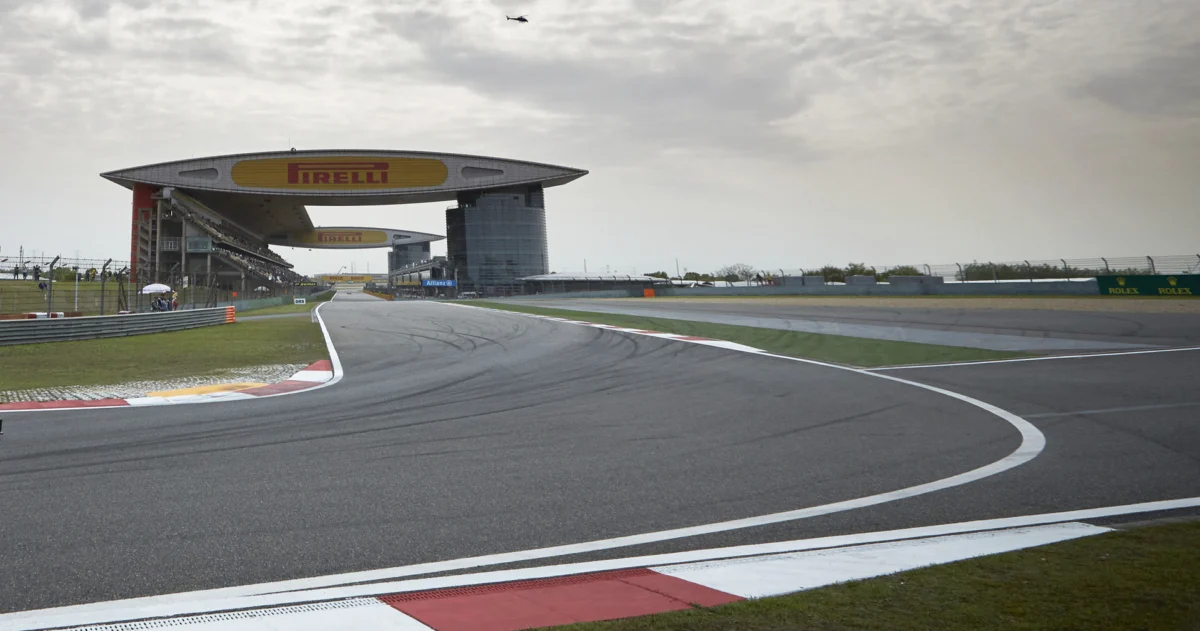
The Shanghai International Circuit remains one of the most demanding venues on the FIA calendar. Stretching 3.4 miles (5.45 kilometers), the layout is defined by its 16 complex turns, characterized by a mix of high-speed technical sections and the iconic "snail" corner—a tightening right-hander that tests the limits of front-end grip.
Engineers face a unique challenge here: approximately 80% of the lap is spent in a cornering state. This places immense lateral load on the tires, particularly the front-left, which often suffers from heavy thermal degradation. Pirelli has opted to bring its mid-range C2, C3, and C4 compounds for this weekend’s outing. While these are the same specifications utilized during the 2024 race, the shift in car design philosophy for 2025 means that teams have had to recalibrate their tire-management simulations to account for increased downforce levels and modified suspension kinematics.
While Shanghai is historically notorious for volatile, rain-affected weekends, the current meteorological outlook suggests a dry, cool weekend. This stability may actually complicate the strategic landscape, as teams cannot rely on wet-weather gambles to offset performance deficits, forcing a pure focus on race-pace degradation and pit-stop optimization.
Chronology: A High-Speed Sprint Format
The 2025 Chinese Grand Prix marks the debut of the Sprint format for the current season. Unlike traditional weekends, this structure compresses the technical program, leaving little margin for error.
- Friday: The weekend commenced with a singular Free Practice session, followed immediately by the Sprint Qualifying session. This rapid-fire transition forces teams to finalize setup parameters within just 60 minutes of track time.
- Saturday: The morning features the Sprint race, a standalone 100km dash that rewards points to the top eight finishers. Following the Sprint, the afternoon is dedicated to the traditional qualifying session, which determines the grid for Sunday’s main event.
- Sunday: The Grand Prix itself, a 56-lap marathon, serves as the weekend’s centerpiece.
In a stunning display of pace during Friday’s Sprint Qualifying, Ferrari’s Lewis Hamilton sent a message to the rest of the field. Hamilton clocked a blistering 1:30.849s, setting a new lap record for the Shanghai International Circuit. His ability to thread the needle through the complex sector two proved superior to Max Verstappen, who will start the Sprint from second. This performance underscores the growing competitiveness of the Ferrari package as the team seeks to challenge the Red Bull hegemony.
Supporting Data: The Championship Landscape
Heading into Round 2, the leaderboard presents a fascinating snapshot of a changing guard. Lando Norris, following a masterclass in defensive driving and tactical execution at the season opener, leads the Drivers’ Championship with 25 points. Max Verstappen, the defending champion, sits in second with 18 points, while Mercedes-AMG’s George Russell rounds out the top three with 15 points.
The Constructors’ Championship is equally tight. McLaren and Mercedes are currently locked in a dead heat, each holding 27 points. Red Bull Racing, usually the dominant force, trails in third with 18 points—a deficit that reflects the team’s ongoing struggles to find the perfect balance in their 2025 challenger.
Last year, Max Verstappen claimed a dominant victory at this circuit. However, the data from Friday suggests that the gap between Red Bull and the chasing pack has narrowed significantly. The telemetry indicates that while Red Bull retains its straight-line speed advantage, Ferrari and McLaren have gained substantial ground in high-speed cornering stability.
Official Responses and Team Perspectives
The mood in the paddock is one of cautious optimism, particularly among the teams aiming to topple the Red Bull dynasty.
"We knew we had a good car coming here, but the track temperature caught us off guard," noted Red Bull Team Principal Christian Horner during Friday’s press briefing. "Lewis’s lap was phenomenal. We have a lot of work to do to adjust our mechanical balance before the main qualifying session. The Sprint race is going to be a fascinating indicator of where our degradation sits compared to the Ferraris."
Lewis Hamilton, reflecting on his pole position, remained grounded. "It’s a great start, but we know the race pace is where the points are won. The track is extremely smooth, which hides some of the issues we had in testing. Tomorrow (Saturday) will be a test of whether we can keep that tire heat under control for a full sprint distance."
Lando Norris, the championship leader, emphasized the pressure of the Sprint format: "Every lap counts this weekend. When you only have one hour of practice, you have to trust your simulator data. We’re in a good spot, but Mercedes and Ferrari are right there with us. It’s going to be a dogfight for every tenth of a second."
Implications for the Season Ahead
The Shanghai race is being viewed by pundits as a "litmus test" for the 2025 season. If Red Bull struggles to maintain dominance on a high-downforce circuit like Shanghai, it could signal the end of their period of total technical superiority.
Furthermore, the implementation of the Sprint format here is designed to maximize engagement. With the championship margins currently so thin, every point scored in the Sprint race could prove decisive when the circus moves to the European leg of the season.
Strategy will be the dominant narrative on Sunday. Because the Shanghai track surface is relatively smooth, "one-stop" versus "two-stop" strategies will be a point of contention. If the track temperatures rise, the degradation on the C4 soft compound may force teams into a two-stop strategy, which would open the door for undercut maneuvers. Conversely, if teams can manage their tires effectively, a conservative one-stop approach could see them track-position their way to a win.
As the sun sets over Shanghai, the anticipation in the pit lane is palpable. For Ferrari, it is an opportunity to validate their resurgence. For Red Bull, it is a chance to prove that their early-season struggles were merely a setup anomaly. For the fans, it is the perfect stage for a modern F1 classic.
The 2025 Chinese Grand Prix is not just a race; it is a tactical chess match played at 200 mph. Whether the current order holds or the hierarchy is once again upended, one thing is certain: the road to the World Championship is winding, and Shanghai is the first major turn.
Key Metrics to Watch
- Tire Life: Keep a close eye on the front-left tire wear during the Saturday Sprint race. This will be the primary indicator for Sunday’s strategy.
- The "Snail" Exit: Watch how drivers manage traction out of Turn 13. A mistake here compromises the entire back straight, creating a prime overtaking opportunity for the car behind.
- The DRS Factor: Shanghai features one of the longest straights in F1. The effectiveness of the Drag Reduction System (DRS) will determine whether the race becomes a procession or a thriller.
As the engines fire up for the Sprint, the world watches to see if the status quo will remain, or if the 2025 season will continue its trajectory as one of the most competitive in recent memory.
