

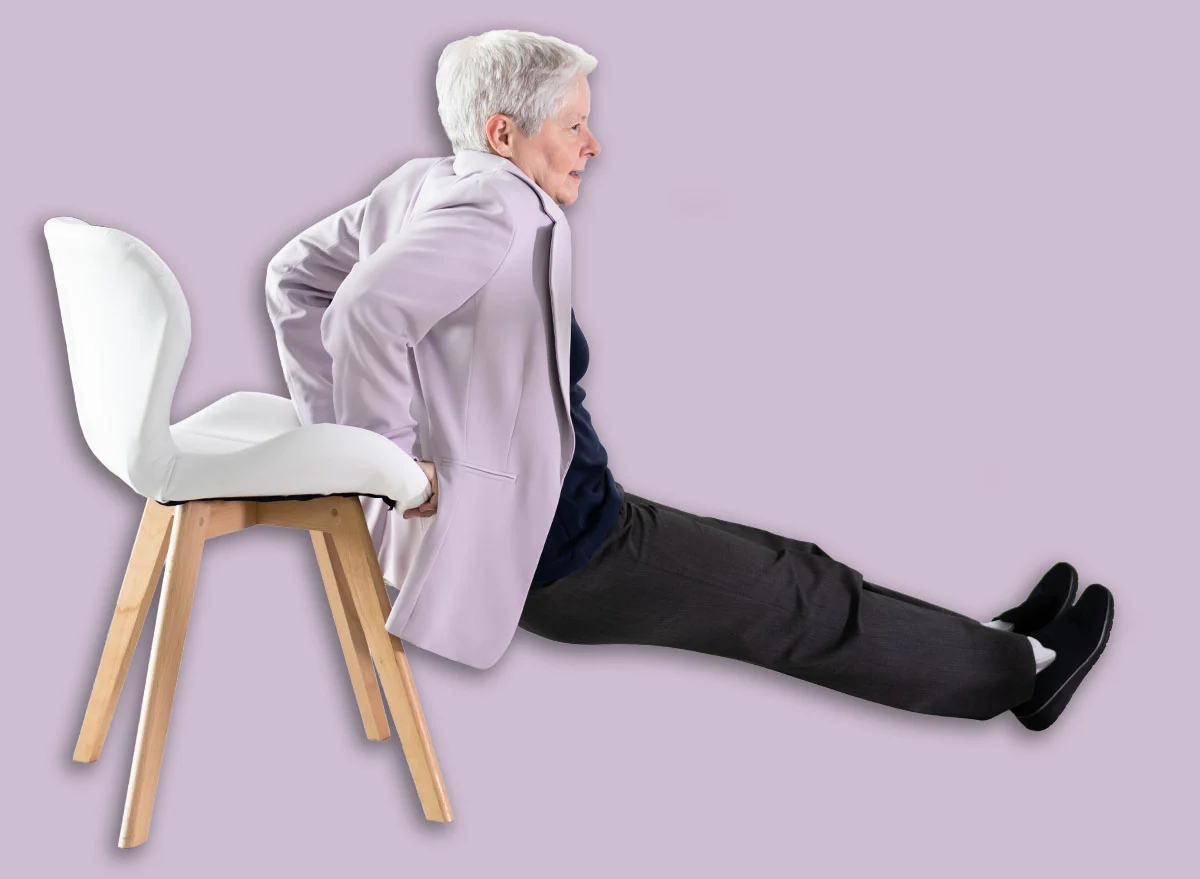
For many, the push-up is the gold standard of fitness. It is simple, requires no equipment, and promises a total-body challenge. However, as we cross the threshold into our 60s and beyond, the traditional floor-based push-up can become a source of frustration rather than progress. The high demand placed on the wrists, shoulders, and core—often simultaneously—can lead to discomfort or injury, causing many to abandon strength training altogether.
As a Certified Strength and Conditioning Specialist (CSCS), I have found that the most effective way to build real, functional upper-body strength after 60 isn’t by forcing complex movements, but by optimizing stability. By incorporating a sturdy chair into your routine, you can create a controlled environment that allows you to press, pull, and stabilize with precision.
The Science of Stability in Aging Populations
The physiological landscape changes as we age. Between the ages of 30 and 70, humans naturally lose muscle mass and strength—a process known as sarcopenia—at an accelerating rate. However, research consistently indicates that resistance training can not only halt this decline but reverse it.
The challenge, as highlighted in recent sports science literature, is that traditional exercise prescriptions often overlook the importance of "joint-friendly" stability for the older adult. Using a chair for support serves two purposes: it removes the instability of the floor, which can be taxing on the wrists, and it allows for a more localized focus on the target muscle groups. By eliminating the need to balance, the central nervous system can recruit more motor units in the chest, arms, and back, leading to a higher quality of muscle contraction.
A Balanced Approach: Beyond the Push-Up
Most people focus heavily on "pressing" movements—push-ups, overhead presses, and chest presses. While important, this creates an imbalance. A truly resilient upper body requires a balance between pushing and pulling. Without adequate "pulling" strength, the shoulders often roll forward, leading to a hunched posture and potential impingement.
This four-exercise chair-based protocol is designed to provide a comprehensive upper-body workout. It balances the pressing power required for everyday tasks—like pushing yourself out of a deep sofa—with the pulling strength necessary for posture and stability.
1. Chair Dips: The Foundation of Pushing Power
Chair dips are the ultimate functional movement for the triceps and shoulders. They mimic the mechanics of standing up from a seated position or pushing yourself up from a bed.
The Mechanism
The dip isolates the triceps, the muscles responsible for elbow extension. When performed with a chair, you control the depth. For many, a shallow dip is far more effective than a deep, painful one that stresses the anterior capsule of the shoulder.
Execution
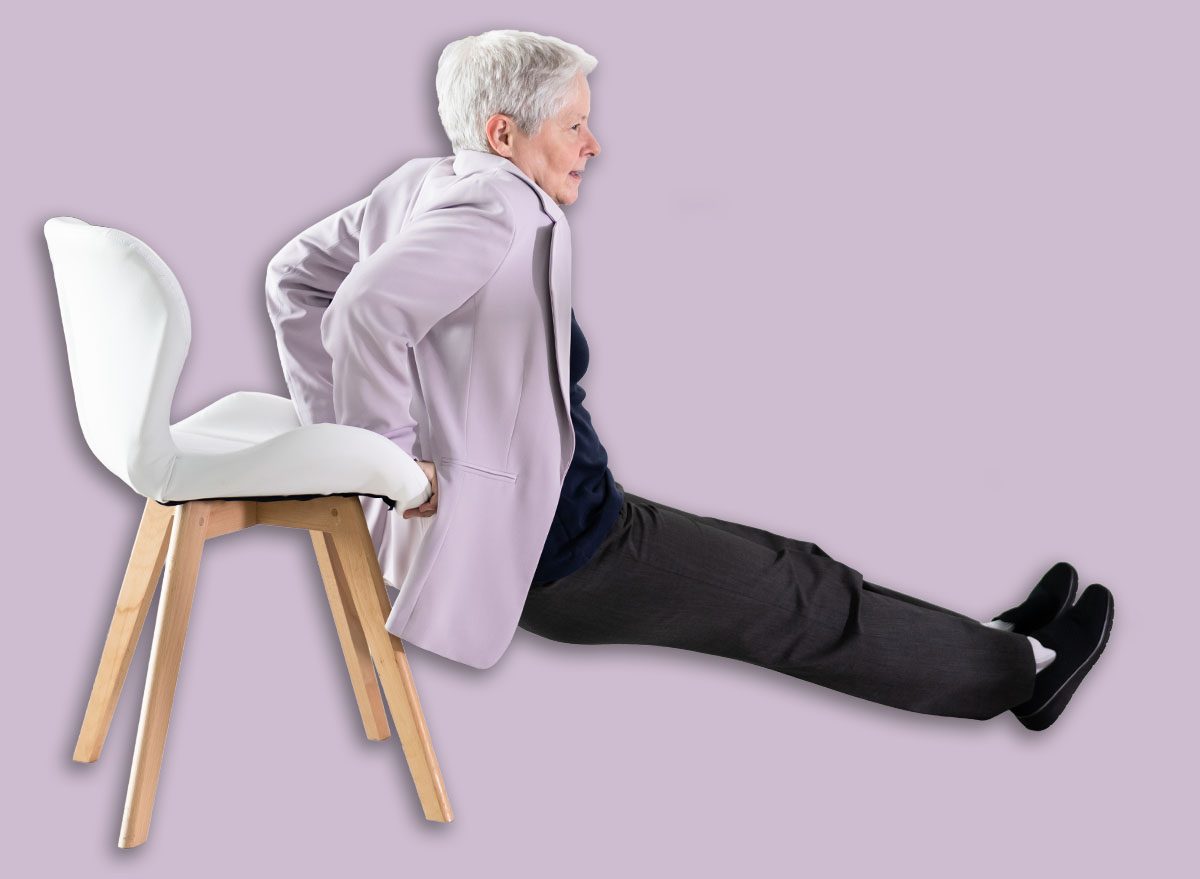
- Setup: Sit on the edge of a sturdy chair. Place your hands on the seat next to your hips, fingers pointing forward.
- The Move: Slide your hips off the edge, supporting your weight with your arms. Slowly lower yourself by bending your elbows.
- The Press: Push back up through your palms, engaging your triceps. Keep your back close to the chair to minimize shoulder strain.
Recommended: 2 to 3 sets of 6 to 10 repetitions. Focus on a slow, 3-second descent.
2. Seated Shoulder Press: Building Overhead Capacity
Reaching into a high cabinet or placing an item on a top shelf requires stable overhead strength. Standing versions of this move can often lead to arching the lower back, which puts unnecessary stress on the spine.
The Stability Factor
By sitting, you remove the legs from the equation, forcing the core to stabilize the torso while the shoulders work. This isolation ensures that the force is generated by the deltoids rather than momentum.
Execution
- Setup: Sit tall, feet flat on the floor. Hold light dumbbells at shoulder height, palms facing forward.
- The Move: Press the weights straight up toward the ceiling.
- Form Tip: Keep your "ribs stacked." This means avoiding the urge to flare your chest and arch your back as the weights rise.
Recommended: 2 to 3 sets of 8 to 12 repetitions. Start light to master the range of motion.
3. Seated Band Row: Correcting the Posture
If pressing is the "go," pulling is the "stop." Rows are essential for counteracting the forward-leaning posture that often develops with age. They target the lats, the rhomboids, and the rear delts.
Why Rows Matter
Strong pulling muscles act as the anchor for the shoulder girdle. When these muscles are weak, the shoulders become unstable, making pressing movements feel uncomfortable.
Execution
- Setup: Sit on the chair and loop a resistance band around your feet. Grip the band firmly.
- The Move: With a tall spine, pull your elbows back behind your torso. Focus on squeezing your shoulder blades together.
- The Pause: Hold the contracted position for one second to maximize muscle activation.
Recommended: 2 to 3 sets of 10 to 15 repetitions. Ensure your shoulders remain relaxed and away from your ears.
4. Seated Band Pull-Apart: The Finishing Touch
This movement is the "secret weapon" for rotator cuff health. It is a low-intensity, high-reward exercise that ensures the small, stabilizing muscles of the shoulder are functioning correctly.
The Goal
The pull-apart promotes external rotation of the shoulders. This is the anatomical opposite of our "tech-neck" and desk-bound posture, helping to open up the chest and improve overall shoulder mobility.
Execution
- Setup: Hold a light resistance band in front of you with arms fully extended.
- The Move: Keeping your arms straight, pull the band apart by moving your hands out to the sides, squeezing your rear delts.
- Control: Slowly return to the starting position. Do not allow the band to "snap" back.
Recommended: 2 to 3 sets of 12 to 15 repetitions.
Chronology of Progress: How to Implement This Routine
When starting a new strength program after 60, consistency is more important than intensity.
- Week 1-2: Focus on "Pattern Practice." Perform the exercises without added weight or with the lightest possible resistance. The goal is to perfect the form and ensure there is no joint pain.
- Week 3-4: Introduce light resistance. If you are using dumbbells, choose a weight that allows you to finish the final two reps with effort, but without compromising form.
- Week 5 and beyond: Gradually increase the tension on the bands or the weight of the dumbbells.
Supporting Data: Why Strength Training is Non-Negotiable
Recent studies published in journals such as The Journals of Gerontology demonstrate that strength training in individuals over 60 improves not only muscle mass but also bone density. The mechanical loading—the tension placed on the bones during resistance training—is a critical stimulus for preventing osteopenia. Furthermore, the improvements in "activities of daily living" (ADLs) are profound. Participants who engaged in regular strength training reported significantly higher levels of independence, reduced fall risk, and improved metabolic markers.
Implications for Longevity
The implications of this training are clear: we are training for independence. The "real strength" referred to in this protocol isn’t about gym vanity; it is about the ability to carry groceries, lift grandchildren, and move through the world without the fear of injury.
By using a chair, we lower the barrier to entry, ensuring that these essential movements are accessible regardless of current fitness levels. The goal is to move from a state of "exercise as a chore" to "exercise as a lifestyle."
Final Recommendations from the Field
As you integrate this into your routine, remember that your body is a dynamic system. If a specific movement feels "off," adjust your grip, lower the resistance, or shorten the range of motion. Listen to the feedback your joints provide.
Consistency will be your best friend. Aim for three to four sessions per week. Because these exercises are low-impact, they can be performed as a standalone session or integrated into a longer walking or mobility program. Stay patient, keep your movements controlled, and you will find that your upper body becomes more capable, more resilient, and more functional with every passing week.
Jarrod Nobbe, MA, CSCS, is a USAW National Coach and Sports Performance Specialist dedicated to helping individuals optimize their physical longevity through science-backed training methods.
