

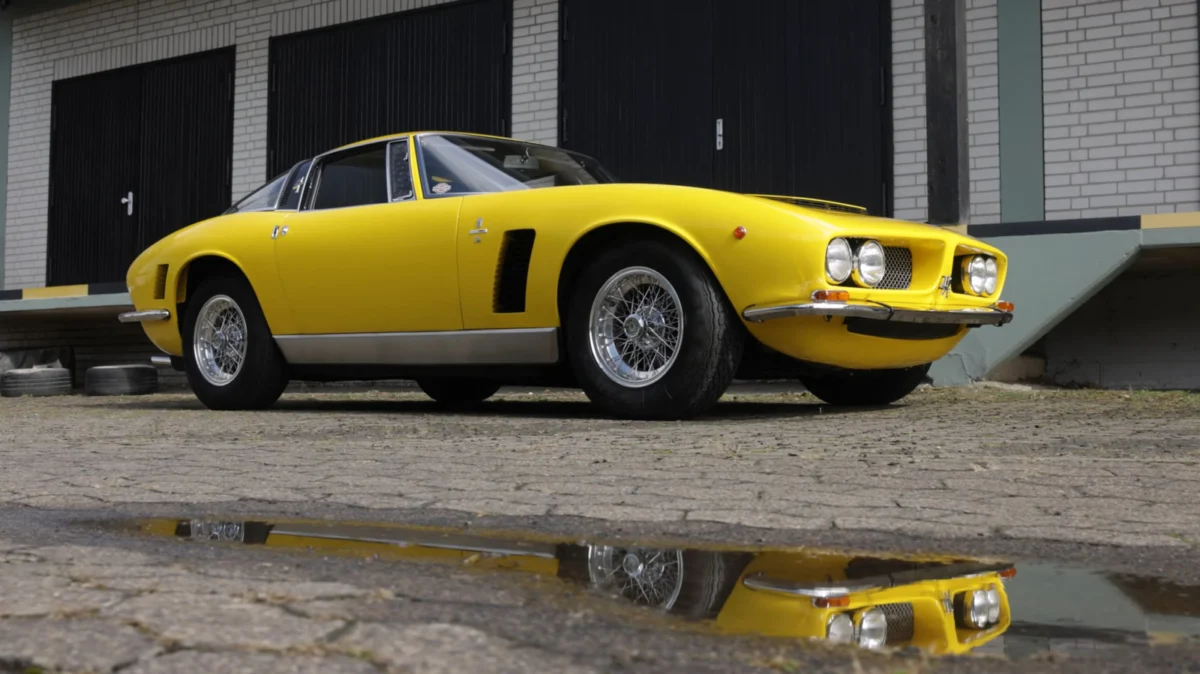
In the pantheon of automotive history, few vehicles bridge the divide between the Old World’s artistry and the New World’s raw, unbridled power quite like the Iso Grifo. While the mid-century era saw various manufacturers—most notably Facel Vega, Jensen, and De Tomaso—attempt to marry European chassis design with American V8 muscle, the Iso Grifo stands as the definitive success story of this hybrid philosophy.
More than half a century after it first stunned the crowds at the 1963 Turin Motor Show, the Grifo remains a masterclass in grand touring. With a production run that spanned a decade and a total output of just over 400 units, it was never a mass-market play. Instead, it was an elite, artisanal creation that challenged the dominance of Ferrari and Lamborghini by proving that one did not need a temperamental, high-maintenance V12 to achieve world-class performance.
Main Facts: The Anatomy of an Icon
At its core, the Iso Grifo was a bold defiance of convention. While competitors like the Ferrari 365 GTB/4 or the Lamborghini Miura relied on complex, expensive, and often fragile indigenous engine designs, Iso adopted the "American Heart" approach. By utilizing Chevrolet’s small and big-block V8s, the Grifo offered owners the prestige of Italian coachwork paired with the reliability, ease of service, and explosive torque of Detroit’s finest engineering.
This synergy was not merely a cost-cutting measure; it was a performance strategy. The car was engineered to be a "Gentleman’s Express"—capable of crossing continents at high speeds without the anxiety of a mechanical failure. With power outputs ranging from 300 horsepower in base models to a staggering 435 horsepower in the legendary "7-Liter" variants, the Grifo was arguably the most practical supercar of the 1960s.
A Chronological Journey: From Turin to Obsolescence
The timeline of the Grifo is a study in evolution and eventual market correction.
- 1963: The A3/L prototype makes its debut in Turin, signaling a departure from the track-focused A3/C. The design, penned by Giorgetto Giugiaro, captures the imagination of the press immediately.
- 1965: Series I production officially begins. These initial models, primarily powered by the Chevy 327-cubic-inch V8, set the standard for the model’s refined, long-legged cruising capability.
- 1966: The Targa body style is introduced, catering to those who desired an open-air experience without sacrificing the structural integrity of the GT coupe.
- 1968: The Big-Block era begins. To compete with the burgeoning output of Maranello and Sant’Agata, Iso introduces the 427-cubic-inch Chevrolet V8.
- 1970: Series II styling tweaks are implemented, introducing hidden headlamps and subtle aerodynamic refinements to keep the design relevant in a changing decade.
- 1972: In a late-production shift, the Ford 351 Cleveland engine is introduced in the IR-8 models, a move that reflected the shifting landscape of global engine supply.
- 1974: Production ceases as the Iso automaker shuts its doors. The global oil crisis, combined with an aging platform, marked the end of an era for the boutique manufacturer.
Supporting Data: Performance and Rarity
The performance figures of the Iso Grifo were, at the time, nothing short of revolutionary. Road tests from the era consistently placed the 327-powered Series I cars in the 160-mph bracket—a figure that put them on par with, and occasionally ahead of, the finest sports cars of the decade.
However, it was the 427-cubic-inch "Big Block" models that solidified the Grifo’s reputation as a giant-killer. Achieving a 0-to-60 mph sprint in just 5.5 seconds, the big-block Grifo wasn’t just fast; it was ballistic. While Ferrari’s V12s required precision tuning to stay in their power band, the Grifo’s American torque curve allowed for effortless overtaking at almost any gear or speed.
Rarity remains a core component of the Grifo’s mystique. With only 402 confirmed examples, the population is so small that provenance and maintenance history have become the primary drivers of current market value. Of these, the 7-liter variants are the "Holy Grail," with only 66 ever produced. Their defining feature—the "pagoda" or "penthouse" hood scoop—was a necessary concession to the sheer physical dimensions of the big-block engine, a visual cue that now commands a premium among collectors.
Official Perspectives: The Men Behind the Machine
The success of the Grifo was no accident; it was the result of a "dream team" of 1960s Italian automotive luminaries.
Renzo Rivolta: The visionary industrialist. Rivolta provided the capital and the strategic direction, but more importantly, he provided the autonomy for his team to innovate. He was the bridge between the pragmatic world of mass-produced scooters (Iso’s origins) and the aspirational world of high-performance GTs.
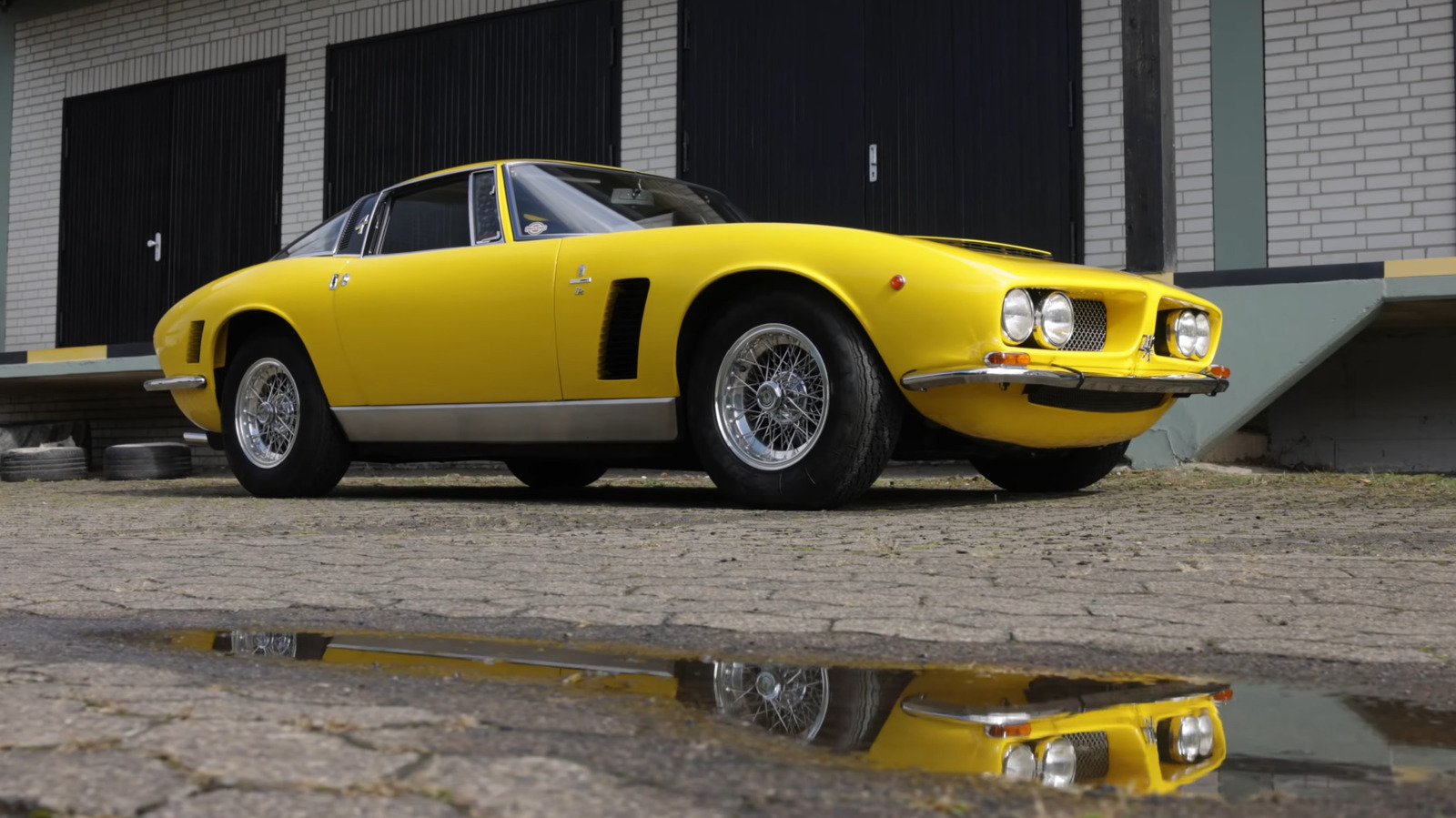
Giorgetto Giugiaro: A design prodigy. His work on the Grifo is often cited as the definitive example of 1960s "Italian Elegance." The car’s long hood, low roofline, and sweeping fenders created a silhouette that felt both aggressive and sophisticated. His ability to mask the car’s utilitarian American mechanicals beneath a skin of pure artistry was the key to the Grifo’s success.
Giotto Bizzarrini: The engineer’s engineer. Having cut his teeth at Ferrari—where he was instrumental in the development of the 250 GTO—Bizzarrini was the perfect choice to build the chassis. He understood that a powerful engine was useless without a chassis capable of handling it. His suspension geometry and weight distribution ensured that the Grifo was not just a straight-line performer, but a car that could handle the twisty mountain roads of Europe with poise.
Implications: The Modern Market and the Legacy of the Hybrid
Today, the Iso Grifo exists in a unique space within the collector car market. When new, it was a vehicle for the exceptionally wealthy. With a 1967 price tag of $14,000 (roughly equivalent to $140,000 today), it was priced comfortably above the Chevrolet Corvette and positioned squarely against the Ferrari 330 GTS.
In the current market, that "exotic" status has only intensified. A standard Series I coupe in excellent condition now easily trades in the $300,000 to $400,000 range. The 7-liter models, meanwhile, have become blue-chip assets, often crossing the half-million-dollar threshold. The record-breaking $1.875 million sale of the 1964 Spider prototype in 2024 serves as a testament to the fact that the market views the Grifo not just as a classic car, but as an essential piece of automotive art.
The lasting implication of the Iso Grifo is the validation of the hybrid concept. It proved that the "Italian Exotic" label was not exclusive to cars built entirely in Italy. It challenged the rigid hierarchies of the auto industry and provided a blueprint for future manufacturers who would later combine disparate components to create something greater than the sum of their parts.
The Grifo was, and remains, the ultimate "Gentleman’s Express." It offered the thrill of a race car, the reliability of a daily driver, and the aesthetic beauty of a sculpture. As we look back at the history of the automobile, the Iso Grifo serves as a reminder that sometimes the most beautiful solutions are the ones that ignore the status quo, embrace global collaboration, and prioritize the raw, visceral experience of the drive above all else. For the fortunate few who own one today, it is not merely a vehicle—it is a living, breathing connection to a golden age of engineering audacity.
