

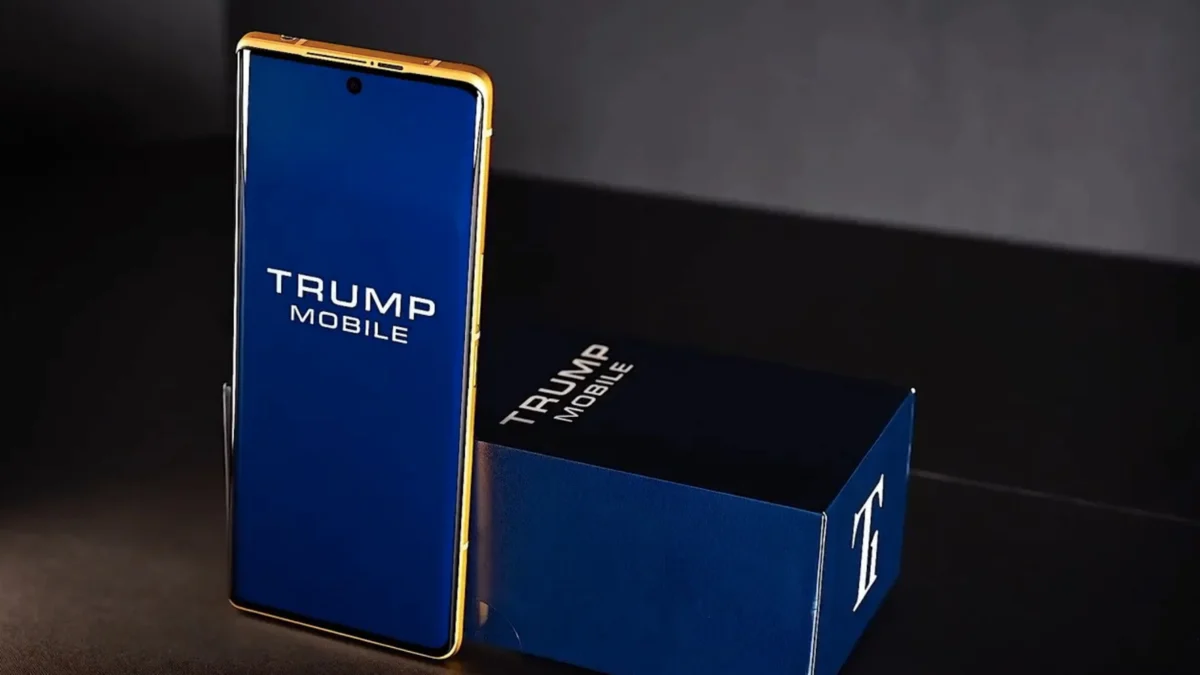
After nearly a year of anticipation, skepticism, and mounting frustration, the “Trump phone”—officially branded as the T1—is reportedly beginning its journey to customers. What was promised as a revolutionary entry into the telecommunications market has instead become one of the most controversial retail sagas in recent memory. As Trump Mobile, the carrier venture founded by Donald Trump Jr. and Eric Trump, prepares to fulfill a massive backlog of orders, the tech and political worlds are left to weigh whether this “amazing product” can justify the intense scrutiny it has attracted.
The Genesis of the T1: Promises vs. Reality
The narrative surrounding Trump Mobile began with a bold promise: to provide a smartphone experience aligned with “American values.” When the T1 was first unveiled, it was marketed as a high-end, domestically produced device that would disrupt the traditional mobile carrier landscape. For many supporters, the prospect of owning a gold-hued device that served as both a status symbol and a political statement was compelling enough to warrant a $100 deposit.
However, as the months dragged on, that initial excitement soured. The T1 was originally scheduled to reach consumers in August, with a subsequent delay pushing the date to October. As the calendar rolled into 2026, those who had pre-ordered the device began to question the integrity of the operation. With nearly 600,000 deposits collected, the company had effectively raised $60 million in capital before a single unit had reached a customer’s hand. The lack of transparent communication led to a wave of public outcry, with critics questioning the legitimacy of a company that, at one point, quietly updated its terms of service to suggest there was no ironclad guarantee the phone would ever be delivered.
A Chronology of the Delay
The path to the T1’s release has been anything but linear. The saga can be broken down into several key phases:
- The Launch Announcement: Trump Mobile unveiled its ambitions to challenge the established mobile order, promising a “game-changing” device and service.
- The Deposit Phase: Approximately 600,000 customers placed $100 deposits, totaling $60 million in pre-order revenue.
- The First Delay (August): Missed deadlines led to the first round of public concern. The company cited supply chain complexities and quality control measures.
- The Second Delay (October): Another missed milestone caused further friction, exacerbated by the company’s decision to modify its terms of service.
- The “Made in the USA” Pivot: Initially, the company touted the device as being manufactured in the United States. This claim was later softened to the assertion that the device was “designed with American values in mind,” a subtle but significant pivot that signaled a change in the product’s origin story.
- The Fulfillment Commitment: Following reports of potential legal scrutiny and public backlash, the company confirmed that shipping would finally commence, with all pre-orders expected to be fulfilled within the “next several weeks.”
Technical Specifications and the Value Proposition
For all the fanfare, the T1 is, by most industry standards, a mid-range Android smartphone. According to official specifications released by Trump Mobile, the device features a Snapdragon processor, a 50MP main camera, and a 5,000 mAh battery. While these specs are functional and competitive in the budget-to-mid-range market, they are hardly revolutionary.
When compared to the broader smartphone ecosystem, the T1’s pricing—ranging from $500 to $1,000—has been a point of contention. Industry analysts point out that for a similar price point, consumers can purchase flagship devices from established manufacturers that offer more advanced hardware, longer software support, and proven track records in privacy and security. The “gold-hued” aesthetic, while intended to be the phone’s signature visual element, has been compared by some tech observers to the gold iPhone 5s, which was introduced over a decade ago.
The company argues that the value proposition extends beyond the raw hardware. By bundling the phone with their proprietary 5G service plans, Trump Mobile claims to offer a “holistic ecosystem.” Their 5G plan, priced at $47.45 per month—a deliberate nod to President Trump’s two terms in office—is central to their pitch. However, the company’s secondary retail business, which involves selling refurbished Samsung and Apple devices at significant markups (e.g., a $630 price tag for a refurbished iPhone 15 that typically retails for $300–$350 elsewhere), has only served to heighten the skepticism of market analysts.
Official Responses and Corporate Strategy
When asked to comment on the extended delays and the nature of the product, a spokesperson for Trump Mobile maintained a disciplined stance. Rather than addressing the specific operational failures that caused the missed deadlines, the spokesperson emphasized the company’s commitment to quality.
“The delays were worth it in our minds as we are delivering an amazing product,” the spokesperson stated. This sentiment echoes the earlier rhetoric of Eric Trump, who famously claimed that the mobile venture would “change the game” and ensure the “highest levels of quality.”
Despite the insistence on quality, the transition from a “Made in the USA” promise to a “designed with American values” branding strategy suggests that the company faced significant hurdles in domestic manufacturing. This shift has led to accusations of “vaporware” marketing, where the branding and the political identity of the product were prioritized over the actual supply chain and manufacturing reality.
The Financial and Legal Implications
The financial scale of this project is significant. With $60 million in deposits, the company has effectively operated on interest-free capital provided by its customer base. For consumer advocacy groups, the “Trump phone” saga serves as a cautionary tale about the risks of crowd-funded-style hardware launches without the oversight typical of traditional retailers.
The fact that the company felt the need to update its terms of service to remove a delivery guarantee is particularly concerning to legal experts. While this maneuver may have protected the company from immediate class-action litigation, it severely damaged consumer trust. As the phones finally ship, the company faces a new challenge: the “Day One” test. If the devices are perceived as low-quality or if the 5G service does not live up to the “game-changing” promise, the reputational damage could be irreparable.
Looking Ahead: Has the Game Changed?
As the first T1 units make their way to customers, the broader implications of the Trump Mobile saga remain a subject of intense debate. Is this a genuine attempt to create a niche mobile brand, or is it a marketing exercise that leverages political loyalty to sell generic hardware at a premium?
The market will ultimately be the judge. If the T1 delivers a stable, high-quality user experience, the delay-ridden history may eventually be viewed as a mere “growing pain” of a startup business. However, if the devices fail to meet the expectations set by the high price point, or if the service infrastructure proves inadequate, the project could become a textbook case of how political branding can struggle when it collides with the unforgiving realities of the global technology industry.
For now, the 600,000 people who placed their bets on the T1 will finally receive their hardware. The “long national nightmare” of waiting may be ending, but for the Trump Mobile brand, the real test of whether they can actually “change the game” is only just beginning. The industry will be watching closely to see if the T1 is a product that stands on its own merits, or if its legacy will be defined solely by the politics that birthed it.
