

Air Force One touched down in Beijing today, marking the beginning of a high-stakes U.S.-China summit that promises to redefine the trajectory of global technological hegemony. On board, alongside President Donald Trump, was a formidable delegation of Silicon Valley’s most influential executives—a "cavalcade" of industry leaders whose presence underscores the inextricable link between national security and the global semiconductor supply chain.
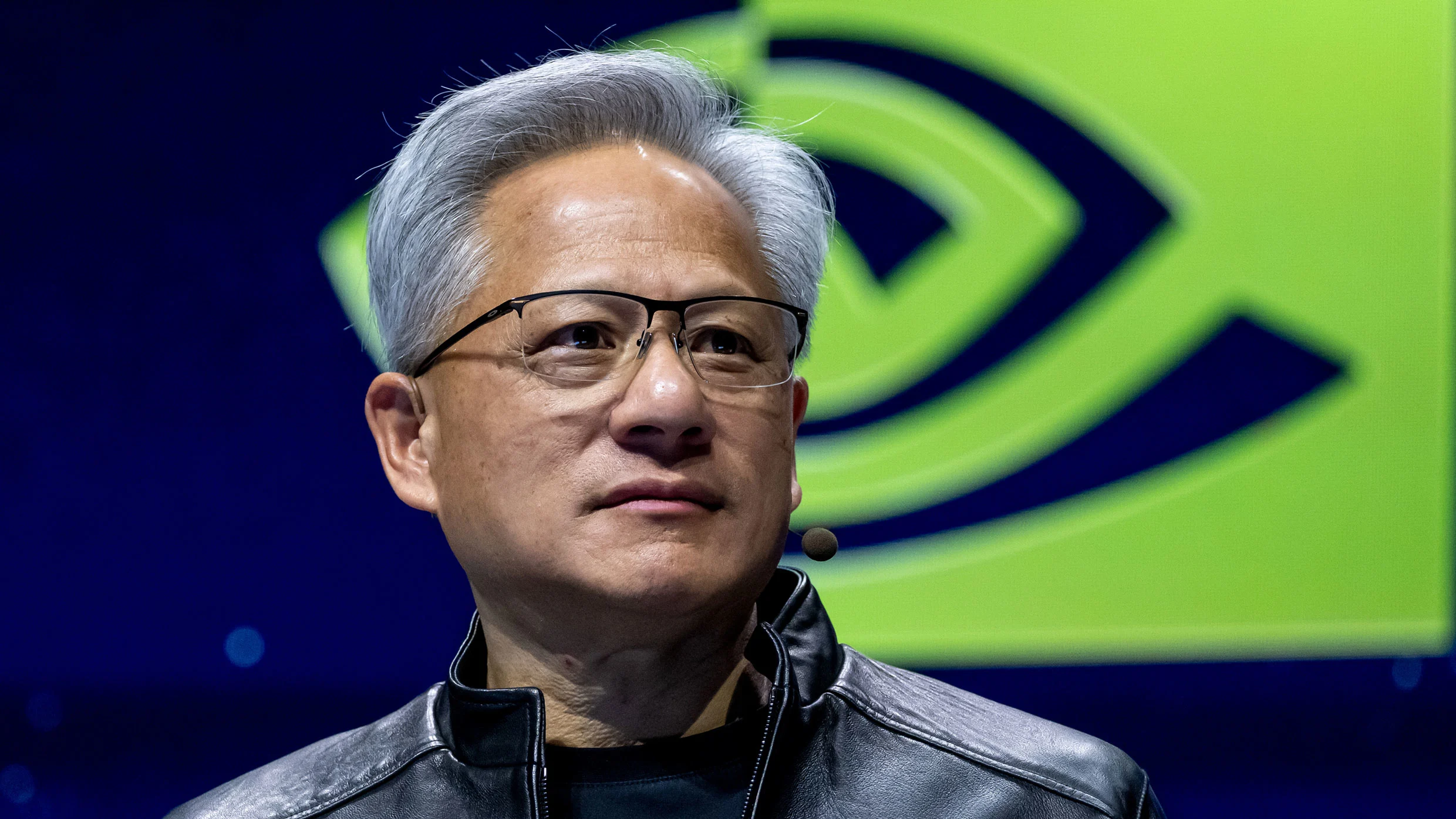
As the delegation settled into the diplomatic rhythms of the summit, the atmosphere was a mix of calculated cordiality and underlying tension. Among those seen enjoying the amenities of the presidential aircraft were Tesla’s Elon Musk, Apple’s Tim Cook, and representatives from tech giants including Qualcomm, Micron, and Cisco. Yet, the most notable presence was perhaps the one that almost wasn’t: Jensen Huang, the CEO of Nvidia. His eleventh-hour inclusion in the delegation has sent shockwaves through the diplomatic and tech communities, signaling a potential shift in the White House’s strategy regarding the most critical component of the 21st-century economy: the AI chip.
The Chronology of an Eleventh-Hour Inclusion
The lead-up to the summit was characterized by intense, behind-the-scenes maneuvering. For weeks, the guest list for the presidential flight had been circulated among top-tier advisors, and conspicuously absent was Huang. Given Nvidia’s status as the linchpin of the global Artificial Intelligence race, his exclusion was widely interpreted by analysts as a deliberate signal from the Trump administration—an attempt to insulate the most sensitive elements of American industrial policy from the unpredictability of direct bilateral negotiations.
However, just hours before the wheels went up at Joint Base Andrews, the passenger manifest was updated. Huang’s inclusion was not merely a logistical change; it was a policy pivot. Sources familiar with the administration’s planning suggest that the decision was finalized during a late-night session in the Oval Office, where officials weighed the risks of excluding the architect of modern AI hardware against the benefits of having him at the negotiating table.
This last-minute change serves as a microcosm of the broader U.S.-China relationship. It reflects a delicate, often erratic dance between Washington’s desire to maintain a technological stranglehold on Beijing and the practical reality that the global tech ecosystem is too interconnected to be easily severed.
Supporting Data: The Resilience of China’s Domestic Semiconductor Push
The urgency of the summit is underscored by mounting evidence that U.S. export restrictions—designed to starve China’s AI ambitions—are having unintended, potentially counterproductive effects. While the White House has long operated under the assumption that cutting off access to high-end Nvidia GPUs would cripple China’s ability to train large-scale AI models, recent data suggests a different narrative.
China’s integrated circuit export data for April paints a compelling picture of defiance. Shipments have doubled year-over-year in value, reaching a staggering $31.1 billion. This growth indicates that, rather than collapsing under the weight of U.S. sanctions, China’s domestic semiconductor industry is undergoing a period of accelerated maturation.
"Chinese semis are more confident now they can figure out how to catch up to the U.S. in a reasonable amount of time," says Rui Ma, a China tech analyst and creator of Tech Buzz China. This sentiment is shared by observers who note that the "pain" of U.S. restrictions has acted as a catalyst for state-funded research and development, effectively forcing Chinese firms to innovate or perish. The result is a more self-reliant, albeit still catching-up, Chinese semiconductor sector that is increasingly immune to the leverage of U.S. export controls.
Official Responses and Strategic Perspectives
The differing views on Huang’s role highlight the widening chasm between the American political establishment and the Silicon Valley C-suite. Ryan Fedasiuk, a fellow at the American Enterprise Institute specializing in China, articulates the administration’s cautious stance: "The Trump administration views access to computing power as too strategically important to compromise. Better to keep American industry out of the CCP’s crosshairs and leave the substance of policy negotiations to the governments."
Conversely, Jensen Huang has been a vocal critic of the administration’s approach. He has repeatedly warned that by walling off the Chinese market, the U.S. is inadvertently accelerating China’s drive for self-sufficiency. In previous public statements, Huang did not shy away from using the President’s own vernacular, characterizing the current trade restrictions as a "loser mentality" that jeopardizes U.S. technological supremacy by forcing China to develop a competing, and potentially superior, hardware stack.
This clash of philosophies—one favoring total decoupling and the other emphasizing the dangers of forcing a competitor into a corner—is what makes Huang’s presence on Air Force One so significant. It suggests that, for the first time in this administration’s tenure, the voices of industry are being invited to challenge the dogmas of the security establishment.
Implications: A New Era of "Silicon Diplomacy"
The arrival of the delegation in Beijing marks the beginning of what could be termed "Silicon Diplomacy." Analysts are already speculating that Nvidia’s involvement is not merely about market access, but about the broader geopolitical chessboard.
"It might be that Trump sees Nvidia’s access to China and China’s access to Nvidia’s chips as something he can bring to the table in relation to other issues like Chinese help on Iran or regional security in the South China Sea," says William Matthews, a senior research fellow at Chatham House. Under this framework, the semiconductor industry is no longer just a sector of the economy; it is a bargaining chip of the highest order.
The implications of this strategy are profound. If the Trump administration successfully leverages tech access for diplomatic concessions, it would signify a return to a "realpolitik" style of governance, where commercial interests are explicitly subordinated to, and utilized for, national statecraft.
However, this approach carries significant risks. By treating Nvidia as a tool of foreign policy, the U.S. risks destabilizing the very companies that give it its competitive edge. If China views these companies as extensions of the U.S. government, they may face retaliatory actions that could disrupt global supply chains, affecting everything from consumer electronics to automotive manufacturing.
Conclusion: The Road Ahead
As the summit proceeds, all eyes will be on the closed-door meetings where Huang, Cook, and their counterparts interact with their Chinese counterparts. The outcome of these discussions will likely determine the tone of the U.S.-China tech relationship for the remainder of the decade.
Will the administration double down on its strategy of containment, using its corporate titans as proxies for state power? Or will it seek a more nuanced, albeit fragile, equilibrium that recognizes the mutual dependency of the two superpowers?
One thing is clear: the presence of Jensen Huang on Air Force One is a tacit admission that the old ways of managing the tech war—isolated policies, sweeping bans, and the exclusion of private-sector input—are no longer sufficient. As the world watches, the intersection of silicon and sovereignty has become the defining frontier of modern international relations. The summit in Beijing is not merely a negotiation; it is a test of whether the global order can withstand the collision of two technological titans, or if the digital iron curtain is destined to become a permanent feature of our global landscape.
