

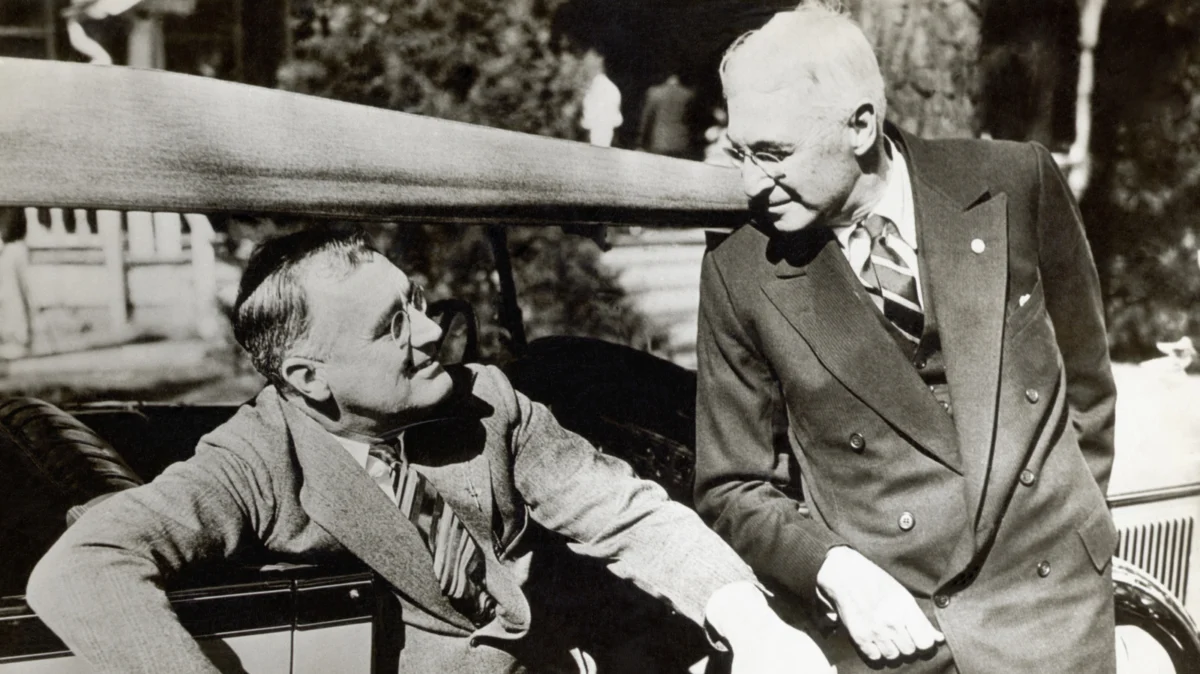
In the quiet hum of a highway, stripped of the static of modern connectivity, the conversation takes on a different cadence. It is a space where truth emerges, where the veneer of public persona fades, and where the raw humanity of a historical figure is laid bare. For the automotive enthusiast and the history buff alike, the dream of a "dream drive" is a recurring fantasy: if you could hand the keys to a classic car—or perhaps let someone else take the wheel—to any figure from the annals of time, who would you choose?
This is not merely a question of logistics or historical trivia. It is a thought experiment about character, intellect, and the profound, silent intimacy of the open road. Whether it’s navigating the rolling hills of the English countryside or the vast, sun-bleached expanses of the American West, the passenger seat is a pulpit for the profound.
The Intersection of History and the Open Road
To engage in this exercise, we must suspend the limitations of temporal reality. We assume that our chosen passenger—whether they lived in the 14th century or the 1940s—can grasp the mechanics of internal combustion, the nuance of modern traffic laws, and the complex engineering of synthetic tires and fuel injection. Once those technical hurdles are cleared, we are left with the fundamental question: whose perspective would illuminate our journey, and what stories would they choose to tell when the engine is the only thing providing a soundtrack?
For many, this is an exercise in seeking answers to the unanswerable. History books provide us with dates, battles, and policy shifts, but they rarely capture the inflection of a voice or the cadence of a thought process in real-time. A road trip offers the perfect environment for this; it is a space of forced proximity and sustained attention, far removed from the pressures of the court, the battlefield, or the printing press.
A Case Study in Intellectual Integrity: The George Orwell Experience
In considering this question, it is essential to look at the figures who shaped our worldviews. George Orwell, the pseudonym of Eric Arthur Blair, remains one of the most compelling candidates for such a journey. While many might be tempted to choose a figure of pure power or technological genius, there is a distinct allure to the company of a man who viewed the world with such brutal, crystalline clarity.
The Evolution of a Chronicler
Orwell’s life was a masterclass in the human condition. From his early, formative years serving in the Imperial Police in Burma—a period that birthed his deep-seated disdain for colonial structures—to his time spent living in destitution in Paris and London, Orwell’s experiences were as varied as they were grueling.
His later commitment to fighting fascism in the Spanish Civil War, where he was wounded and subsequently hunted by Stalinist factions, provided the crucible for his most enduring works. It was this specific intersection of lived experience and political disillusionment that birthed Animal Farm and 1984.
Why the Passenger Seat Matters
If one were to pick up Orwell for a drive—perhaps in a classic, understated British cruiser like a Jaguar XJR—the conversation would likely transcend the mundane. We would not want to discuss the geopolitical ramifications of his work; he would likely find that tedious. Instead, one would hope to hear him recount the granular details of his life: the smell of the Burmese air, the specific flavor of a meal shared with fellow militiamen in the trenches of Aragon, or the sheer, visceral terror of being betrayed by one’s own ideological allies.
Orwell’s 6 Rules for Writing, which he outlined in his seminal essay "Politics and the English Language," serve as a testament to his obsession with precision. He despised the "inflated" language of bureaucracy and the "meaningless" terminology of politics. A road trip with him would be a lesson in brevity. He would, undoubtedly, critique the radio commercials and the signage along the route, forcing his driver to consider the weight and intent of every word they uttered.
The Constraints of History: A Chronology of Influence
The selection of a passenger is, by definition, a reflection of the driver’s own values. When we look at history through the lens of potential companionship, we see a shift in how we interpret the past.
- The Colonial Lens (Early 1900s): Figures like Orwell or even figures of the early industrial age offer a bridge between the analog past and the high-speed future.
- The Pioneers of Motion (Early to Mid-20th Century): Figures like Maria Teresa de Filippis, the first woman to race in a Formula 1 Grand Prix, offer a different kind of conversation. For the gearhead, a drive with de Filippis would be an education in grit, mechanical sympathy, and the sheer audacity required to break into a male-dominated sport in the 1950s.
- The Philosophical Giants: Choosing someone like Socrates or Marcus Aurelius would move the conversation away from the machine and into the realm of the psyche.
Supporting Data: What Makes a "Good Hang"?
In modern social science, the concept of the "ideal conversation partner" is often linked to the ability to engage in "active listening" and "intellectual vulnerability." When we analyze why we might choose a historical figure, we are often looking for someone who challenged the status quo.
For instance, consider the logistical implications:
- The Vehicle: It must be a vehicle that facilitates conversation—a classic sedan or a luxury tourer, not a cramped two-seater that necessitates shouting over the exhaust.
- The Setting: An open road, preferably one with significant scenery, which serves as a prompt for memory.
- The Outcome: The goal is not to "fix" history or to warn the figure of their impending demise. It is to bear witness to their perspective, to learn how they processed the world they inhabited.
Official Responses and Public Sentiment
The question of "who would you ride with" has been posed in various forums, from automotive enthusiast sites like Jalopnik to history podcasts and literary circles. The responses are consistently revealing.
While some prioritize historical titans like Winston Churchill (for the wit) or Amelia Earhart (for the sense of adventure), there is a growing trend toward "the observer." People want to sit with those who saw the world as it was, not necessarily those who were trying to bend it to their will. There is a profound desire for authenticity—a quality that is increasingly rare in our curated, social-media-driven era.
Implications for the Modern Enthusiast
Why does this question matter in the year 2024? Because we live in an era of unprecedented distraction. We are rarely truly present with the person sitting next to us, let alone a figure from history. By imagining a road trip with a historical figure, we are reclaiming the importance of the long-form conversation.
We are acknowledging that history is not just a series of events, but a series of lived moments—some of which happen in the passenger seat of a car. It reminds us that our own "historical" lives are unfolding right now, and that the quality of our company and our conversations defines the journey.
Conclusion: The Long Road Ahead
Whether it is George Orwell, Maria Teresa de Filippis, or a figure far removed from our own interests, the exercise remains a powerful tool for self-reflection. If you were to pick up your chosen historical figure today, would you have anything worth saying? Would you be able to listen with the intensity required to honor their time?
The car is a capsule, a private sanctuary in a public world. It is where we think, where we process, and where we dream. By inviting a historical figure into that space, we are not just asking a question about them; we are asking a question about ourselves. We are asking what we value, what we fear, and what we hope to learn before the journey comes to an end.
So, the next time you find yourself on a long, winding road with the radio off and the world passing by, ask yourself: who is sitting in that passenger seat? And more importantly, are you listening to what they have to say?
