

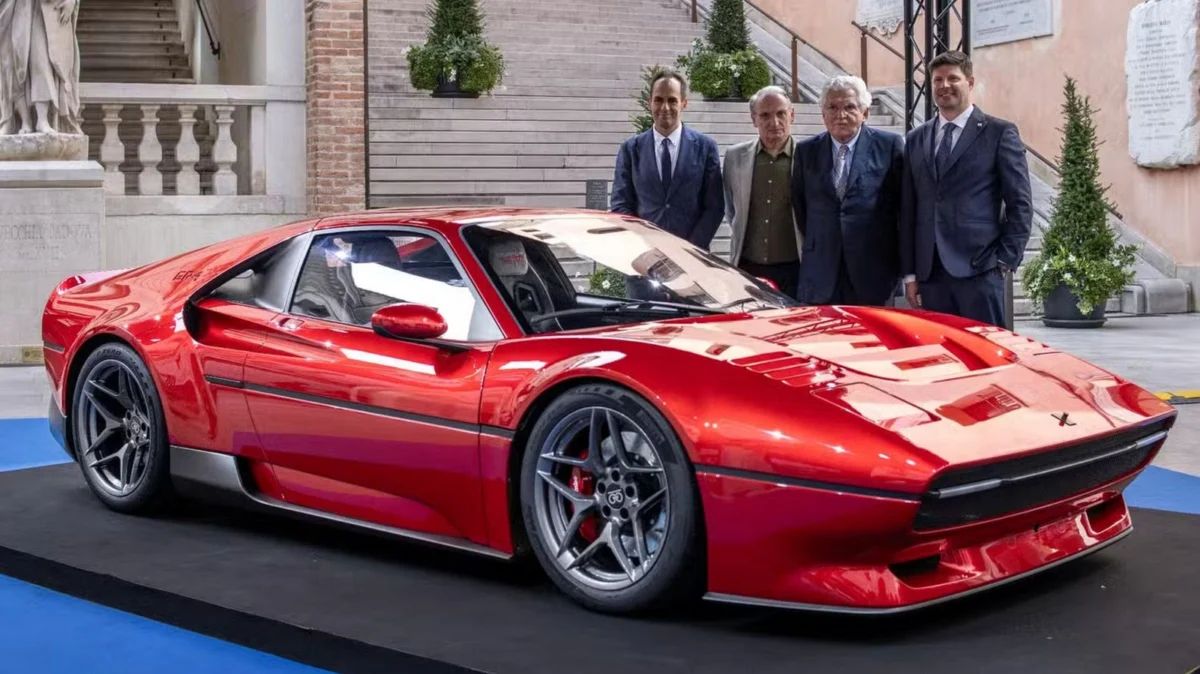
In an automotive landscape increasingly dominated by hybrid hypercars, software-defined cockpits, and curb weights that balloon with every model generation, a new contender has emerged from the Italian workshop of AC Motorsport. The Michelotto Gruppo 4 Tributo is not merely a restomod; it is a spiritual and technical resurrection of one of Ferrari’s most evocative chapters. By blending the soul of the 1970s rally-bred 308 with cutting-edge composite engineering, AC Motorsport and legendary racing house Michelotto have created a machine that prioritizes the raw, visceral connection between driver and road over the sterile pursuit of horsepower benchmarks.
Main Facts: A Lightweight Masterpiece
The Michelotto Gruppo 4 Tributo is a purpose-built, boutique sports car that pays homage to the legendary Ferrari 308 GTB rally cars. While it draws heavily on the iconic Pininfarina silhouette of the 1970s, the car is an entirely new construction. At its heart lies a custom tubular chassis cloaked in lightweight composite body panels, ensuring that the Tributo is not weighed down by the compromises of a production-based platform.
The specifications are a masterclass in balance:
- Engine: Naturally aspirated 3.4-liter V8.
- Output: 380 horsepower and 269 lb-ft of torque.
- Transmission: Dog-leg manual gearbox.
- Weight: 950 kg (2,094 lbs).
- Construction: Tubular space-frame chassis with carbon fiber bodywork.
The most striking figure in this spec sheet is the weight. At 950 kg, the Gruppo 4 Tributo is 140 kg (308 lbs) lighter than the original 308, an achievement that feels almost revolutionary in an era where even entry-level sports cars regularly tip the scales well beyond 1,500 kg.
Chronology: From WRC Dust to Modern Boutique Production
To understand the significance of this vehicle, one must look back at the original Ferrari 308’s tenure in the World Rally Championship (WRC). In the late 1970s and early 1980s, the 308 GTB was adapted into Group 4 rally specifications by Michelotto, a Padova-based engineering firm with deep ties to Ferrari. These cars were not just icons of design; they were competitive, snarling machines that tackled the most treacherous terrain in rallying.
The Genesis of the Tributo
The current project was born from the vision of Francesco Calzavara, who founded AC Motorsport only two years ago. Having cut his teeth at Michelotto—a firm that remains synonymous with Ferrari’s endurance and rally racing success—Calzavara possessed the technical pedigree and the institutional knowledge required to approach such an ambitious task.
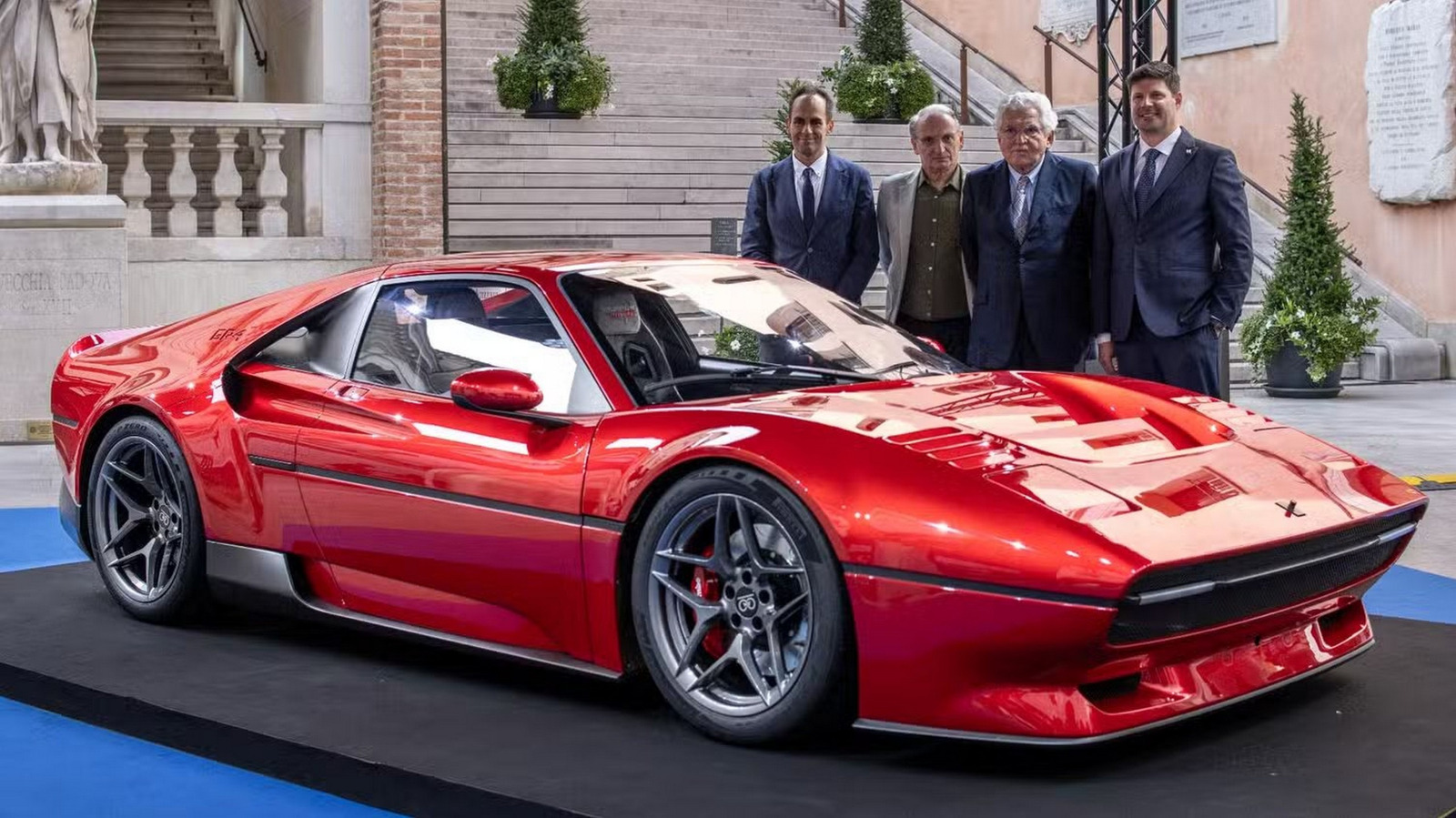
The development of the Gruppo 4 Tributo represents a two-year intensive cycle. Rather than taking a donor chassis and modifying it, the team opted for a bespoke ground-up build. This allowed them to optimize the weight distribution and structural rigidity in ways that a simple restoration could never achieve. By late 2025, the prototype began its testing phase, signaling a shift in the "restomod" market toward high-performance, track-focused boutique manufacturing.
Supporting Data: The Physics of "Less is More"
Modern supercars have become victims of their own technology. The shift toward hybrid systems, complex all-wheel-drive architectures, and massive battery arrays has pushed curb weights into territory previously reserved for luxury sedans. The Gruppo 4 Tributo offers a necessary counter-narrative.
Power-to-Weight Ratio
With 380 horsepower pushing a mass of just 950 kg, the car boasts a power-to-weight ratio of approximately 400 hp per tonne. This exceeds many modern "performance" cars that require 600+ horsepower to achieve similar acceleration metrics. Because the car is so light, the suspension geometry does not need to be overly stiff to control body roll, allowing for more mechanical grip and a more forgiving, communicative chassis.
The Drivetrain Philosophy
The decision to utilize a naturally aspirated 3.4-liter V8 is a deliberate rejection of turbocharging. While turbos offer easy torque, they often dampen the throttle response and the auditory experience—two pillars of the traditional Ferrari identity. By sticking to a naturally aspirated power plant, AC Motorsport ensures that the Tributo delivers a linear power delivery that builds in intensity as the revs climb, mirroring the character of the racing Ferraris of the past. The inclusion of a "dog-leg" manual transmission is the final nod to the purist, forcing the driver to engage physically with the gear changes, a practice largely abandoned by major manufacturers.
Official Responses and Design Analysis
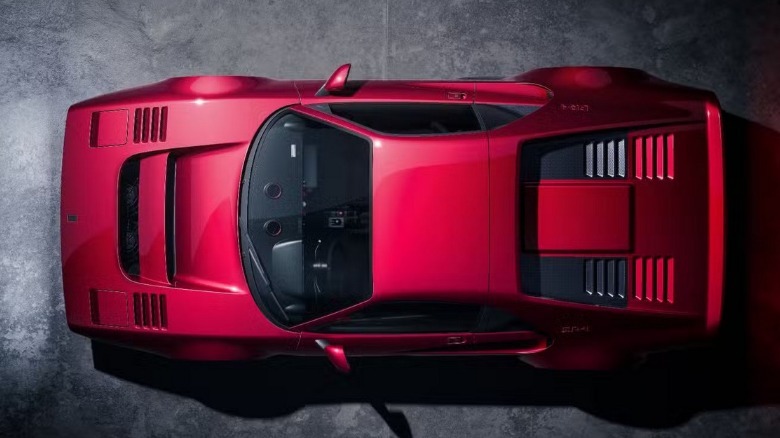
Designers at AC Motorsport and Michelotto have meticulously studied the 308’s original DNA to modernize its footprint without losing its soul. The low-slung nose, the blacked-out grille, and the iconic pop-up headlights—integrated with modern lighting technology—provide an immediate visual link to the 1970s. However, the flared fenders, aggressive side intakes, and the exposed carbon fiber rear diffuser distinguish the Tributo as a modern performance machine.
The Interior: Function Over Form
While the exterior is a work of art, the interior of the prototype remains functional and utilitarian. It is a space designed for focus. A flat carbon fiber dashboard houses a digital display for telemetry, while the center console is a sea of analog switches and dials. The absence of infotainment systems or plush upholstery is not a cost-cutting measure; it is a statement of intent. The interior exists to facilitate the drive, featuring a three-spoke steering wheel, a metal gated shifter that acts as a tactile centerpiece, and carbon fiber racing seats that hold the driver in place during lateral G-force events.
Implications: The Future of the Boutique Sports Car
The Michelotto Gruppo 4 Tributo lands at a time when enthusiasts are becoming increasingly vocal about their disillusionment with modern "supercar" aesthetics. As Ferrari moves toward the 849 Testarossa and F80 era—vehicles characterized by complex, sometimes polarizing aero-heavy styling—the Gruppo 4 Tributo serves as a reminder of a time when beauty was defined by clean lines and mechanical transparency.
The Market Shift
This project highlights a growing trend: the emergence of "boutique OEMs." These are companies that operate in the shadow of major manufacturers, utilizing historical licensing or deep engineering partnerships to produce small-batch, high-value vehicles. These cars are not designed to compete with the F80s of the world in terms of Nürburgring lap times or 0–60 sprints. Instead, they compete for the soul of the driver.
The Legacy of the 308
By reviving the Group 4 spirit, AC Motorsport has created a vehicle that is not just a car, but a cultural artifact. It challenges the industry to reconsider what "performance" actually means. Is it the ability to accelerate to 60 mph in under two seconds with the help of electric motors? Or is it the ability to feel every vibration of the engine through the chassis, to manually select a gear, and to navigate a corner with a machine that feels like an extension of one’s own body?
What Lies Ahead?
As of now, AC Motorsport has remained tight-lipped regarding the production numbers and pricing. Given the collaborative nature of the project with Michelotto, it is expected that the Tributo will be a highly exclusive, low-volume production run. Potential owners should anticipate a price point reflective of its bespoke engineering and its pedigree.
The Michelotto Gruppo 4 Tributo is more than just a nod to history. It is a testament to the fact that when you strip away the excess, the weight, and the digital interference of the modern age, you find the purest form of motoring. It is a loud, unapologetic, and beautifully crafted tribute to a time when Ferrari racing was synonymous with the smell of high-octane fuel and the sound of a V8 at full song. For the automotive purist, the Tributo is not just a welcome arrival—it is perhaps the most important car of its generation.
