

For many individuals navigating their seventh decade, the pursuit of fitness often feels like a double-edged sword. On one hand, the medical community correctly emphasizes the importance of cardiovascular health and bone density; on the other, the traditional "go-to" exercises—such as jumping jacks, high-impact aerobics, or rapid plyometrics—can feel increasingly punishing.
As a movement specialist, I frequently encounter clients over 60 who arrive at the clinic frustrated. They have attempted to stay active, only to find their joints flaring up, their lower back seizing, and their confidence in their own mobility waning. The prevailing advice—"just keep moving"—is fundamentally sound, but the method of movement is where many go wrong. When the body’s mechanical foundation is compromised, adding high-impact stress is akin to putting a heavy load on a structural beam that has already developed a hairline crack.
To regain true mobility, we must pivot away from the obsession with intensity and toward the refinement of coordination.
The Myth of High-Impact Necessity
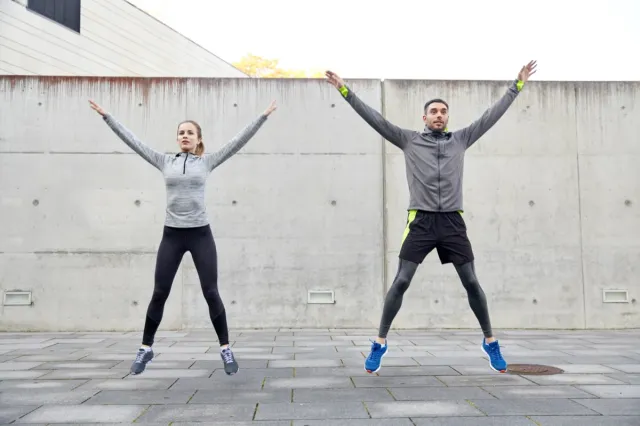
In the fitness industry, jumping jacks are often touted as the "gold standard" for a quick, full-body cardiovascular workout. They are accessible, require no equipment, and engage the body in the frontal plane. However, for the aging athlete or the active senior, they present a significant biomechanical hurdle.

Jumping jacks generate a substantial amount of downward force. In a healthy, well-aligned body, this force is distributed evenly through the kinetic chain. But when an individual experiences diminished proprioception (the body’s ability to sense its position in space), restricted range of motion, or subtle misalignments, that force does not dissipate. Instead, it is "dumped" directly into the joints. Over time, this repetitive, high-velocity impact leads to inflammation, cartilage degradation, and chronic pain. Before one can "jump," one must first ensure that the body is capable of "landing" and absorbing force safely.
The Sacrum: The Body’s Silent Structural Hub
At the center of this biomechanical conversation sits the sacrum, a triangular bone located at the base of the spine. It is perhaps the most misunderstood and undervalued player in human movement. The sacrum serves as the critical junction point where the force of gravity from above meets the ground reaction force from below.
The sacrum is not a static block of bone; it is suspended within a sophisticated network of ligaments that anchor it to the pelvis and the lumbar spine. These connections form the sacroiliac (SI) joints. Contrary to popular belief, the sacrum does not require massive, sweeping ranges of motion. Instead, it thrives on subtle "micro-movements."
In clinical practice, we observe that these micro-movements are the architects of our "macro-movements"—the everyday actions like walking, sitting, and reaching. If the sacrum becomes "stuck" due to sedentary habits, previous injury, or compensation patterns, the entire kinetic chain suffers.
The Trampoline Analogy
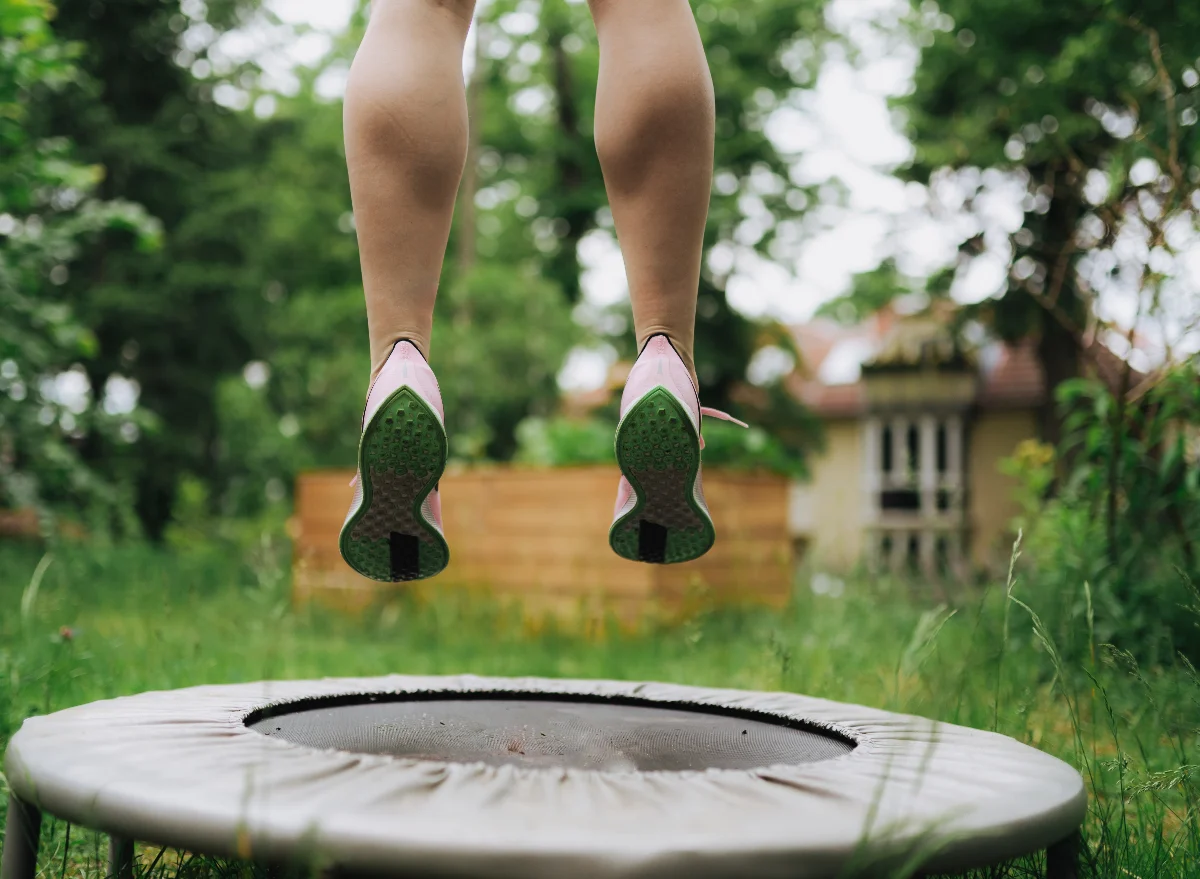
To visualize this, imagine the sacral area as a trampoline. The sacrum is the jumping surface, and the surrounding ligaments are the springs. When the system is balanced, the "springs" allow for fluid force distribution, providing resilience and efficiency.
When the sacrum gets stuck—often in a state of slight rotation or side-bending—it essentially locks one side of the "trampoline." As you continue to move, you are no longer jumping on a balanced surface. You are stressing the hardware. This leads to the classic symptoms of aging-related dysfunction:
- Chronic hip discomfort.
- Persistent lower back tightness.
- Changes in gait (the way you walk).
- Functional leg length discrepancies.
The Integrated Pressure System
The sacrum does not operate in a vacuum. It is the centerpiece of an internal pressure system defined by the diaphragm at the top and the pelvic floor at the bottom. These structures are linked by fascial connections—specifically a powerful ligamentous chain that runs from the pubic bone in the front to the coccyx in the back.
This connection is vital for more than just posture; it is the foundation of bladder and bowel health. When the sacrum is restricted, it creates torsion through these fascial connections, effectively "choking" the pelvic floor’s ability to function correctly. If your breathing is shallow or if your diaphragm is rigid, you lose the ability to regulate internal pressure. When you add high-impact activity like jumping to this already compromised system, you are essentially asking an unbalanced structure to bear a load it cannot manage.
A New Protocol: Restoring Function Through Four Phases
If we want to reclaim our mobility, we must stop viewing exercise as a battle against our joints. Instead, we must treat movement as a process of restoring communication between the brain, the pelvic floor, and the spine. The following four-phase protocol is designed to re-educate your nervous system.
Phase One: The Hands and Feet Sacral Walk
This is the foundational stage. Most people, when asked to move while seated, drag their legs or use their feet to push themselves along the floor. In this phase, we learn to initiate movement from the sacrum and ilium (the "sit bones").
- The Objective: Learn to lift the hip rather than slide the leg.
- Muscles Targeted: Glutes, hip stabilizers, and the deep core.
- The Key: Use your hands for balance, but ensure the movement of the hip is what drives the progression forward.
Phase Two: Hands-on Shins
Once you have mastered the hip lift, we remove the support of the floor and transition to holding the shins. This requires more activation from the pelvic floor and deeper core stability. Moving backward in this position is intentionally difficult; it challenges your proprioception and forces the sacrum to track through its intended range of motion.
Phase Three: The No-Hands Sacral Walk
With the hands removed from the shins, the arms are no longer providing stability. You are now relying entirely on your own internal structural integrity. If you find yourself reaching for the floor, it is a sign that your core is not yet ready to stabilize the weight of your torso independently. Return to Phase Two to build more control.
Phase Four: Walking on Sits Bones
This is the pinnacle of the protocol. By walking entirely on your sit bones without hands or feet touching the floor, you are training the body to manage its own center of gravity. This movement demands a high level of pelvic floor engagement and deep core integration. It is not about speed; it is about the quality of every single shift in weight.
Implications for Long-Term Health
The implications of this approach extend far beyond the gym. By focusing on sacral health and pressure management, we are doing more than just preventing joint pain; we are supporting the health of our internal organs, improving our balance, and reducing the risk of falls—the leading cause of injury among those over 60.
Transitioning from "high-impact" to "high-precision" movement is not a sign of slowing down. On the contrary, it is a sophisticated upgrade to your fitness strategy. It acknowledges that your body is a complex, integrated system that deserves to be treated with care rather than brute force.
Avoiding Common Pitfalls
As you begin this journey, keep the following "Golden Rules" in mind:
- Stop Chasing Fatigue: Do not measure the success of a workout by how much you sweat or how sore your muscles are the next day. Measure success by the quality of your movement and the absence of joint pain.
- Respect the "Stuck" Points: If you feel a "dead spot" or a resistance in your movement, do not force through it. That is your body telling you where the dysfunction resides. Slow down and breathe through it.
- Consistency Over Intensity: Ten minutes of mindful sacral work every day is exponentially more effective than a one-hour, high-intensity workout once a week that leaves you immobile for three days.
By embracing this, you aren’t just protecting your joints for today—you are ensuring that your body remains a capable, resilient vehicle for the decades to come. Your joints were designed to move, but they were also designed to be protected. Start listening to the signals your body is sending, and you will find that "moving well" is the most rewarding goal of all.
