

In an era where the boundary between political discourse and cultural expression is increasingly porous, the art world has found itself at the epicenter of a profound ideological struggle. This week’s developments highlight a growing friction between institutional mandates and individual creative agency, underscored by the South African government’s recent attempts to suppress Palestinian-focused artistic expression and the ongoing labor tensions within American cultural institutions. From the hallowed, echo-filled halls of the Venice Biennale to the picket lines of the Pacific Northwest, the arts are currently serving as a primary site for navigating modern geopolitical crises.
The Censorship of Elegy: A Chronology of Suppression and Resilience
The controversy surrounding artist Gabrielle Goliath’s installation Elegy serves as a stark case study in the weaponization of cultural policy. Back in January, the international art community was confronted with a jarring paradox: South Africa, a nation that had positioned itself as a global leader in human rights by formally accusing Israel of genocide at the International Court of Justice in The Hague, was simultaneously engaging in domestic cultural censorship.
The Official Mandate
The suppression of Elegy was spearheaded by South African Culture Minister Gayton McKenzie. Despite the government’s public stance on the conflict in Gaza, Minister McKenzie—a figure known for his divergent political alignments, including past expressions of support for Israel—moved to nix the installation from the South African pavilion at the Venice Biennale. The justification offered was a thin veil of administrative rhetoric, alleging "foreign intervention" in the curatorial process. These claims, however, were widely dismissed by art historians and critics as a transparent attempt to silence an exhibition that offered a visceral, mournful meditation on Palestinian grief.

The Path to Restoration
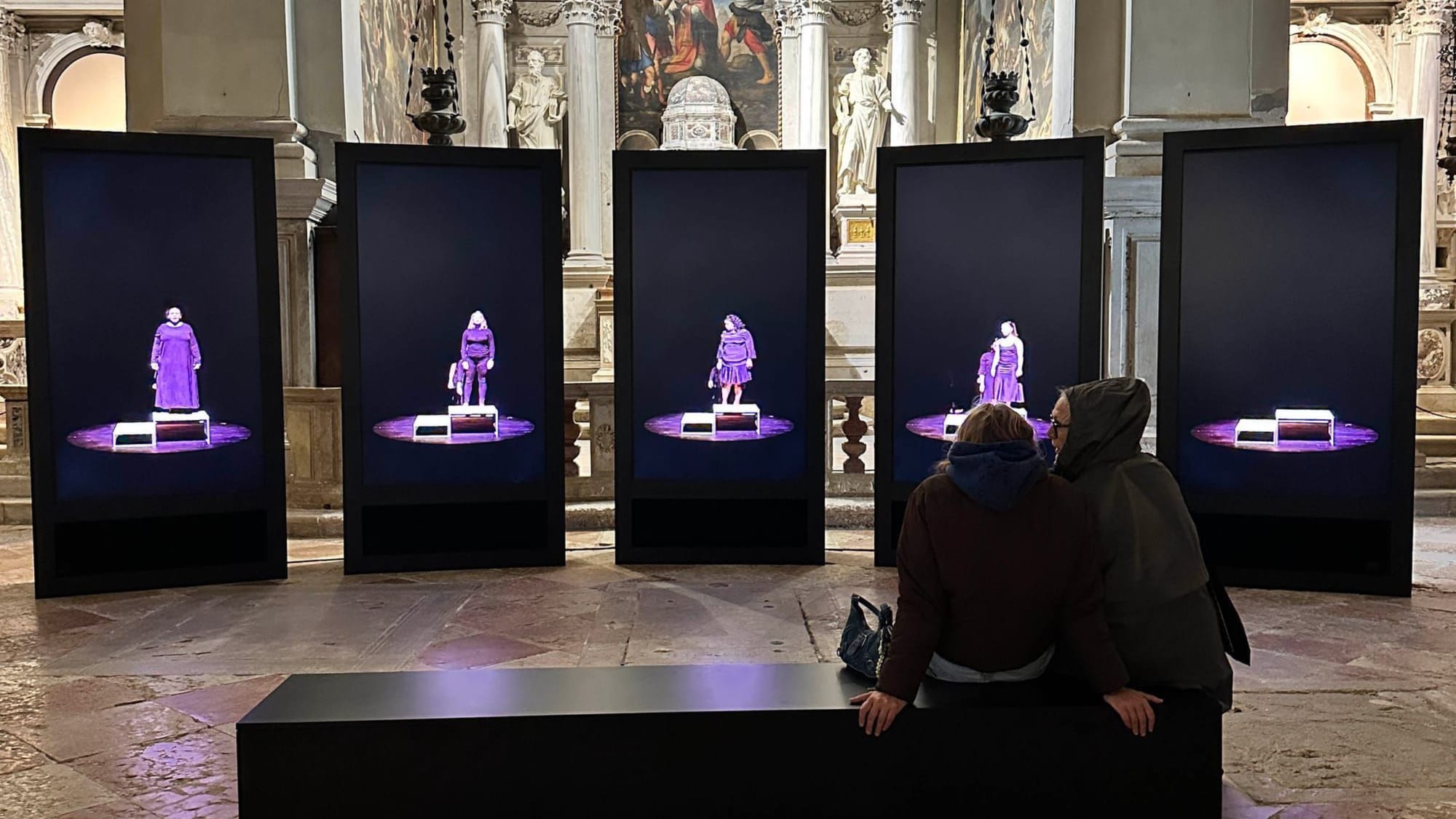
The suppression, however, proved to be a catalyst rather than a conclusion. Rather than allowing the work to vanish, independent organizations and advocates mobilized to ensure that Goliath’s vision reached the public. The exhibition was eventually salvaged and installed in a historic church in Venice, transforming the site into a sanctuary for both art and advocacy.
Critic Aruna D’Souza, reflecting on the installation in her recent review, noted the perversity of the state’s interference. “The censorship of Goliath’s proposed contribution to the Biennale seems especially perverse when confronted with the actual installation, which is hauntingly beautiful and achingly tender,” D’Souza wrote. The exhibition utilizes sound as its primary medium; in the vaulted, reverberant space of the church, the recorded voices of those affected by violence meld into a singular, haunting choir. By forcing the viewer into a space of acoustic immersion, Goliath renders the geopolitical crisis personal and physical, ensuring that the audience is not merely an observer, but an implicated participant in the act of bearing witness.
Geopolitical Solidarity and the Cost of Advocacy
The efforts to silence artistic dissent are not isolated to the South African pavilion. A parallel trend is emerging globally, where artists and photographers who vocalize support for the Palestinian cause face systemic professional "smear campaigns."
British-Nigerian photographer Misan Harriman, known for his poignant visual documentation of social justice movements, has recently found himself at the center of such a conflict. As noted by Hyperallergic staff reporter Rhea Nayyar, Harriman has been subjected to intense scrutiny and organized public backlash due to his vocal solidarity with Palestinians. This pattern of intimidation suggests a broader, systemic effort to isolate creators who integrate their political convictions into their professional practice. The implication is clear: in the current cultural climate, the act of artistic solidarity is being treated as a professional liability, prompting an urgent conversation about the limits of free expression in the creative sector.
The Public Commons and the Institutional Crisis
While international censorship dominates the headlines, a secondary, equally critical struggle is occurring within the domestic sphere. The push for unionization among workers at the Seattle Art Museum (SAM) represents a growing labor consciousness within the museum sector. As the cost of living surges and the gap between administrative salaries and frontline staff compensation widens, workers are increasingly leveraging collective bargaining to demand equity, transparency, and a voice in institutional governance.
This labor movement is inextricably linked to the broader question of what the "public art museum" actually serves. As reader commentary on the current state of the art world suggests—specifically in response to critiques of the Frieze New York art fair—there is a palpable frustration regarding the "contentless-ness" and "elitism" that defines the contemporary market. Critics argue that the modern art world has become an "isolated enclave" for the ultra-wealthy, drifting further away from its potential as a "vibrant Public Commons."
The alienation of the broader public is not merely a complaint; it is an analytical observation of the current state of cultural production. When art becomes an assembly-line commodity, the capacity for profound, socially resonant work—like that of Goliath—is often suppressed, either by state actors or by the market-driven desire for "escape" and "aversion to meaningfulness."
Broadening the Scope: 2026 Cultural Outlook
The landscape of 2026 is further defined by a series of events and initiatives aimed at re-centering the role of the artist as a civic participant.
- ArtPhilly’s "What Now: 2026": This five-week city-wide festival is set to feature over 30 newly-commissioned works. The goal is explicitly focused on sparking national conversations about the future of the United States. By moving art out of the sterile gallery space and into the public sphere, the festival attempts to bridge the gap between high-concept art and the concerns of the average citizen.
- Sonic Interpretations: The Clyfford Still Museum in Denver is hosting an exhibition titled Still in Sound, which invites sound artists to compose multisensory interpretations of abstract paintings. This initiative highlights a trend of moving beyond the visual, encouraging viewers to engage with art through diverse sensory pathways, thereby making abstract concepts more accessible and visceral.
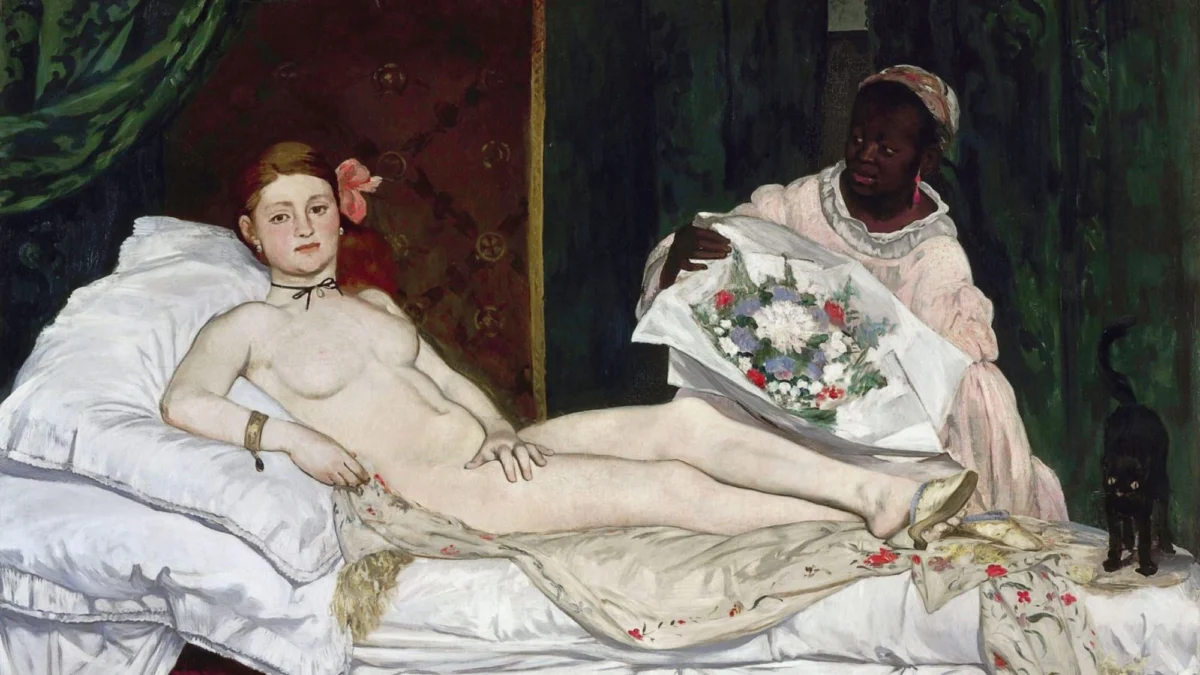
- Revisiting Historical Controversies: The resurgence of interest in art history’s most controversial nudes, such as Édouard Manet’s Olympia, serves as a reminder that the battleground of the body and the image is not new. By contextualizing current controversies alongside historical ones, the discourse reminds us that art has always been, and remains, a mechanism for social agitation.
Implications for the Future of Artistic Freedom
The events of the past few months underscore a significant transition in the role of the artist. We are witnessing the decline of the "neutral" artist. Whether through the censorship of Elegy, the smear campaigns against photographers like Misan Harriman, or the push for unionization at museums, the mandate is clear: neutrality is no longer an option.
The implications for the future are threefold:
- The Decentralization of Gatekeepers: As governments and major institutions attempt to exert control over the narratives presented within their spaces, artists are increasingly turning to alternative venues—churches, public squares, and independent digital platforms—to bypass traditional gatekeepers. This decentralization is essential for maintaining the integrity of protest art.
- The Necessity of Institutional Reform: The labor movements in institutions like the Seattle Art Museum signal that the internal culture of these organizations is shifting. If museums want to remain relevant, they must reconcile their internal labor practices with their external messaging of social justice and inclusion.
- The Re-Politicization of the Public Commons: The critique that the art world has become an "empty artifact of incremental hegemony" is a call to action. To avoid becoming a relic of the Gilded Age, the art world must prioritize accessibility and substantive discourse over marketability.
As we look toward the remainder of the summer, the reading lists—featuring titles by authors like Megan O’Grady and Jennifer Higgie—suggest a continued interest in the intersection of life and art. But as these books and exhibitions show, the most pressing "summer reading" is the news itself. The struggle for the soul of the contemporary art world is not happening in a vacuum; it is a direct reflection of the geopolitical, economic, and moral tensions of our time.
The story of Gabrielle Goliath’s Elegy is ultimately a story of victory—not just for the artist, but for the principle that art, when confronted with the machinery of censorship, possesses an inherent, irrepressible power to demand to be heard. In the echo of that church in Venice, we find the blueprint for the next phase of artistic resistance: a commitment to grief as a form of solidarity, and a refusal to let the silence of the state dictate the boundaries of the human experience.
