

The automotive landscape is undergoing a seismic shift as manufacturers grapple with the dual pressures of electrification and consumer affordability. Into this fray steps the Skoda Epiq, a vehicle that promises to rewrite the rules for entry-level electric SUVs. Positioned as the electric spiritual successor to the popular Kamiq, the Epiq is not merely a battery-powered conversion; it is a clean-sheet design aimed at democratizing the EV experience. With a starting price of £24,950, Skoda is firing a warning shot across the bows of its competitors, proving that zero-emission motoring need not be an exclusive luxury.
Main Facts: The Anatomy of the Epiq
The Skoda Epiq is built upon the Volkswagen Group’s sophisticated MEB+ architecture, a platform specifically engineered to maximize the interior space and efficiency of smaller electric vehicles. By placing the motor at the front and nestling the battery pack beneath the floor between the axles, Skoda has achieved a packaging efficiency that belies the car’s compact dimensions.
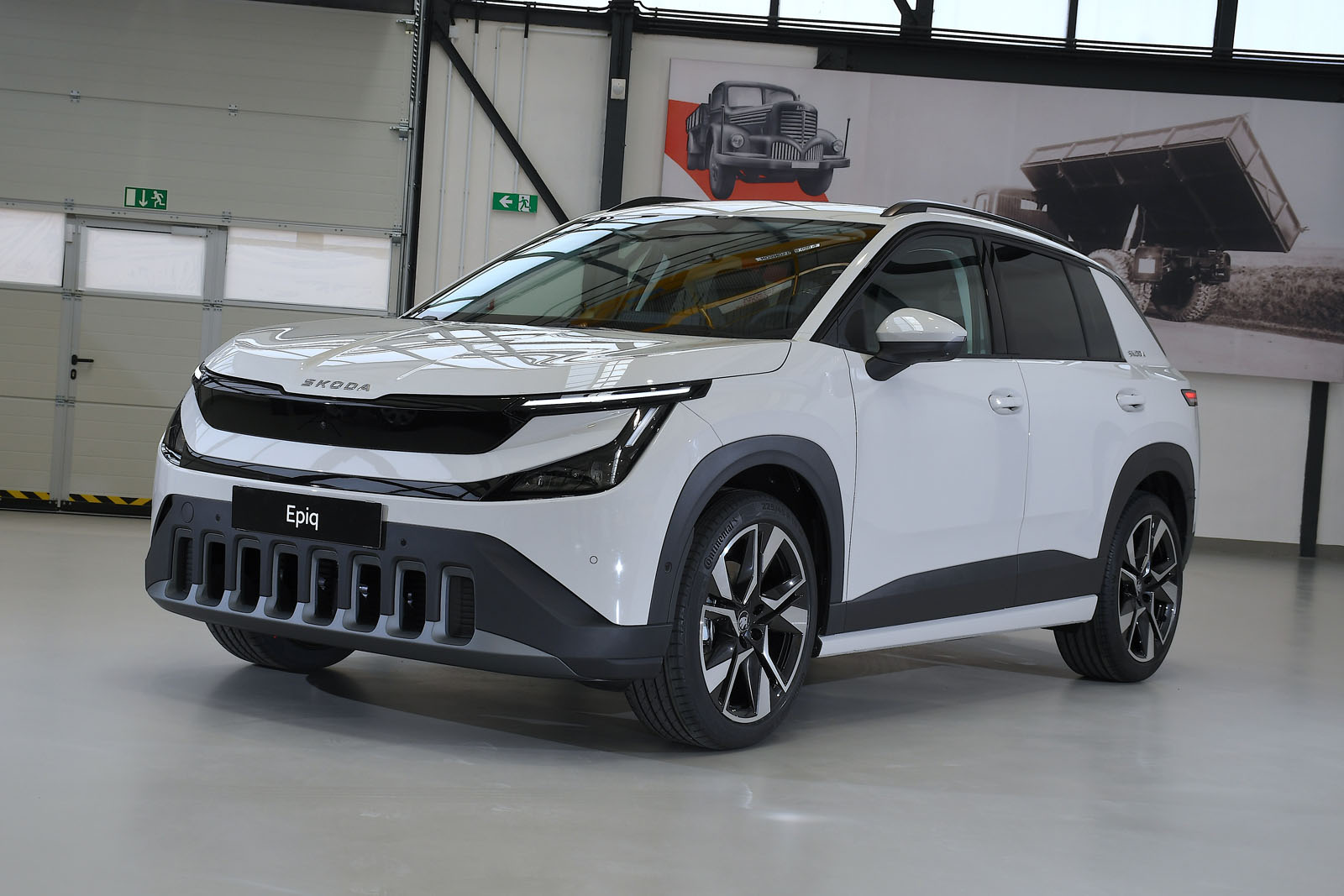
The Epiq serves as a vanguard for the brand’s "Modern Solid" design philosophy. It follows in the footsteps of the larger Elroq, yet it refines the aesthetic with a bolder, more technical edge. Its signature T-shaped lighting arrays at the front and rear, paired with a pronounced, muscular shoulder line, create a silhouette that is both rugged and unmistakably contemporary. This visual identity is not an isolated experiment; it is the blueprint for Skoda’s future design language, which will also be reflected in the upcoming seven-seat Peaq model.
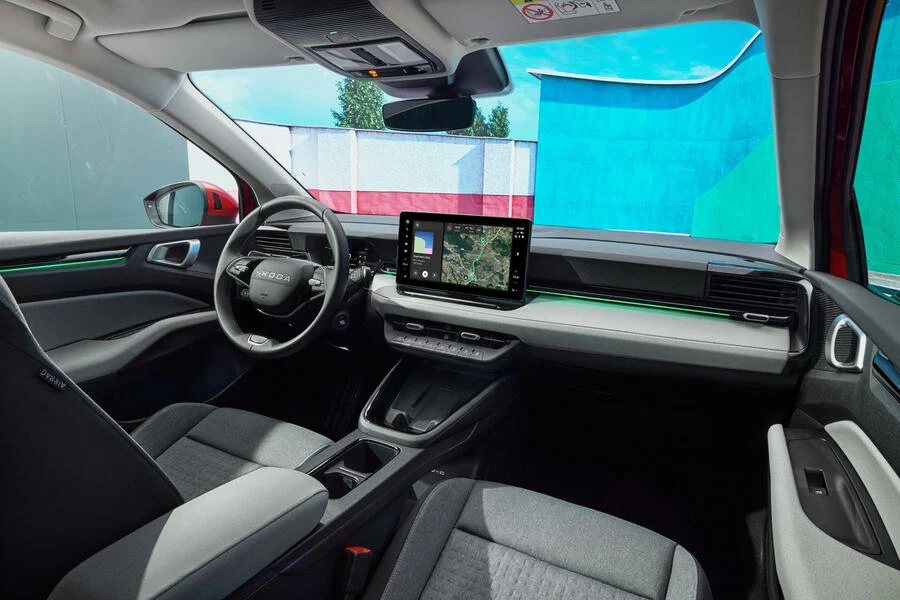
The interior reflects a refreshing pushback against the industry’s trend of burying every function within touchscreen menus. Skoda has prioritized tactile usability, featuring dedicated physical switchgear for climate control and intuitive scroll wheels on the two-spoke steering wheel. This ergonomic focus is designed to reduce driver distraction and enhance the daily ownership experience.
Chronology: From Concept to Consumer Delivery
The journey of the Epiq represents a rapid development cycle for the Czech manufacturer. Following the announcement of the "Modern Solid" design language, Skoda teased the silhouette of the Epiq to signal its intent to dominate the sub-compact SUV segment.
- Initial Concept Phase: The development team focused on balancing the cost-efficiency of the MEB+ platform with the high standards of build quality synonymous with the Skoda badge.
- Design Unveiling: The reveal of the Epiq’s exterior showcased the new T-shaped light signatures, establishing a clear link to the forthcoming Peaq.
- Technical Specification Release: Skoda detailed the split-powertrain strategy, offering two distinct battery options to cater to urban commuters and those requiring greater range for long-distance travel.
- Imminent Market Launch: With the order books set to open, the manufacturing lines at the Volkswagen Group’s facilities are preparing for high-volume production.
- Consumer Deliveries: The final milestone is scheduled for early next year, marking the point at which the Epiq will officially grace European roads.
Supporting Data: Powertrains, Charging, and Practicality
Skoda has opted for a two-tier strategy with the Epiq to ensure it meets the diverse needs of modern drivers.
The Epiq 40 (Entry-Level)
Priced at £24,950, this variant is targeted squarely at urban dwellers. It is powered by a 133bhp electric motor paired with a 37kWh lithium-iron-phosphate (LFP) battery. This configuration offers a range of approximately 190 miles on the WLTP cycle. While modest by long-distance standards, it is perfectly suited for daily commutes and short-to-medium trips.
The Epiq 55 (Long-Range)
Starting at £27,700, the Epiq 55 steps up the performance and utility. It features a more potent 208bhp motor and an energy-dense 52kWh nickel-manganese-cobalt (NMC) battery, pushing the range to 272 miles.
Charging and Efficiency
Both models are designed for fast-paced living. The Epiq 55 supports peak charging speeds of 105kW, while the Epiq 40 is capped at 90kW. Critically, Skoda claims both models can complete a 10% to 80% charge in under 25 minutes, provided the user has access to a rapid DC charger.
Practicality Beyond the Battery
Skoda’s heritage of "Simply Clever" features remains front and center. The boot offers 475 litres of cargo space—a figure that challenges much larger SUVs. Furthermore, the inclusion of a 25-litre "frunk" (front trunk) provides a dedicated, weather-proof compartment for charging cables, keeping the main boot clutter-free. The vehicle also supports vehicle-to-load (V2L) and vehicle-to-grid (V2G) functionality, allowing the car to act as a mobile power bank or even feed energy back into the home or grid.
Official Responses and Strategic Positioning
Skoda executives have been clear regarding the role of the Epiq: it is the bridge to mass-market electrification. In internal briefings, company representatives emphasized that the Epiq is not designed to be a "cheap" car in terms of quality, but rather an "accessible" one. By leveraging the economies of scale offered by the Volkswagen Group’s MEB+ platform, Skoda has managed to keep the price point below that of the combustion-engined Kamiq, a feat that many industry analysts previously thought impossible given the high cost of battery technology.
The focus on physical buttons is a direct response to customer feedback. While competitors have chased the minimalist, screen-heavy interiors seen in tech-focused startups, Skoda has identified that their core demographic values longevity, ease of use, and functional reliability. The inclusion of the "B" gear mode for one-pedal driving also underscores the company’s commitment to efficiency, allowing drivers to recapture energy that would otherwise be lost during braking.
Implications: Changing the Competitive Landscape
The arrival of the Epiq fundamentally alters the competitive hierarchy of the small EV market. Its pricing and feature set place it in a precarious position for rivals.
The Competitive Field
The Renault 4, a major competitor in this segment, offers a range of 250 miles, which is eclipsed by the Epiq 55’s 272-mile capability. Meanwhile, the Kia EV2—another highly anticipated model—offers a slightly higher range of 281 miles via its 61kWh battery. However, the Epiq’s blend of Skoda’s legendary practicality and a lower entry price creates a compelling value proposition that is difficult to ignore.
A Turning Point for EV Adoption
The success of the Epiq will serve as a bellwether for the wider automotive industry. If a legacy manufacturer can successfully produce a high-utility, stylish, and long-range electric SUV at a sub-£25,000 price point, it will effectively remove the "affordability barrier" that has held back many potential EV converts.
Furthermore, the integration of V2G technology suggests that the Epiq is being positioned as a key component of the future smart-home ecosystem. As energy costs rise and the grid becomes more decentralized, the ability for a vehicle to store cheap overnight electricity and discharge it during peak hours adds a layer of economic utility that goes beyond mere transportation.
Final Thoughts
The Skoda Epiq is more than just a new entry in a crowded market; it is a statement of intent. It proves that electric vehicles are maturing. We are moving past the era of experimental, prohibitively expensive EVs and entering a phase of pragmatic, high-quality, and highly capable electric mobility. By blending the "Modern Solid" design language with a deep understanding of what families actually need from a car, Skoda has created a vehicle that is likely to become the new benchmark for the entry-level electric SUV segment. As deliveries commence next year, the rest of the industry will be watching closely to see if the Epiq can indeed deliver on its promise to bring electric driving to the masses.
