

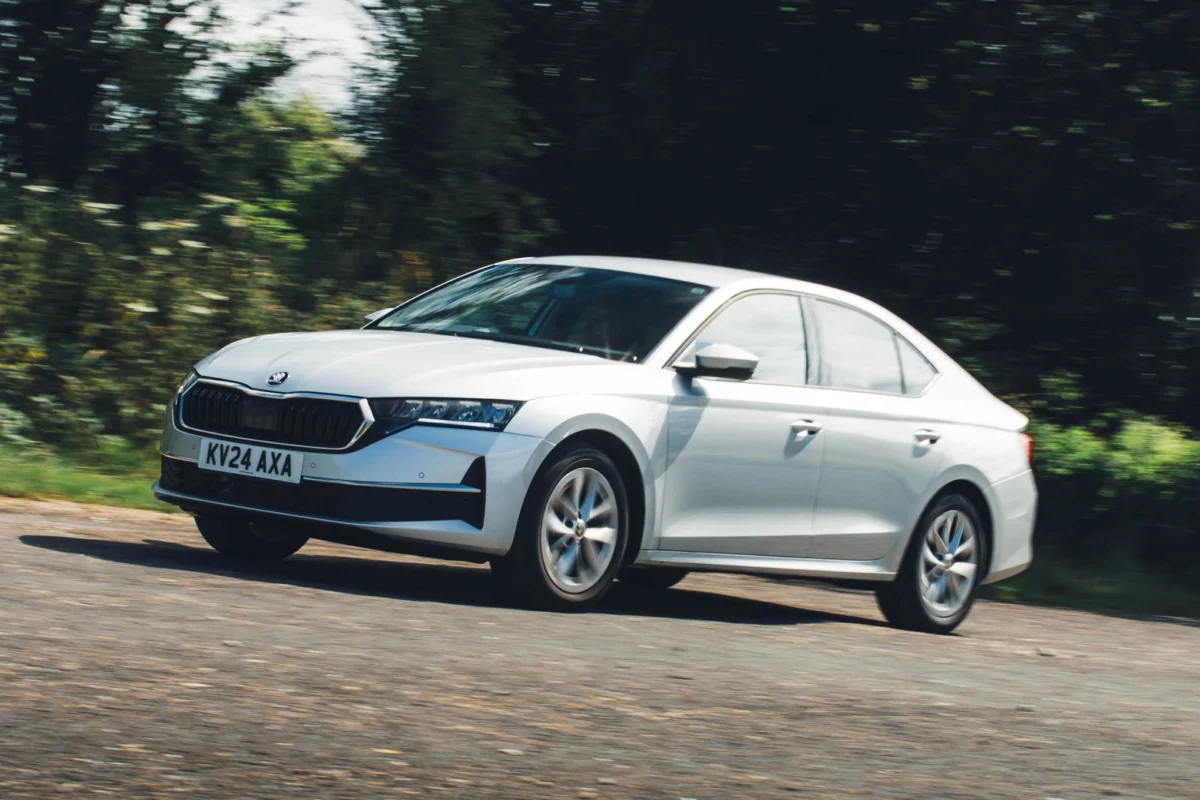
The automotive landscape is undergoing a tectonic shift, yet for Skoda, the strategy remains one of pragmatic versatility. As the Czech manufacturer looks toward the latter half of the decade, it has confirmed that its perennial bestseller, the Skoda Octavia, will undergo a significant powertrain expansion. By integrating a suite of full-hybrid and plug-in hybrid (PHEV) solutions, Skoda aims to provide buyers of both the hatchback and estate variants with the most comprehensive range of engine options in the segment.
The Strategic Shift: Hybrid Power for the Octavia
For years, the Skoda Octavia has served as the backbone of the brand, lauded for its “Simply Clever” philosophy, immense practicality, and value-oriented positioning. Now, that versatility is being extended to its propulsion systems. In a recent discussion with Autocar, Skoda’s technical chief, Johannes Neft, confirmed the brand’s trajectory: “What you can expect for the Octavia is that you will get pure-hybrid and mild-hybrid solutions in future.”
This announcement signals a deliberate move to transition the Octavia into the electrified age while ensuring it remains accessible to a broad spectrum of drivers—from fleet managers looking for tax efficiency to families requiring long-distance touring capabilities. By leveraging the modular architecture of the Volkswagen Group, Skoda is positioning the Octavia to compete aggressively against both traditional rivals and newer, electrified entrants in the D-segment.
A Chronology of Electrification
The path to this hybridization strategy has been calculated and methodical.
- Initial Integration: Skoda began its electrification journey with the introduction of mild-hybrid (mHEV) technology in the fourth-generation Octavia, providing a modest reduction in fuel consumption through 48-volt starter-generator systems.
- The Vision O Concept (2023): At the Munich Motor Show, Skoda unveiled the Vision O concept. This radical design study offered a glimpse into a potential future for the Octavia—one that is entirely battery-electric (BEV). While the concept generated significant industry buzz, it served primarily as a technological roadmap rather than an immediate production precursor.
- The Upcoming Transition (2024-2025): The current shift involves the rollout of full-hybrid (HEV) systems, expected to mirror the debut of similar technologies in the Volkswagen Golf and T-Roc.
- Long-term Outlook (2030 and beyond): Skoda has committed to maintaining a presence in the combustion-engine market for as long as "feasible," with a dedicated production version of an electric Octavia slated for the turn of the decade.
Supporting Data: The Powertrain Architecture
At the heart of the Octavia’s new hybrid offering is the Volkswagen Group’s latest generation of hybrid hardware. This system, which is set to debut in the refreshed Golf and T-Roc, promises to bring efficiency to the fore without compromising the Octavia’s trademark driveability.
The Full-Hybrid System (HEV)
The new self-charging hybrid setup pairs a 1.5-litre turbocharged four-cylinder petrol engine with a seven-speed dual-clutch automatic transmission (DSG). The system incorporates an integrated electric motor and a compact 1.6kWh battery.
Technically, the motor is designed to drive the wheels at lower urban speeds, where internal combustion is least efficient. Under higher loads—such as highway merging or overtaking—the petrol engine seamlessly engages to provide sustained power. The system is expected to be offered in two distinct states of tune:
- 136bhp variant: Optimized for city efficiency and entry-level accessibility.
- 170bhp variant: Providing a more spirited driving experience for those who prioritize performance alongside efficiency.
The Plug-in Hybrid (PHEV) Upgrade
For those requiring more substantial electric-only capability, the next-generation plug-in hybrid Octavia will borrow its architecture from the Volkswagen Golf eHybrid. This system utilizes the same 1.5-litre engine but features a more robust six-speed dual-clutch gearbox and, crucially, a significantly larger 19.7kWh battery.
While the Octavia’s larger body shell compared to the Golf may result in a slightly reduced electric-only range, the expectation is that it will comfortably exceed the 70-mile mark. Such a range is pivotal for the UK and European markets, as it would place the model firmly within the 7% benefit-in-kind (BIK) tax band. For company car users, this represents a massive financial incentive, effectively positioning the Octavia PHEV as a dominant player in the fleet market.
Official Responses and Corporate Philosophy
The decision to keep the Octavia’s powertrain options diverse is a top-down mandate. Skoda CEO Klaus Zellmer has been vocal about the brand’s commitment to consumer choice, noting that the company "wants to keep all avenues open in terms of what is feasible."
This philosophy directly counters the "EV-only" trend observed in some other manufacturers. By keeping diesel engines in the lineup for the foreseeable future, Skoda is acknowledging the reality of the European market, where diesel remains the preferred fuel for high-mileage drivers. Johannes Neft’s commitment to offering a "complete range of combustion versions" ensures that the Octavia remains a viable option for those living in regions where charging infrastructure remains underdeveloped or for customers whose usage patterns simply do not suit electric propulsion.
Implications: The Octavia’s Market Positioning
The decision to blend traditional combustion with cutting-edge hybrid tech has profound implications for the automotive sector.
1. Fleet Dominance
By focusing on the BIK tax advantages of the new PHEV system, Skoda is aggressively targeting the corporate sector. In many European countries, the tax burden on company car drivers is the single most significant factor in vehicle choice. By providing an 88-mile (or near) electric range, the Octavia becomes an attractive alternative to pure EVs, which may have limited charging access for some employees.
2. Retaining Brand Loyalty
Skoda’s decision to offer everything—mild-hybrid, full-hybrid, plug-in hybrid, and traditional combustion—is a masterclass in risk management. In an era of market uncertainty, where EV adoption rates have plateaued in several key regions, Skoda is ensuring that it does not alienate its existing customer base. The "Octavia buyer" is typically pragmatic and value-conscious; by giving them the option to "upgrade" to hybrid or "stick" with proven petrol/diesel tech, Skoda protects its market share.
3. Bridging the Gap to the Electric Era
The long-term goal remains the transition to an all-electric lineup by 2030. However, the period between now and then is fraught with challenges, including raw material costs for batteries and changing political mandates regarding emissions. The hybrid Octavia acts as a bridge, allowing Skoda to refine its software and battery-integration capabilities while continuing to manufacture vehicles that customers are familiar with and comfortable buying.
4. Technical Challenges and Synergy
The reliance on shared Volkswagen Group platforms provides Skoda with economies of scale that few other manufacturers can match. However, the challenge lies in the "Skoda-fication" of these systems—ensuring that the tuning, interior interface, and overall ride comfort maintain the distinct character that separates an Octavia from a Golf. Based on the current trajectory, Skoda is succeeding in this, utilizing the group’s hardware while maintaining its unique selling proposition of superior interior space and clever ergonomics.
Conclusion
The Skoda Octavia has long been the "thinking person’s car," and its impending transition to a comprehensive hybrid lineup is a testament to the brand’s deep understanding of the market. By refusing to commit prematurely to a single path, Skoda is ensuring that the Octavia remains the standard-bearer for practical, efficient, and accessible motoring.
Whether it is the new 1.6kWh full-hybrid system designed for urban efficiency or the high-capacity plug-in hybrid aimed at the fleet sector, the Octavia is evolving to meet the demands of a changing world. As the industry looks toward the 2030 horizon, Skoda’s strategy of “all avenues open” provides a roadmap that is as balanced as the car itself. For buyers who aren’t quite ready to sever ties with the combustion engine, but who recognize the necessity of electrification, the future Octavia promises to be a compromise that feels like a gain.
