


As we cross the threshold of 55, the physiological landscape of our bodies begins to shift. Muscle mass naturally declines—a process known as sarcopenia—and the elasticity of our skin can lead to the common, often-frustrated observation of "arm jiggle." However, fitness experts and gerontologists agree that this is not an inevitable decline. With the right strategic approach, you can build a stronger, more athletic, and firmer upper body from the comfort of your own home.
The secret to transforming your arms after 55 isn’t found in thousands of repetitive, isolated curls; it is found in a "top-down" approach that prioritizes total upper-body structural integrity.
The Science of Structural Strength: Beyond the "Jiggle"
The common misconception regarding arm toning is that you must isolate the biceps and triceps exclusively. In reality, the arms are merely the appendages of a larger kinetic chain. To achieve significant, lasting changes, one must look at the shoulders, chest, upper back, and core as the foundation.
The Compound Movement Advantage
Professional coaching philosophy emphasizes "compound movements"—exercises that require multiple joints and muscle groups to work in unison. By initiating a workout with movements like push-ups, rows, and overhead presses, you recruit the large muscles of the back and chest to stabilize the movement. This creates a higher metabolic demand and allows for heavier loading, which triggers a stronger hormonal and neurological response for muscle growth.
Once this foundation is established through compound work, direct arm isolation (like curls or extensions) acts as the "finishing touch," adding definition and muscular endurance. This full-body approach not only yields better aesthetic results but also improves functional independence, helping you maintain the strength required for daily tasks like lifting groceries, reaching for high shelves, or maintaining healthy posture.
A Chronology of Effective Home Training
Consistency is the cornerstone of fitness success. A practical home routine requires only a pair of light-to-moderate dumbbells, a resistance band, and your own body weight. The following sequence is designed to be performed two to three times per week, allowing for at least 48 hours of recovery between sessions.
1. Close-Grip Incline Push-Up
This is your primary "push" movement. By elevating your hands on a counter or a sturdy table, you reduce the load on your joints while maintaining a high level of intensity.
- Why it works: The narrow hand placement forces the triceps—the largest muscle group in the upper arm—to take on the bulk of the work.
- Execution: Place your hands on an elevated surface slightly closer than shoulder-width apart. Keep your body in a straight line from heels to head. Lower your chest toward the surface, keeping your elbows tucked close to your ribs, then press back to the starting position.
- Protocol: 3 sets of 8–12 reps.
2. Dumbbell Bent-Over Row
This is the "pull" movement essential for balancing out the chest work.
- Why it works: It engages the lats, traps, and rhomboids, which are vital for shoulder health and upright posture. It also provides significant biceps activation.
- Execution: Hinge at your hips, keeping your back flat. Pull the dumbbells toward your hips, leading with your elbows. Focus on squeezing your shoulder blades together at the top.
- Protocol: 3 sets of 8–12 reps.
3. Standing Dumbbell Shoulder Press
The shoulder press is the keystone of an athletic upper body.
- Why it works: It builds the deltoids, which create the "cap" that frames the arm, and engages the core to stabilize the weight overhead.
- Execution: Stand with feet shoulder-width apart. Press the weights directly overhead, ensuring your core is braced to prevent leaning backward.
- Protocol: 3 sets of 8–10 reps.
4. Band Triceps Pressdown
Now that the triceps have been fatigued by the compound pushing movements, we finish them with isolation.
- Why it works: Resistance bands provide "accommodating resistance," meaning the tension increases as the muscle shortens, leading to a intense contraction.
- Execution: Anchor a band to a high point. Keep your elbows glued to your sides and extend your arms downward until they are fully straight.
- Protocol: 3 sets of 12–15 reps.
5. Dumbbell Hammer Curl
The final touch for the biceps and forearms.
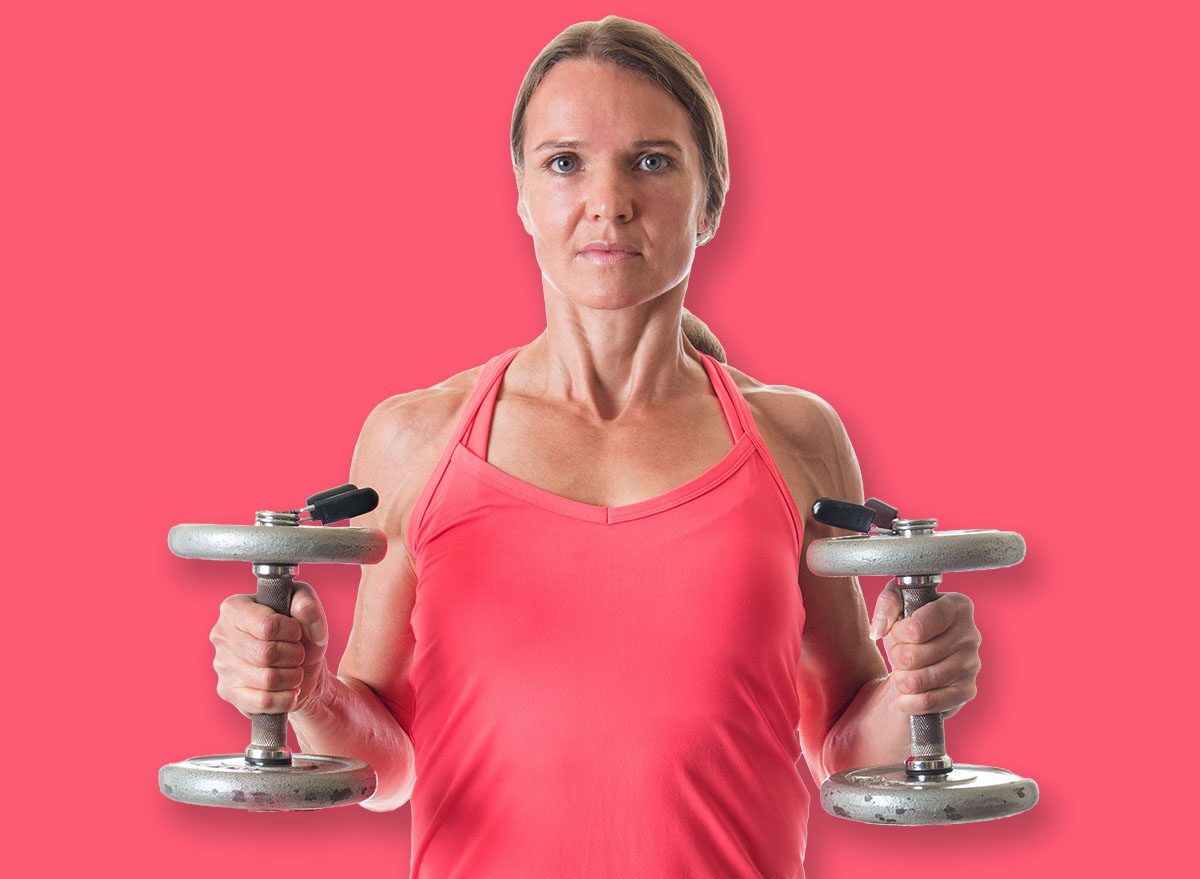
- Why it works: The neutral grip (palms facing each other) is generally easier on the wrists and elbows, making it a safer, more sustainable choice for those over 55.
- Execution: Hold dumbbells with palms facing in. Curl the weights toward your shoulders without swinging your torso.
- Protocol: 3 sets of 10–12 reps.
Supporting Data and Physiological Implications
Research published in journals such as the Journal of Strength and Conditioning Research underscores that resistance training in older adults is highly effective at increasing protein synthesis and muscle cross-sectional area.
When you train the upper body, you aren’t just changing your appearance; you are impacting systemic health. Studies have shown that improved upper-body strength is correlated with lower all-cause mortality and improved bone density. By utilizing controlled, deliberate repetitions—where the "lowering" phase of the movement is slow and intentional—you increase the time under tension, which is the primary driver for muscle fiber recruitment.
Professional Perspectives: The "Form-First" Mindset
Leading trainers emphasize that "more" is not always "better." For those over 55, the goal is "better" in terms of movement quality. If you cannot perform a movement with perfect form, the weight is too heavy or the range of motion is too aggressive.
"The objective," notes one expert, "is to create a stimulus that forces the body to adapt without overloading the connective tissues." This is why variations such as wall-supported push-ups or seated rows are encouraged for beginners. By prioritizing stability and technique, you minimize the risk of injury while maximizing the muscle-building effect.
Implications for Longevity
The implications of this routine extend far beyond vanity. A firm, strong upper body acts as a support system for your spine and shoulders. As we age, the tendency to develop a "rounded" posture—often caused by hours spent at computers or looking down at smartphones—can lead to chronic neck and back pain.
By strengthening the muscles of the upper back (through rows) and the chest (through push-ups), you naturally pull your shoulders into a more optimal, upright position. This not only makes you look more athletic but also improves respiratory function and reduces the strain on your cervical spine.
Conclusion: Your Roadmap to Success
To see results, consistency is the ultimate variable. You do not need to spend hours in a gym. By dedicating 30 minutes, three days a week to this systematic approach, you will provide your body with the signal it needs to hold onto muscle and increase tone.
Remember these three keys to long-term success:
- Progressive Overload: Once 12 reps become easy, look to increase the resistance slightly or decrease the rest time.
- Mind-Muscle Connection: Don’t just move the weight from point A to point B. Focus on the muscle you are targeting.
- Rest and Recovery: Muscle grows while you sleep and recover, not while you are training. Ensure you are getting adequate protein intake and high-quality sleep to support your gains.
By treating your body with the same respect you would treat a high-performance machine, you can ensure that your upper body remains as strong, capable, and defined at 65, 75, and beyond as it was in your younger years.
