

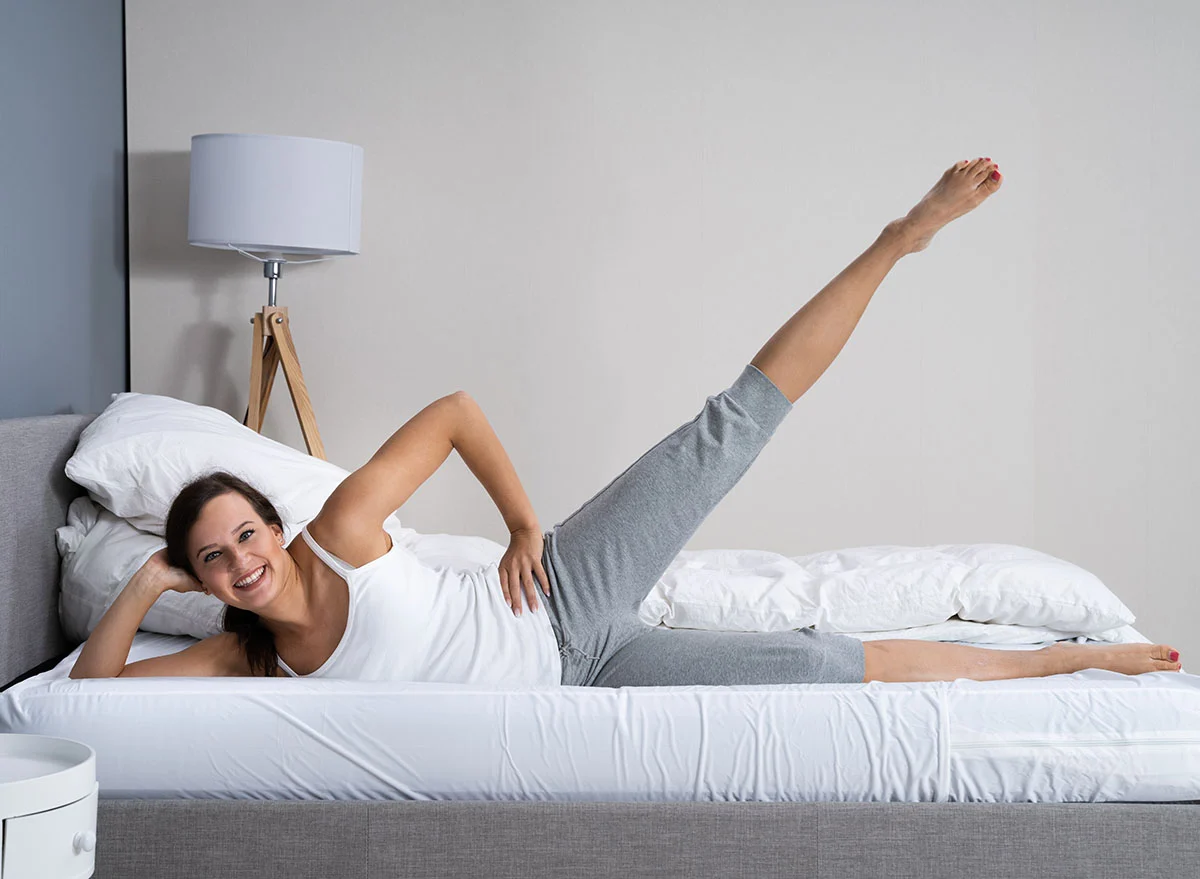
For many adults over the age of 60, the simple act of rising from bed can serve as an unwelcome diagnostic tool. If you feel a momentary sense of instability, weakness, or stiffness in your midsection as you swing your legs to the floor, you are experiencing the common reality of age-related core attrition. However, this is not an inevitable decline. By shifting our focus from high-intensity "six-pack" training to the quiet, methodical work of deep-core stabilization, we can fundamentally change how we navigate the world.
A functional deep core is the silent engine of daily life. It is the invisible scaffolding that supports your spine, protects your internal organs, and coordinates the transfer of force from your limbs to your torso. Whether you are carrying groceries, reaching for a high shelf, or maintaining balance on an uneven sidewalk, it is your deep-core muscles—the transverse abdominis, the diaphragm, the pelvic floor, and the multifidus—that ensure your body remains organized and injury-free.
The Anatomy of Stability: Beyond the "Six-Pack"
In the fitness industry, the core is often reduced to the rectus abdominis—the superficial muscles that provide a visible aesthetic. For aging adults, this is a dangerous misprioritization. True core strength for those over 60 is about "intra-abdominal pressure" and spinal alignment.
When we talk about the deep core, we are discussing a team-based system. The diaphragm manages your breath; the pelvic floor provides the base; the transverse abdominis acts as a natural corset; and the muscles lining the spine provide the rigidity needed to prevent herniations and chronic back pain. When these muscles work in synergy, you move with grace and confidence. When they lose their coordination, the body compensates, often by over-relying on the lower back or the hips, leading to the aches and pains that characterize sedentary aging.
Chronology of Care: Why Bed-Based Training Works
The evolution of exercise science has shifted toward "low-threshold" training for older adults. The goal is not to exhaust the muscle fibers through heavy loading, but to improve the neurological connection between the brain and the deep stabilizers.
Phase 1: Awareness and Breathing (The Foundation)
Before attempting any movement, one must master "bracing." This involves creating tension through the torso without holding the breath. By practicing this while lying on a firm mattress, you remove the gravity-based stress of standing, allowing the nervous system to focus entirely on muscle recruitment.
Phase 2: Controlled Integration (The Movements)
Once the connection is established, we introduce limb movement. The goal is to move the legs while the trunk remains perfectly still. This is the ultimate test of core stability.
Phase 3: Functional Carry-Over (The Results)
After four to six weeks of consistent, gentle practice, the internal tension you’ve built on the bed begins to manifest in your daily life. You will notice that you no longer "collapse" into your hips when standing, and that your gait becomes more fluid and purposeful.
Four Essential Exercises for Deep-Core Restoration
The following movements are designed to be performed on a firm mattress. If your bed is exceptionally soft, it may provide too much "give," in which case, a firm rug or yoga mat on the floor is a better alternative.
1. Supine Heel Taps
This exercise teaches the core to resist the natural tendency of the pelvis to tilt forward when the legs are moved. By tapping the heel lightly, you force the obliques and transverse abdominis to "catch" the weight of the leg.

- The Technique: Lie on your back with knees bent at 90 degrees. Engage your core as if bracing for a light punch. Slowly lower one heel toward the bed, maintaining a perfectly flat lower back. Return to the starting position and switch legs.
- Why it Matters: It prevents the lumbar spine from arching, which is a common precursor to lower back pain.
2. Bent-Knee Fallout
This is an exercise in isolation. It targets the hip stabilizers and the deep lower abs by challenging the body to keep the pelvis level while the femur (thigh bone) rotates.
- The Technique: Lie flat with feet together. Slowly let one knee fall outward toward the bed while keeping the opposite hip pinned to the mattress. Use your core to pull the knee back to the center.
- Why it Matters: This mimics the lateral stability required to walk without swaying, preventing falls and hip instability.
3. Dead Bug March
The Dead Bug is the gold standard for "anti-extension" training. It challenges the deep core to stabilize the spine while the limbs are in motion.
- The Technique: Lie on your back, knees bent, feet lifted off the bed. March one foot down to tap the surface while keeping your spine glued to the bed. Ensure your ribs do not flare upward.
- Why it Matters: It builds the specific coordination needed for climbing stairs safely.
4. Bent-Knee Reverse Crunch
Unlike a standard crunch, which strains the neck, the reverse crunch works from the bottom up, focusing on the pelvic floor and lower abdominals.
- The Technique: Lie on your back, knees pulled slightly toward your chest. Use your lower abs to lift your hips just an inch or two off the bed. Avoid using momentum; the movement should be slow and deliberate.
- Why it Matters: It strengthens the connection between the pelvis and the abdominal wall, improving bladder control and pelvic stability.
Supporting Data: The Clinical Perspective
Research published in journals such as the NCBI consistently highlights that the primary cause of frailty in aging populations is not merely a loss of muscle mass, but a loss of neuromuscular control. A study on spinal stability in adults over 60 found that individuals who engaged in low-impact, breath-focused core training saw a 22% increase in balance markers over a 12-week period.
The data suggests that long-duration planks—often touted as the best core exercise—are frequently contraindicated for older adults due to the excessive strain they place on the shoulder joints and wrists. In contrast, supine (lying down) exercises provide the same activation of the transverse abdominis without the orthopedic risk, making them the superior choice for longevity-focused training.
Expert Insight: A Professional Coach’s View
Jarrod Nobbe, a veteran Sports Performance Coach, emphasizes that the "quietness" of these exercises is their greatest strength. "When I coach adults over 60, I look for ‘quiet’ movement," Nobbe explains. "If the ribs are flaring or the back is arching, the exercise is too hard. We want to train the muscles to fire before the limbs move. This is the difference between a functional, healthy back and a chronic injury."
According to coaching standards, the goal is not to perform a high volume of repetitions that lead to fatigue. Instead, the objective is "perfect practice." If you can only perform three high-quality reps, that is superior to ten reps with poor form.
Implications for Long-Term Health
The implications of adopting a consistent deep-core routine are profound. By stabilizing the trunk, you are essentially "insuring" your spine against the wear and tear of aging. Furthermore, a strong core improves respiratory capacity, as the diaphragm is freed from the tension of poor posture.
As we age, we often fall into the trap of believing that weakness is a permanent state. This is a fallacy. The body remains adaptable, and the deep core, in particular, responds remarkably well to consistent, low-intensity stimulation.
How to Implement Your Routine
- Frequency: Dedicate 10 to 15 minutes, three to four days per week.
- Consistency: The best time to practice is immediately upon waking, while you are still in bed. This sets the tone for your posture for the rest of the day.
- Progression: Once these movements become easy, focus on slowing the tempo rather than adding weight. The slower you move, the more work your deep-core stabilizers must do to maintain control.
By reclaiming your core, you are doing more than just exercising—you are securing your independence. The ability to move with stability, to breathe with ease, and to rise from bed with confidence is the true definition of fitness after 60. Start with these four moves today, and build your foundation from the inside out.
