

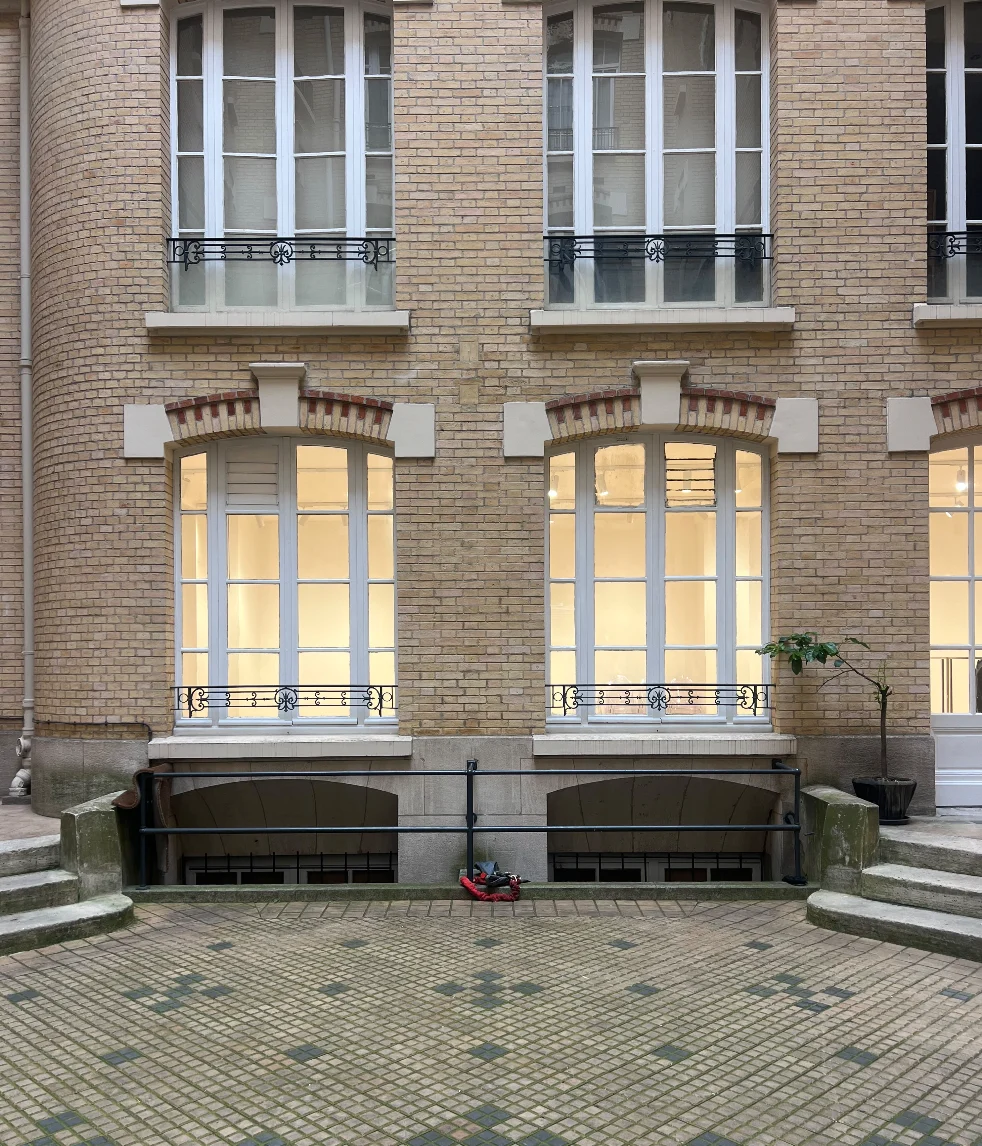
In the high-stakes ecosystem of the contemporary art market, the traditional fair circuit has long been criticized for its exclusionary gatekeeping, exorbitant overheads, and the homogeneity of the "white cube" aesthetic. However, a seismic shift is underway. Post-Fair, an innovative, low-cost, and highly localized exhibition model launched by Los Angeles-based gallerist Chris Sharp, is set to export its democratic ethos to the heart of the European art world. This October, as the global art cognoscenti descends upon the French capital for Art Basel Paris, Post-Fair will make its international debut, marking a significant milestone in the evolution of how art is bought, sold, and experienced.
The Genesis of an Alternative Model
The concept for Post-Fair was born out of a perceived necessity to bypass the financial barriers that often prevent mid-sized and emerging galleries from participating in international marquee events. Chris Sharp, the proprietor of the eponymous Chris Sharp Gallery in Los Angeles, first unveiled the project in February 2025. The inaugural venue was as unconventional as the business model itself: a historic, Art Deco-style post office in Santa Monica, constructed in 1938.
By utilizing a non-traditional architectural space, Sharp signaled a departure from the sterile, modular booth structures that characterize behemoths like Frieze or the standard Art Basel editions. The fair’s debut was met with critical acclaim for its atmosphere of camaraderie, as twenty-six galleries—ranging from local Californian spaces to internationally recognized heavyweights like Sprüth Magers—converged under a single roof. Crucially, the cost of participation was fixed at a flat fee of $6,000, a radical departure from the opaque, tiered, and often prohibitively expensive pricing structures of established commercial fairs.
Chronology: From Santa Monica to the Marais
The trajectory of Post-Fair has been one of rapid, purposeful growth. Since its 2025 inception, the event has successfully navigated the challenges of maintaining an "alternative" identity while scaling its operations.
- February 2025: The inaugural Post-Fair Los Angeles opens in a 1938 Santa Monica post office. Twenty-six galleries participate, establishing the $6,000 flat-fee model.
- February 2026: The second Los Angeles iteration takes place, expanding its reach to include a diverse array of global participants, such as Montreal-based Eli Kerr, Chicago’s Hans Goodrich, and Cambria’s Cruise Control Contemporary.
- July 2026: Official confirmation is released regarding the international expansion. Post-Fair announces it will operate in Paris from October 19–25, coinciding with Art Basel Paris.
- September 2026: The finalized list of the thirty-four participating galleries for the Paris edition is slated for public release.
- October 2026: Post-Fair Paris debuts in two distinct buildings located in the historic Marais district, marking the brand’s first venture outside the United States.
A Strategic Shift in Geography and Scale
The transition from a single Art Deco post office in Southern California to a two-venue setup in the Marais represents a conscious evolution of the Post-Fair identity. While the Santa Monica location provided a highly specific, site-responsive aesthetic, the Paris edition seeks to engage with one of the world’s most dense and historical gallery districts.

By utilizing two buildings in the Marais, Sharp is moving away from the "site-specific" constraints of the original fair, instead embracing a "distributed" model. This approach allows the fair to maintain its intimate, non-corporate feel while accommodating thirty-four galleries—an increase from the previous editions. This expansion suggests that the Post-Fair model is not merely a novelty restricted to a single architectural anomaly, but a scalable framework that can be adapted to the cultural geography of major art capitals.
Supporting Data and Economic Rationale
The primary draw of Post-Fair remains its radical transparency and accessibility. In an industry where booth fees can often reach tens of thousands of dollars, effectively pricing out smaller galleries, the $6,000 fee functions as an equalizer. This fixed cost structure significantly lowers the risk for exhibitors, allowing them to take more creative risks with their curated presentations.
The model is predicated on the idea that commerce and community are not mutually exclusive. By removing the "cordoned-off" barriers of the traditional booth format, Post-Fair fosters a more fluid, conversational environment. The data from the 2025 and 2026 Los Angeles editions indicate that this "low-cost, high-engagement" strategy has fostered a robust network of recurring and new participants, proving that there is a significant appetite among dealers for an alternative to the industrial-scale trade show.
Official Perspectives: The Philosophy of Accessibility
Chris Sharp has been vocal about the motivations behind his venture. In his discussions with industry press, he has consistently framed the initiative as a direct response to the consolidation of the art market. "The main fair is incredibly competitive and hard to get into, and also really expensive," Sharp explained to The Art Newspaper.
Sharp’s philosophy centers on the belief that the current fair infrastructure acts as a bottleneck for the art ecosystem. By providing a platform that is accessible, he aims to decentralize the power dynamics of the industry. The success of the Los Angeles editions provided the necessary proof-of-concept; according to Sharp, the decision to import the model to Paris was a natural progression. By positioning Post-Fair during the same week as Art Basel Paris, he is not attempting to compete directly with the institution, but rather to exist as a necessary, more accessible satellite—a space for those who find the primary fair circuit inaccessible or unappealing.

Implications for the Future of Art Fairs
The arrival of Post-Fair in Paris is set to trigger a broader conversation regarding the sustainability and ethics of the "mega-fair" model. Several implications emerge from this development:
- The Rise of the "Boutique" Fair: Post-Fair suggests a growing trend toward smaller, more curated, and more intimate art events. As collectors grow fatigued by the sheer scale of events like Art Basel or Artissima, the appeal of a 34-gallery fair with a distinct, human-centric focus becomes more pronounced.
- Architectural Contextualism: By moving from a post office to the Marais, the fair demonstrates that its brand identity is not bound by a single building, but by the "vibe" and operational philosophy. Future iterations could theoretically appear in any city with a surplus of interesting, underutilized space.
- The Pressure on Major Fairs: While Post-Fair does not have the institutional capital to threaten the market dominance of Art Basel, its success puts pressure on larger entities to address the issue of accessibility. If mid-tier galleries continue to find more success and community in low-cost alternatives, the larger fairs may be forced to rethink their own pricing and layout strategies to remain relevant to the next generation of gallerists.
- Community Over Commerce: By emphasizing the removal of the "white-booth, cordoned-off format," the fair is redefining the transactional nature of the art market. It moves the focus from the "transactional booth" to the "exhibition space," potentially influencing how galleries present their artists in other contexts.
Conclusion
As October approaches, the art world will be watching to see how the Post-Fair model translates to the European market. The move into the Marais is a bold statement of intent—one that suggests the "alternative" is becoming a legitimate, sustainable, and highly sought-after component of the global art calendar.
Whether this expansion leads to a permanent fixture on the international circuit remains to be seen. However, by prioritizing the needs of the exhibitors and challenging the exclusionary nature of the current market, Chris Sharp has tapped into a profound desire for change. Post-Fair Paris will likely serve as a litmus test for the industry: a chance to see if the spirit of camaraderie and the drive for accessibility that defined the Santa Monica post office can thrive in one of the most established and competitive art markets on the planet. If it succeeds, the "post" in Post-Fair may well come to define the future of the art fair itself—a future that is more equitable, more transparent, and, ultimately, more connected.
