

By Arts & Culture Correspondent
April 3, 2024
In the heart of New Jersey, the Newark Museum of Art recently served as the stage for a profound exploration of contemporary sculpture, sustainability, and community agency. Willie Cole, the acclaimed Newark-based artist whose work has long interrogated the relationship between discarded objects and cultural identity, took to the podium to discuss his latest monumental endeavor: The Water Bottle Giant.
Far from a mere aesthetic exercise, this towering installation—composed of 10,000 recycled water bottles—serves as a physical manifesto. It is a confrontation with the dual crises of modern civilization: the increasing scarcity of potable water and the suffocating proliferation of single-use plastics. By transforming "trash" into a formidable cultural totem, Cole has sparked a city-wide conversation about environmental justice, civic responsibility, and the power of collective creation.
The Genesis of a Giant: Conceptual Foundations
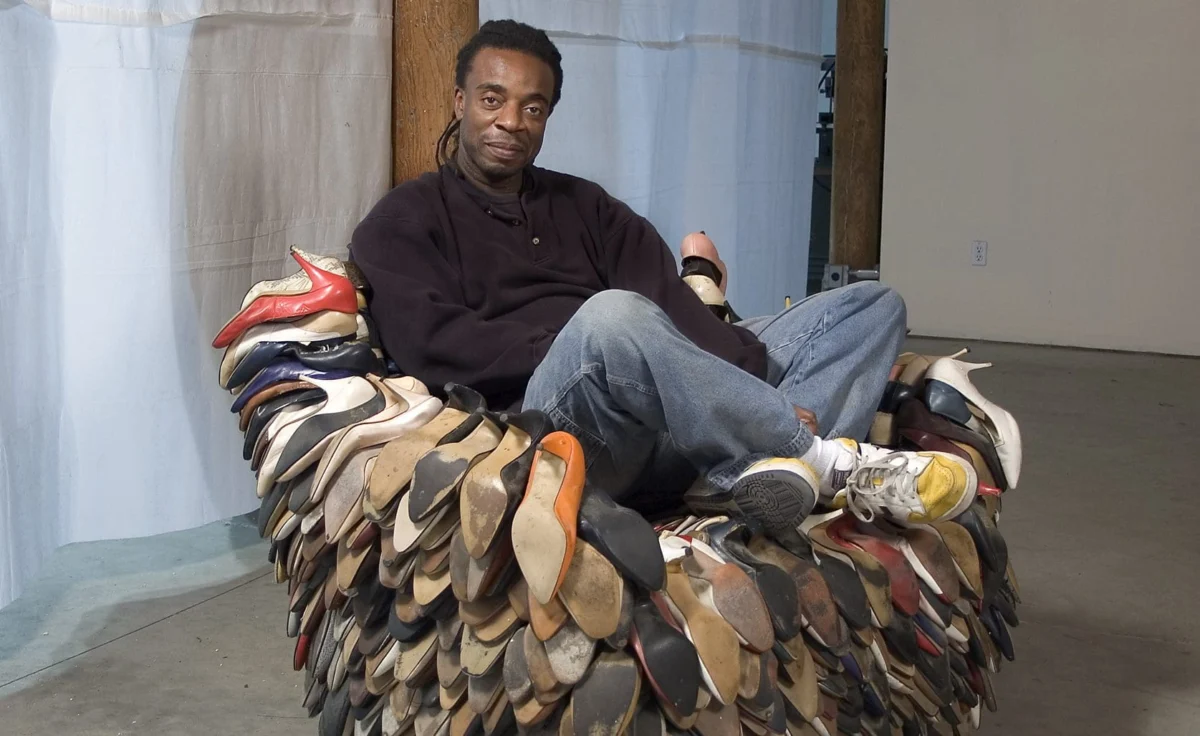
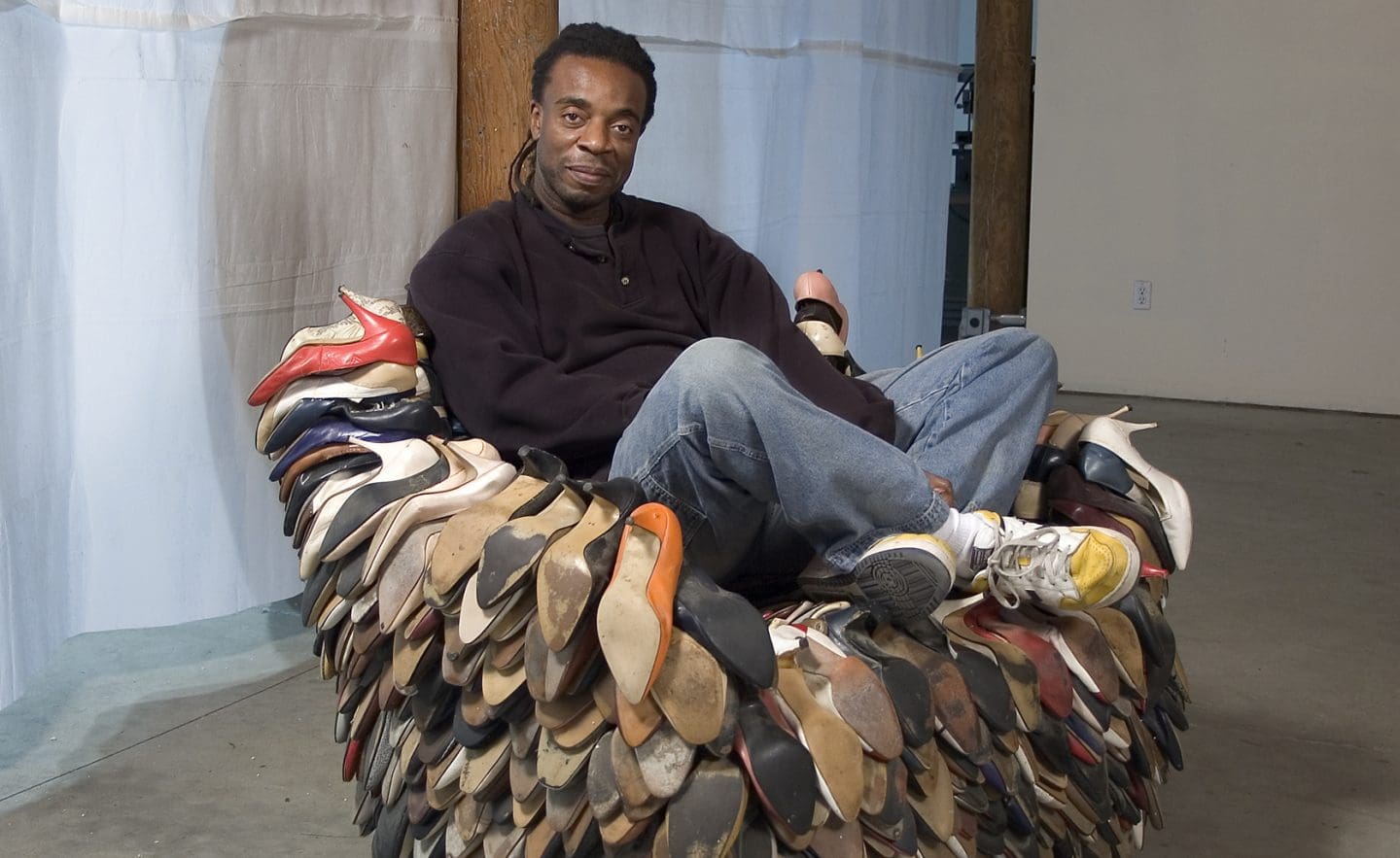
Willie Cole’s career has consistently been defined by his ability to reclaim the mundane. From irons and ironing boards to high-heeled shoes and hair dryers, Cole has historically utilized domestic relics to invoke ancestral histories and the scars of the African Diaspora. However, with The Water Bottle Giant, the artist pivots toward a more literal form of environmental advocacy.
The project began not in a studio, but through a call to the community. Cole envisioned a sculpture that required the labor and participation of the very people affected by the issues it addresses. By sourcing 10,000 bottles, the project became a collaborative act of collection, a ritual that forced residents to consider the sheer volume of waste generated by their daily consumption habits.
The "Giant" stands as a metaphor for the Goliath-like proportions of the plastic pollution problem. It is an imposing, translucent monolith that looms over the viewer, reflecting light in a way that suggests a pristine, ethereal structure from a distance, while revealing the gritty reality of mass-produced consumer debris upon closer inspection.
Chronology of the Installation
The development of The Water Bottle Giant was a multi-phased operation that spanned several months, integrating logistics, community engagement, and structural engineering.
- Phase I: The Collection Drive (Fall 2023): Working with local schools, neighborhood centers, and environmental groups, Cole initiated a massive recycling drive. The objective was to intercept plastic bottles that would otherwise end up in landfills or local waterways.
- Phase II: Cleaning and Curation (Winter 2023): Once the bottles were collected, they had to be sanitized and sorted. This phase involved volunteers who spent hours processing the materials, a process Cole described as a "meditative act of reclaiming."
- Phase III: Structural Assembly (Early 2024): The assembly required a scaffold-like approach. Because the bottles were to be stacked and bound rather than fused with permanent adhesives, structural integrity became a paramount concern. Cole utilized internal supports to ensure the "Giant" could stand as a stable, monumental figure.
- Phase IV: The Unveiling (April 2024): The installation was debuted at the Newark Museum of Art, accompanied by a series of lectures and workshops, culminating in the artist talk held on April 3, where Cole detailed the technical and emotional challenges of the process.
Supporting Data: The Reality of Plastic and Water
To understand the gravity of Cole’s work, one must look at the data surrounding the materials he employs. The "10,000" figure is not arbitrary; it represents a significant volume of plastic waste that would take centuries to decompose.
- Plastic Longevity: According to environmental data, the average PET (polyethylene terephthalate) bottle takes approximately 450 years to break down in a marine environment.
- Water Inequity: The installation draws attention to the "Water Crisis," a global issue that hits closer to home than many realize. In the United States, infrastructure failures—most notably seen in cities like Flint, Michigan, and Jackson, Mississippi—have left thousands dependent on bottled water, creating a vicious cycle where clean water access is linked to the generation of more plastic waste.
- Community Impact: By involving local Newark residents, the project served as a case study in "Citizen Science." Participants reported a heightened awareness of their own recycling habits, noting that the physical act of handling 10,000 bottles made the abstract concept of "waste" a tangible, personal reality.
Official Responses and Curatorial Perspectives
The Newark Museum of Art has positioned this exhibition as a cornerstone of its commitment to socially engaged art. In an official statement following the artist talk, museum curators noted that The Water Bottle Giant represents a shift in institutional programming toward works that facilitate dialogue on climate justice.
"Willie Cole has achieved something rare," the curatorial team stated. "He has managed to balance high-concept sculptural ambition with a grassroots approach that empowers the community. The museum is not just displaying a sculpture; we are providing a space for a necessary reckoning with our environmental footprint."
Critics have lauded the piece for its "visceral honesty." Writing for arts journals, observers have noted that while the piece is undeniably beautiful—glimmering under gallery lights like a faceted diamond—it possesses an "unsettling weight." The transparency of the bottles serves as a window into the consumer culture that produces them, making the viewer complicit in the narrative.
Implications: The Future of Eco-Art
The success of The Water Bottle Giant has significant implications for the future of public art. As museums globally struggle to justify their environmental impact, Cole’s model of "community-sourced materiality" offers a blueprint for sustainable exhibition design.

1. Re-thinking Materiality
Artists are increasingly tasked with considering the life cycle of their materials. Cole’s work challenges the tradition of bronze and stone, suggesting that the "found objects" of the Anthropocene are the most relevant mediums for 21st-century commentary.
2. The Museum as a Community Hub
The collaborative nature of this project reinforces the role of the museum as a civic anchor. By moving beyond passive observation, the Newark Museum of Art has successfully engaged a younger, more environmentally conscious demographic, proving that institutional art can be both intellectually rigorous and socially active.
3. Sustainability as a Narrative Tool
The project demonstrates that environmentalism does not have to be didactic or dry. By utilizing the "Giant" as a focal point, the narrative of sustainability becomes human-centric. It is not about the planet in the abstract; it is about the water we drink, the streets we walk, and the waste we generate in our own homes.
Conclusion: A Giant Legacy
As the exhibition continues to draw visitors, the legacy of The Water Bottle Giant is already taking shape. It has served as a catalyst for local recycling initiatives and prompted discussions about municipal water infrastructure.
Willie Cole’s talk at the Newark Museum of Art was more than a post-mortem on a sculpture; it was a challenge to the audience. He asked his listeners to look at a plastic bottle not as a disposable convenience, but as a permanent record of their presence on Earth. In transforming a mountain of trash into a "Giant," Cole has provided a mirror for society—one that forces us to look, reflect, and ultimately, reconsider our place in the fragile ecosystem of the modern world.
Whether the "Giant" will eventually be dismantled and its materials recycled, or whether it will stand as a permanent monument to a fleeting moment in history, remains to be seen. Regardless, its impact is indelible. Through this work, Willie Cole has ensured that the conversation surrounding water access and plastic waste in Newark—and beyond—will not be easily discarded.
