

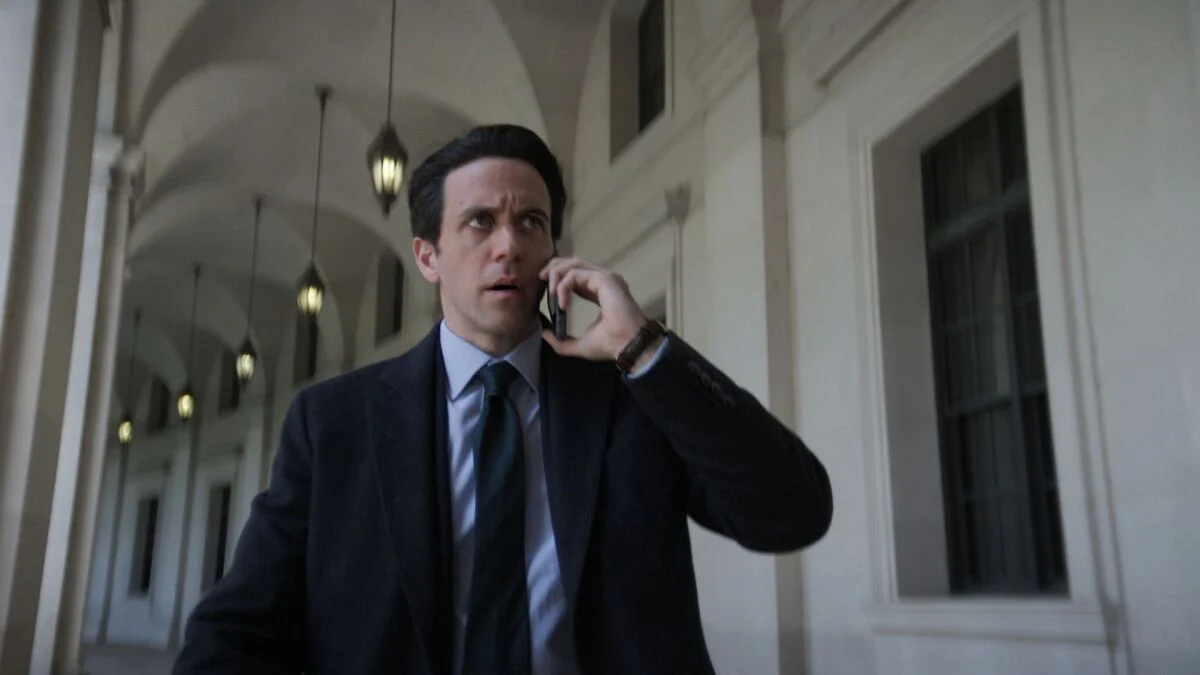
We are three episodes deep into the third season of Apple TV+’s hit dystopian drama Silo, and the atmosphere inside the subterranean structure—and within the show’s intricate flashback narrative—has reached a fever pitch of paranoia. While the residents of the Silo grapple with the suffocating realities of their claustrophobic existence, a parallel investigation unfolding in the past is proving just as high-stakes.
At the center of this mystery is a shadowy, gray-haired figure whose presence is becoming impossible to ignore. Initially dismissed by some as a flicker of a protagonist’s imagination, the man’s reappearance in Episode 3 confirms a chilling reality: the conspiracy surrounding the mission crash is far more pervasive and coordinated than anyone dared to imagine.
The Main Facts: A Convergence of Timelines
The narrative of Silo Season 3 is masterfully split between the present-day struggle for survival and the high-stakes investigation led by Congressman Daniel Keene (Ashley Zukerman). Keene is obsessed with uncovering the truth behind the tragic crash of his sister, Charles (Jessica Brown Findlay).
What began as a personal quest for closure has transformed into a political thriller. In Episode 3, Daniel’s search for answers leads him to the funeral of one of Charles’s fellow pilots. It is here that the narrative threads tighten. During a conversation with Alameda (Joseph Balderrama), the father of the deceased pilot, Daniel learns that a recording of the mission’s communications—the "smoking gun" of the series—may still exist.
As the conversation concludes, the "Gray-Haired Man" enters the frame. His arrival is not incidental; he is seen alongside a high-ranking military official, suggesting he possesses significant influence within the corridors of power. This man is not merely an observer; he is a participant in the machinery of the Silo’s secrets.
Chronology of the Shadow: Mapping the Man’s Appearances
To understand the gravity of this character’s role, one must track his appearances across the season’s opening arc.
The Subway Encounter (Episode 1)
The audience’s first introduction to the man occurred in the season premiere. Charles, already on edge and suspecting she is being followed, attempts to navigate the subway to meet her brother. On the platform, she spots a gray-haired man. Their eyes lock—a moment of instant, visceral recognition.
When Charles attempts to evade him by boarding the train, he follows. Her panic is palpable; she jumps off the train at the last possible second, watching from the platform as the train pulls away. Crucially, the man remains on board, refusing to look up or acknowledge her, a classic move of a seasoned surveillance operative. At the time, viewers were left to wonder: was Charles suffering from paranoia, or was she truly being hunted?
The Funeral Surveillance (Episode 3)
The answer arrived two episodes later. When Daniel Keene attends the funeral, the same man appears, this time keeping a watchful eye on the Congressman. The man’s proximity to military brass—specifically his interaction with a captain from the USS Nimitz—confirms that he is a player in the same game that claimed Charles’s life. He is not a random bystander; he is a stalker with institutional backing.
Supporting Data: Behind the Performance
The casting of this character provides a vital clue to his future importance. The man is portrayed by Reed Birney, a veteran character actor known for his nuanced, often menacing roles in House of Cards and American Horror Story.
In television production, the casting of a high-caliber actor for a "background" role is rarely accidental. Birney’s presence signals that the character is not a mere background extra but a narrative anchor. His ability to convey menace through silence and posture suggests a character who is deeply embedded in the hierarchy of the Silo’s governing forces. The fact that he wears civilian clothes while walking side-by-side with military officers suggests he belongs to an intelligence branch—perhaps a specialized agency operating above the reach of conventional law enforcement.
Implications: The Web of Deceit
The introduction of this character changes the fundamental stakes of the show. If Charles was being followed in the past, it implies that the "crash" she experienced was not an accident but a targeted liquidation.
1. The Institutional Cover-Up
The fact that the Gray-Haired Man is seen with military personnel suggests a collusion between private or intelligence sectors and the armed forces. This implies that the secrets of the Silo are protected by an entity that transcends individual loyalties. Whatever Charles uncovered during her mission, it was significant enough to warrant a coordinated, long-term surveillance operation.
2. The Vulnerability of Congressman Keene
Daniel Keene believes he is the one conducting the investigation, but he may actually be the one being investigated. By following Daniel, the Gray-Haired Man is essentially monitoring the progress of the truth. Every person Daniel speaks to, every lead he pursues, is being cataloged by those who wish to keep the secrets of the Silo buried.
3. The "Gray-Haired" Archetype
In dystopian fiction, the middle-aged, non-descript man in a suit is often the most dangerous trope. He represents the "banality of evil"—the bureaucrat who signs the papers, the observer who reports back, and the shadow that never quite disappears. His lack of a uniform makes him harder to track, and his ability to move through civilian spaces makes him the perfect hunter.
Official Responses and Production Context
While Apple TV+ and the showrunners of Silo have kept the plot details under tight wraps, the strategic placement of this character has been a talking point among fans and critics alike. The show’s commitment to building a sense of dread is reinforced by this character’s consistent, silent presence.
The producers have previously noted that Season 3 focuses on the "unraveling of reality," and the Gray-Haired Man is the physical manifestation of that theme. He represents the wall that the characters hit whenever they get too close to the truth. Whether he is a government fixer, a private contractor, or an operative for an even more mysterious organization, his role is to ensure that the Silo remains as it is: sealed, silent, and obedient.
Looking Ahead: The Future of the Investigation
As the season progresses, we can expect the dynamic between Daniel Keene and the Gray-Haired Man to evolve from passive observation to active confrontation. If the man is indeed an operative, he will eventually be ordered to "neutralize" the threat posed by Daniel’s investigation.
The questions remain:
- Who does he report to? Is there a secret council within the Silo that manages these operations?
- What did Charles see? The recording of the mission comms is clearly the "MacGuffin" that will drive the plot toward the season finale.
- Will Daniel realize he’s being hunted before it’s too late? The Congressman is smart, but he is operating in a world where he is significantly outmatched by the shadowy forces of the establishment.
For now, viewers are encouraged to watch the background of every scene. The Gray-Haired Man is watching, and in the world of Silo, being watched is the first step toward being erased.
Silo Season 3 is streaming now on Apple TV+, with new episodes dropping every Friday. Keep your eyes on the shadows—the conspiracy is only just beginning to surface.
