

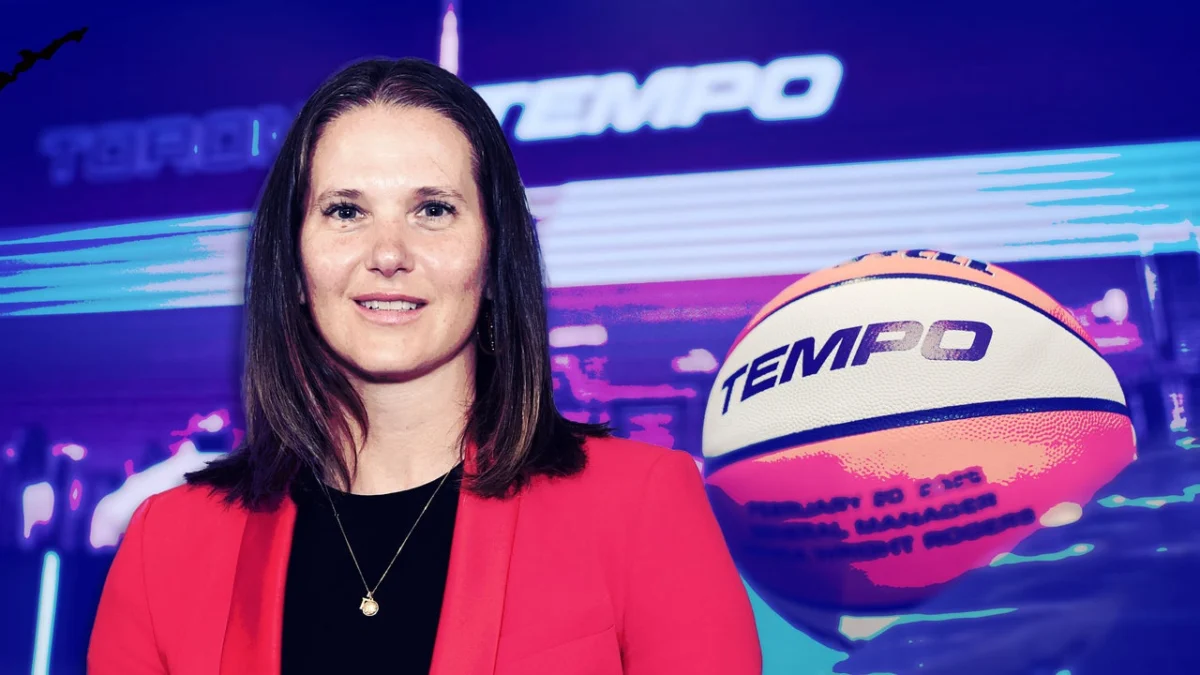
The Toronto Tempo’s arrival in the WNBA was not merely a sports expansion; it was a masterclass in high-stakes corporate agility. Arriving in a league currently experiencing a seismic cultural shift, the Tempo entered the fray as the WNBA’s newest franchise, burdened by the immense expectations of a city hungry for professional basketball and the logistical nightmare of building a brand, a roster, and a business model in real-time.
As the league hits the pause button for the highly anticipated All-Star Weekend, the Tempo’s inaugural season stands as a testament to resilience. With record-breaking attendance figures that have electrified the Canadian market and a marquee performance that saw a star player drop 53 points in a single game, the team has already cemented itself as a focal point of the WNBA’s new era. Behind the scenes, team president Teresa Resch has been the architect of this rapid ascent, navigating a path that she describes as "running a startup at supersonic speed."
The Startup Mindset: Navigating Organizational Chaos
In a recent interview on the Rapid Response podcast with host Robert Safian, Resch reflected on the precarious nature of the Tempo’s inception. Back in mid-March, just months before the season’s tip-off, the franchise was a skeleton crew operating in a vacuum of uncertainty. The expansion draft had not yet occurred, the roster was non-existent, and, perhaps most critically, the financial framework of the league remained in limbo due to ongoing Collective Bargaining Agreement (CBA) negotiations.
"At that point, we didn’t know who was going to be on the team. We didn’t know what our budget was because the owners and the players union hadn’t yet agreed on a CBA," Resch explained. "You seemed both excited and anxious. Now you describe it as a little bit of chaos, huh?"
This "chaos" was not merely internal; it was systemic. For a franchise trying to build a fan base from scratch, the ambiguity surrounding the league’s economic future threatened the very viability of the season. "If we didn’t have a deal done in those few weeks, we probably weren’t going to be able to have a season," Resch admitted. "As an expansion team, there is so much hype around this inaugural season. To not have that happen would’ve been a really incredible blow to everything that we had built over the last two years."
Chronology of a Lightning-Fast Launch
The trajectory of the Tempo’s first year can be divided into three distinct phases: the period of high-stakes ambiguity, the compressed activation phase, and the current era of operational adaptation.
Phase 1: The Pre-Season Ambiguity (Pre-March)
The Tempo spent nearly two years preparing for a launch that was constantly threatened by the broader league climate. The franchise had to secure sponsorships, venue logistics, and marketing campaigns without a clear understanding of the player salary cap or the talent pool available to them.
Phase 2: The 16-Day Sprint (Post-CBA Ratification)
Once the CBA was finalized, the clock began to tick in earnest. The franchise was tasked with building an entire professional sports team in 16 days—a process that typically requires six months of scouting, contract negotiations, and team chemistry building. This period saw the Tempo front office operating around the clock to secure talent that could represent the Toronto brand, a task made significantly more difficult by the fact that they were working in a new market with unique regulatory and political considerations.
Phase 3: The Mid-Season Trial by Fire
From the season’s tip-off to the All-Star break, the team has faced an unprecedented string of injuries. Despite these setbacks, the Tempo has managed to stay competitive, largely due to the leadership of core players like Marina Mabrey and Brittney "Slim" Sykes.
Supporting Data: The Economic Transformation
The new WNBA CBA is not just an agreement; it is a financial revolution. Resch points out that the deal is the largest increase in salaries of any professional sports league in history. "Last year, the highest-paid player was about $250,000," Resch noted. "Now, the minimum player gets $270,000, with maximum players getting upward of $1.5 million a year."
While these figures are a victory for labor rights and the professionalization of the league, they have presented a distinct challenge for an expansion franchise like the Tempo. The budget for building and maintaining a team has skyrocketed, requiring Resch and her team to generate revenue at a pace that justifies the league’s new, higher-cost structure. The business of the Tempo is no longer just about selling tickets; it is about sustaining a high-end corporate entity in a complex international market.
The Canadian Factor: Building a Fan Base Across Borders
One of the most nuanced aspects of Resch’s role is navigating the political and cultural geography of the Toronto market. Operating a U.S.-based league franchise in Canada requires more than just marketing; it requires a deep understanding of the cross-border relationship.
"It’s very difficult," Resch said, referring to the process of building a team in a new country. "When you’re doing everything for the first time, you are essentially translating the language of the WNBA for a Canadian audience that has its own unique sports culture."
The Tempo has leaned into this challenge by positioning itself not just as a branch of the WNBA, but as a uniquely Canadian institution. This has involved navigating international tax laws, broadcast logistics, and the cultural expectations of a fan base that is accustomed to the high-performance standards of the NBA’s Toronto Raptors.
Official Responses and Strategic Implications
The resilience of the roster has been a primary talking point for the organization. Despite the fact that the team has never fielded the same starting lineup for more than a few consecutive games, they have remained a formidable opponent.
"Our team was incredibly resilient," Resch stated. "We call [Brittney Sykes] ‘Slim.’ She was performing at an All-Star level. She went down about 12 games into the season. Otherwise, I think we would’ve had two All-Stars, which is pretty incredible for an expansion franchise."
The strategic implications of this first half-season are clear: the Tempo has survived the "startup" phase of its existence. However, the future requires a shift from survival to sustainability. The franchise must now translate its massive initial hype into long-term brand loyalty. This means:
- Deepening Community Engagement: The Tempo must move beyond the "inaugural season" novelty and integrate itself into the local Toronto fabric.
- Managing the "Cost of Success": As salary caps rise, the franchise must leverage its record-breaking attendance into diversified revenue streams, including premium partnerships and long-term broadcast deals.
- Human Capital Development: The injury-riddled season has highlighted the need for greater roster depth. The front office is currently evaluating scouting strategies that prioritize durability and team chemistry over pure star power.
Looking Ahead: The Post-All-Star Reality
As Teresa Resch looks toward the second half of the season, her focus remains on the "real-time" nature of her role. She is effectively building the airplane while it is in the air. The Tempo is no longer a theoretical concept; it is a high-performing, high-pressure, and high-visibility organization that has captured the imagination of basketball fans across North America.
For the WNBA, the Tempo’s success—or failure—will serve as a blueprint for future expansion. By choosing to embrace the chaos, the Toronto franchise has demonstrated that the appetite for women’s basketball is not just a trend, but a permanent shift in the sports landscape.
The upcoming months will be the ultimate test of the infrastructure Resch has built. With a more stable budget, a clearer understanding of the competitive landscape, and a fan base that has already proven its commitment to the team, the Toronto Tempo is poised to move from a startup to a staple.
"It’s transformative and it’s made history," Resch said of the season’s start. For the city of Toronto, the history is just beginning. As the players return from the All-Star break, the Tempo’s focus will shift from the anxiety of the "what-ifs" to the tangible goal of building a legacy that will last as long as the league itself.
This report features insights derived from the Rapid Response podcast, hosted by Robert Safian. For more in-depth analysis on how business leaders navigate real-time challenges in the modern era, listeners are encouraged to subscribe to Rapid Response on all major podcast platforms.
