

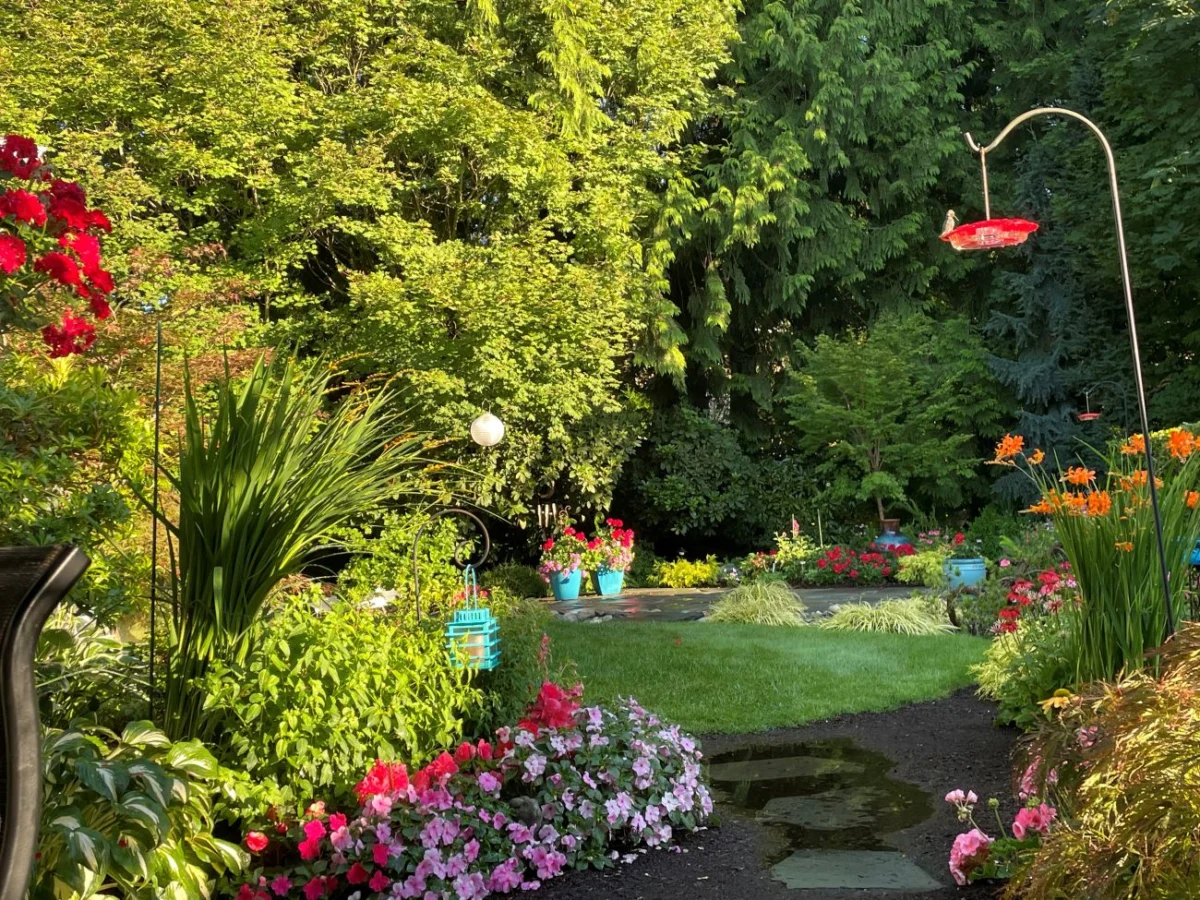
In the quiet, verdant neighborhoods of Mill Creek, Washington, the concept of a garden tour has been transformed from a simple walk-through into an immersive, narrative-driven experience. Recently, the garden of local enthusiast Lila Johnson was selected as a featured stop on her local garden club’s annual tour—a pivotal event that raises essential funds for the “Giving Through Gardening” grants program. By integrating technology with traditional horticulture, Johnson has created a blueprint for how private gardens can serve as public classrooms, fostering community connection while preserving the historical evolution of the landscape.
The Genesis of a Community Initiative
The “Giving Through Gardening” tour is more than just a showcase of aesthetic beauty; it is a philanthropic engine. On July 25, the tour opened six private landscapes to the public, with all proceeds earmarked for local horticultural grants. These grants provide the financial scaffolding for community-led gardening initiatives, school garden programs, and environmental restoration projects within the region.
For participants like Johnson, the day was a rigorous yet deeply rewarding endeavor. “We survived—and thrived—through our community garden tour,” Johnson notes. While the physical demands of hosting a public event were significant, the engagement from the community served as the primary catalyst for the day’s success. The tour focused on the theme, “Where Every Garden Tells a Story,” a mantra that underscored the importance of not just displaying plants, but communicating the intent and effort behind their cultivation.
A Chronological Evolution: From 2011 to the Present
One of the most striking aspects of Johnson’s garden is its depth of history. Rather than presenting a static display, she chose to leverage her extensive personal archives, which document the evolution of her landscape dating back to 2011.
By utilizing interactive storyboards equipped with QR codes, visitors were able to scan and view digital galleries that chronicled the "before-and-after" transformations of specific garden beds. This chronological transparency allowed guests to witness the maturation of woody plants, the changing soil compositions, and the iterative design process that eventually led to the garden’s current state. This digital integration provided a pedagogical layer to the tour, turning a passive viewing experience into an active lesson on horticultural patience and landscape development.
Horticultural Highlights and Botanical Diversity
Johnson’s garden is a study in diverse micro-climates, expertly managed to sustain a wide variety of plant species. The design emphasizes texture, color, and structural interest, utilizing everything from Japanese-inspired dry streambeds to lush woodland retreats.
The Japanese-Inspired Retreat
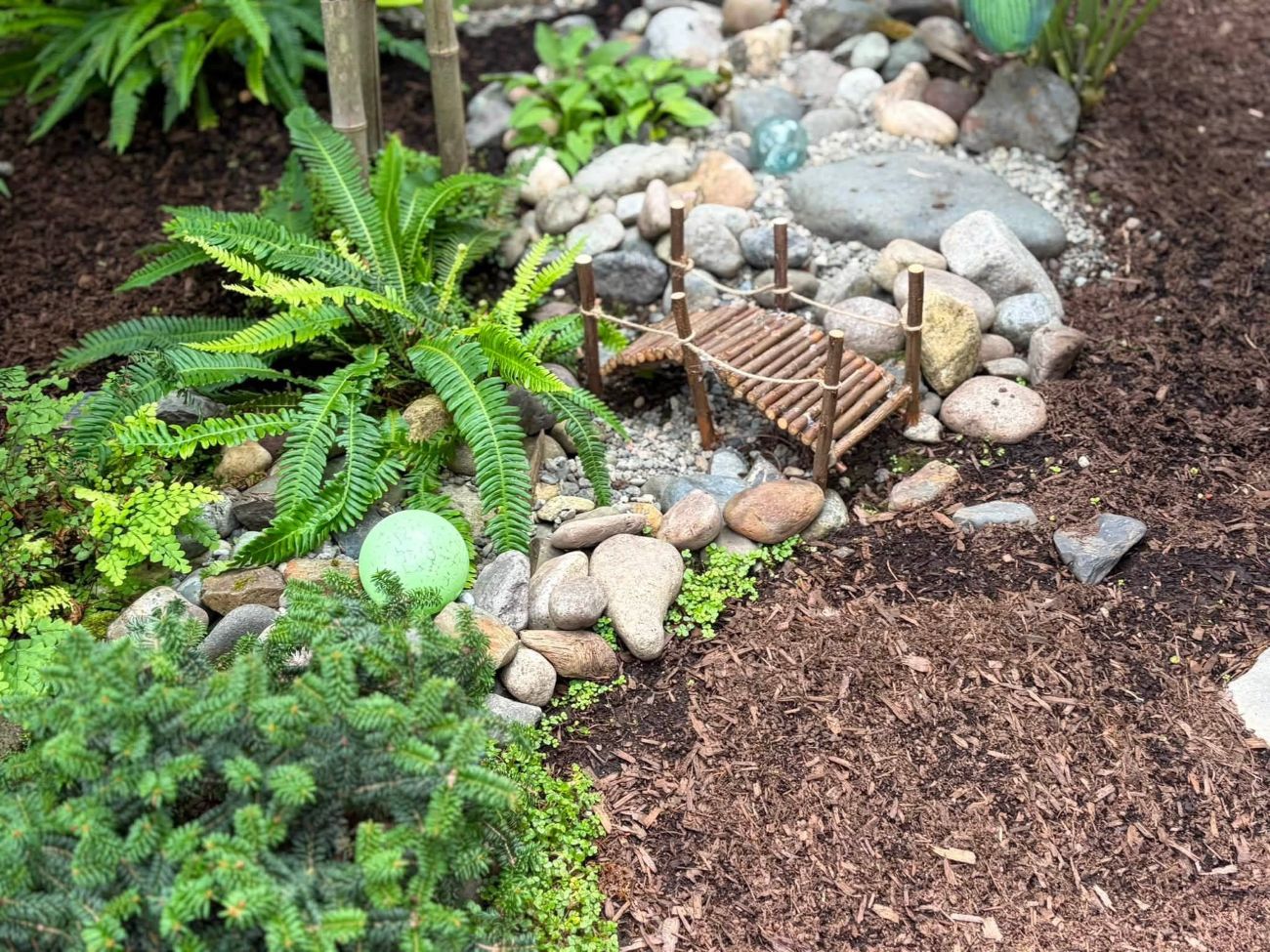
A standout feature of the landscape is a miniature Japanese-inspired garden. Johnson meticulously constructed a primitive wood bridge to cross a dry streambed, creating a focal point that feels both tranquil and intentional. The planting palette here relies on moisture-loving and shade-tolerant species, including:
- Deer fern (Struthiopteris spicant): Adding structural, dark green fronds that thrive in Zones 5–8.
- Baby’s tears (Soleirolia soleirolii): Providing a dense, carpet-like groundcover suitable for the temperate climate of Zones 9–11.
- Himalayan maidenhair fern (Adiantum venustum): Offering a delicate, airy contrast to the bolder foliage nearby.
- ‘Piccolo’ balsam fir (Abies balsamea ‘Piccolo’): A slow-growing, miniature conifer that provides evergreen stability to the design.
Color and Texture in the Border Beds
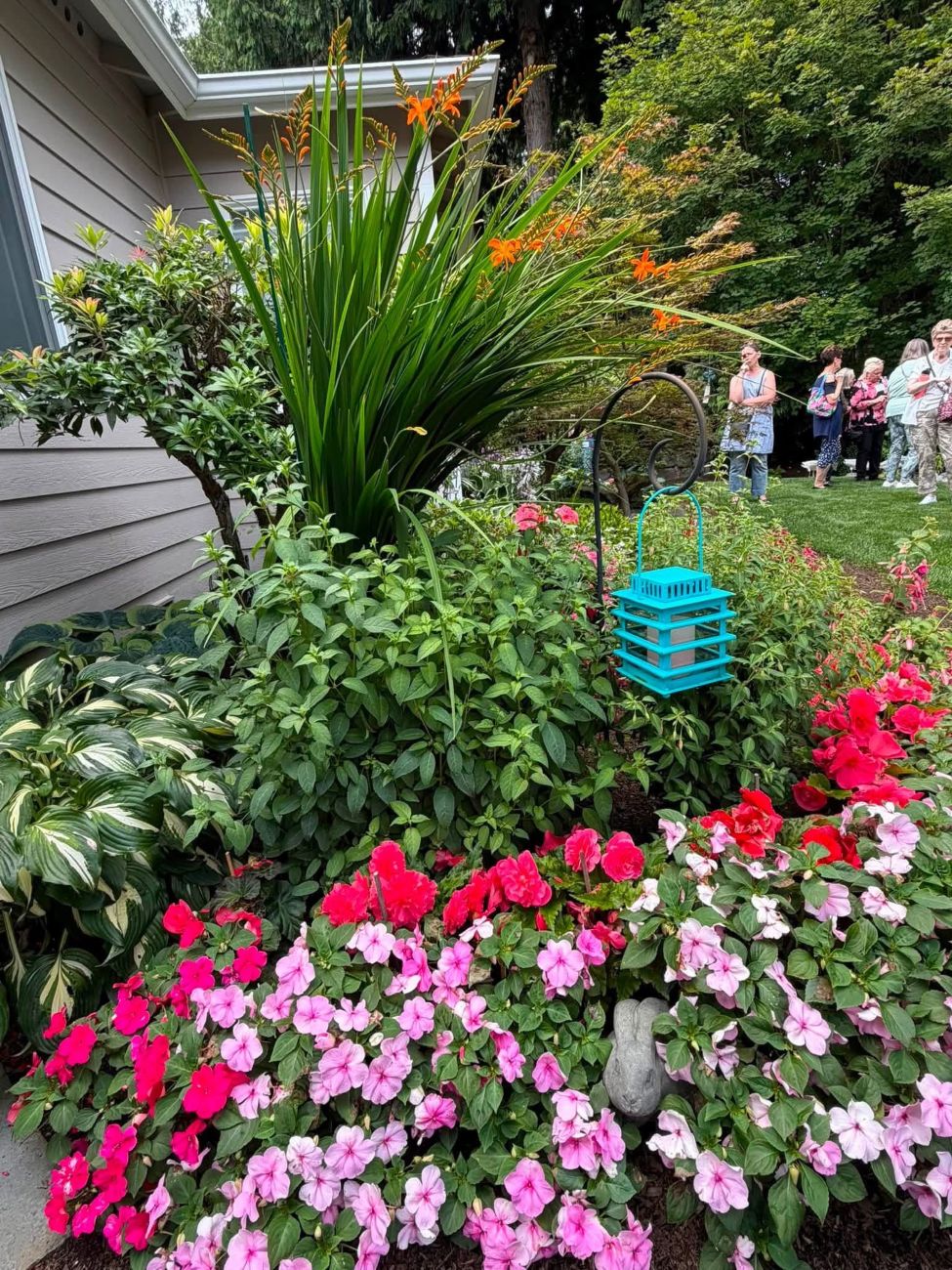
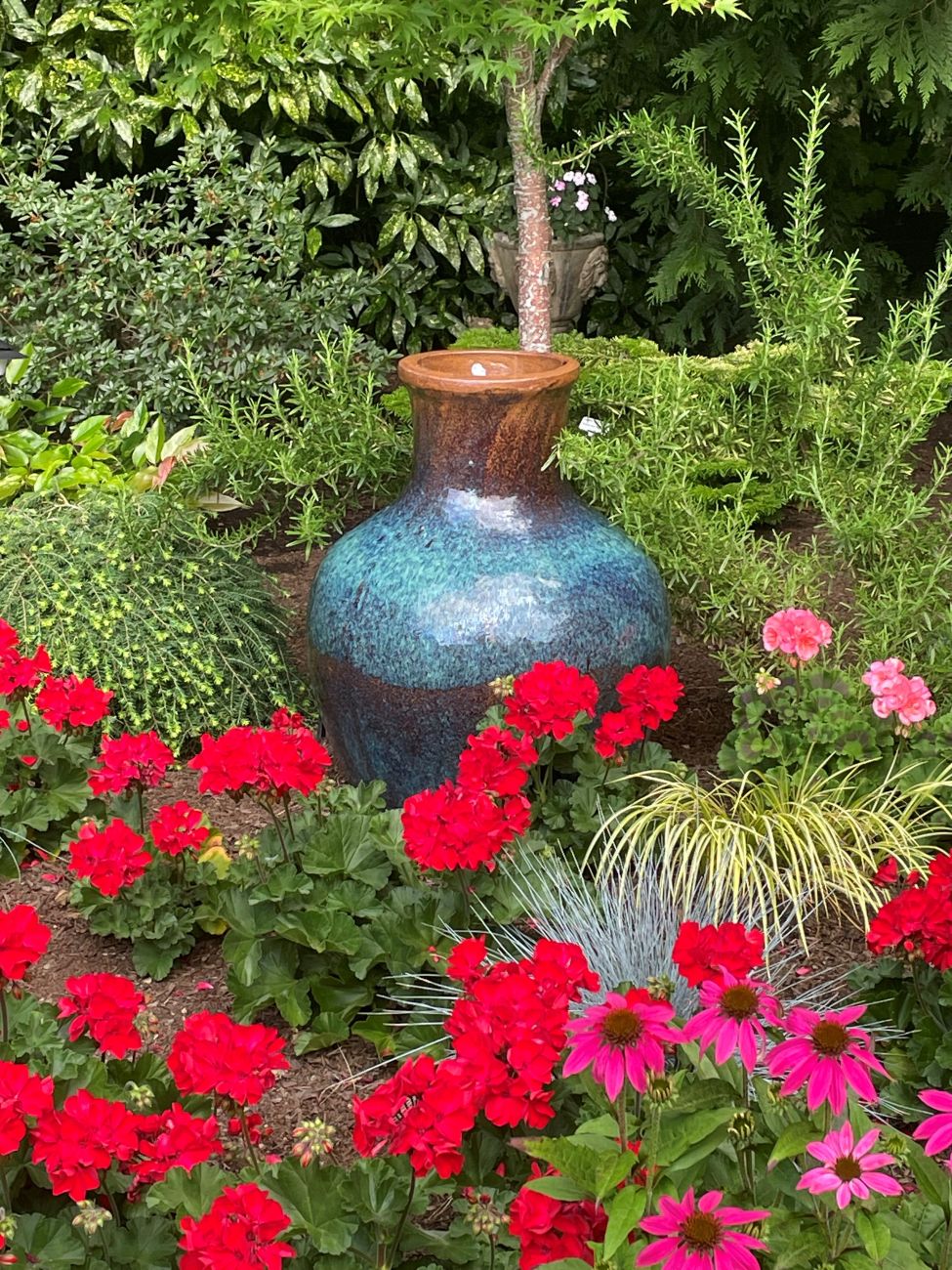
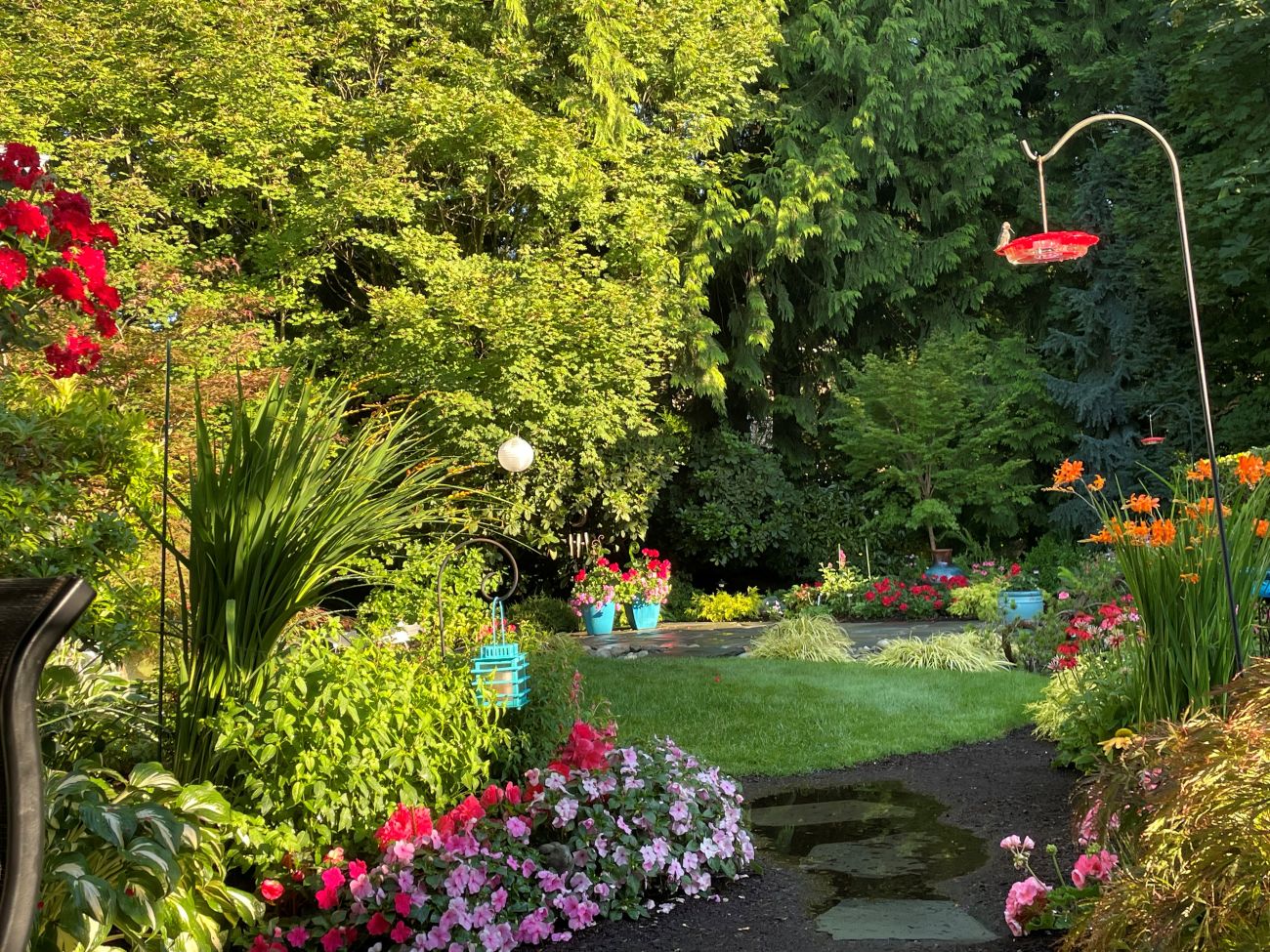
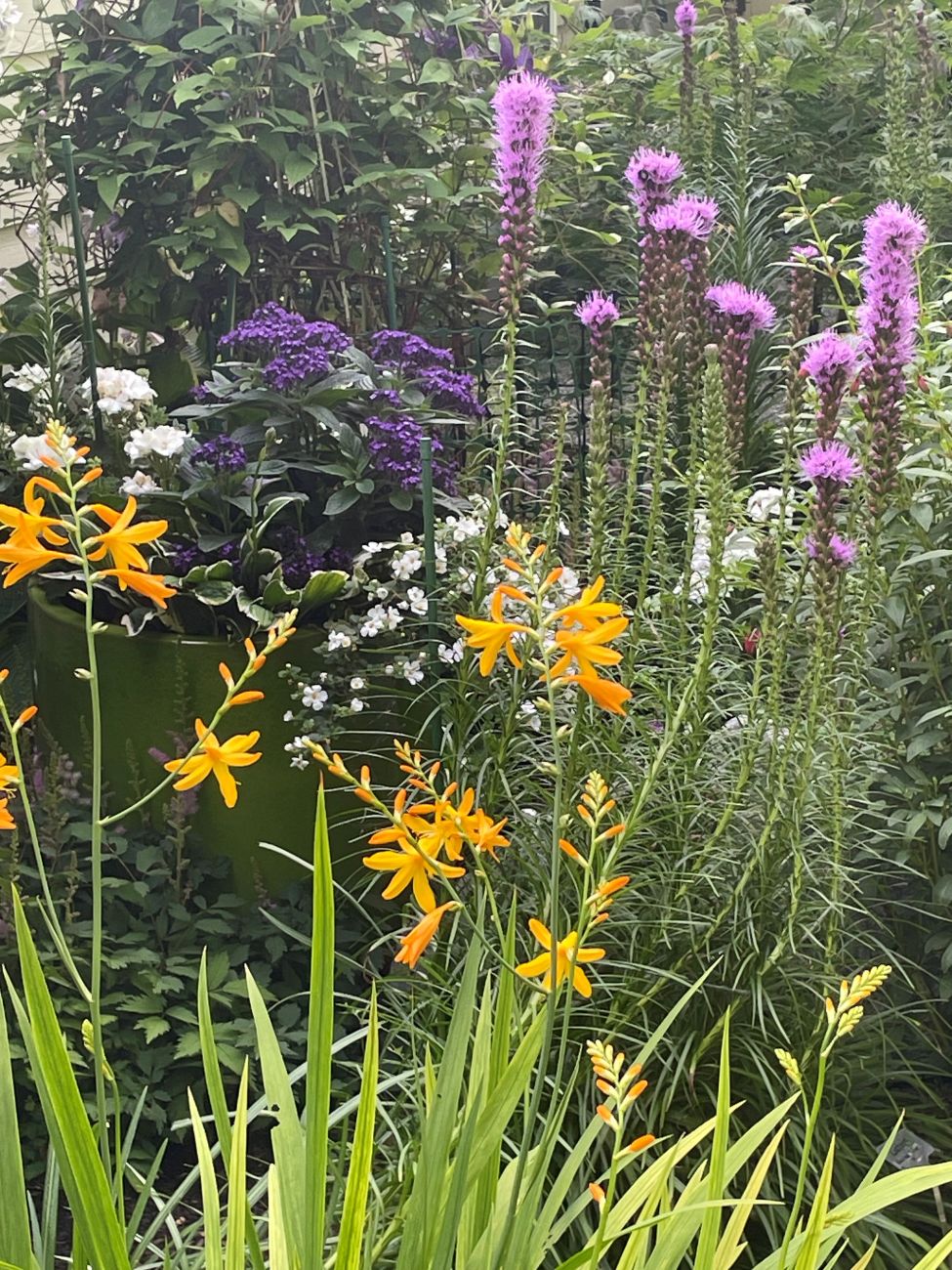
Moving from the contemplative Japanese corner to the vibrant perennial borders, the garden demonstrates a mastery of color theory. The beds are anchored by high-impact annuals like pink Impatiens walleriana and rosy tuberous begonias, which provide a foundation of constant color. These are interspersed with structural perennials such as Hosta cultivars, hardy fuchsias (Fuchsia magellanica), and the dramatic, upright spikes of Crocosmia. In the background, the sophisticated foliage of Pieris japonica adds a layer of depth that keeps the borders looking lush well into the late summer.
Whimsy and Pollinator Advocacy
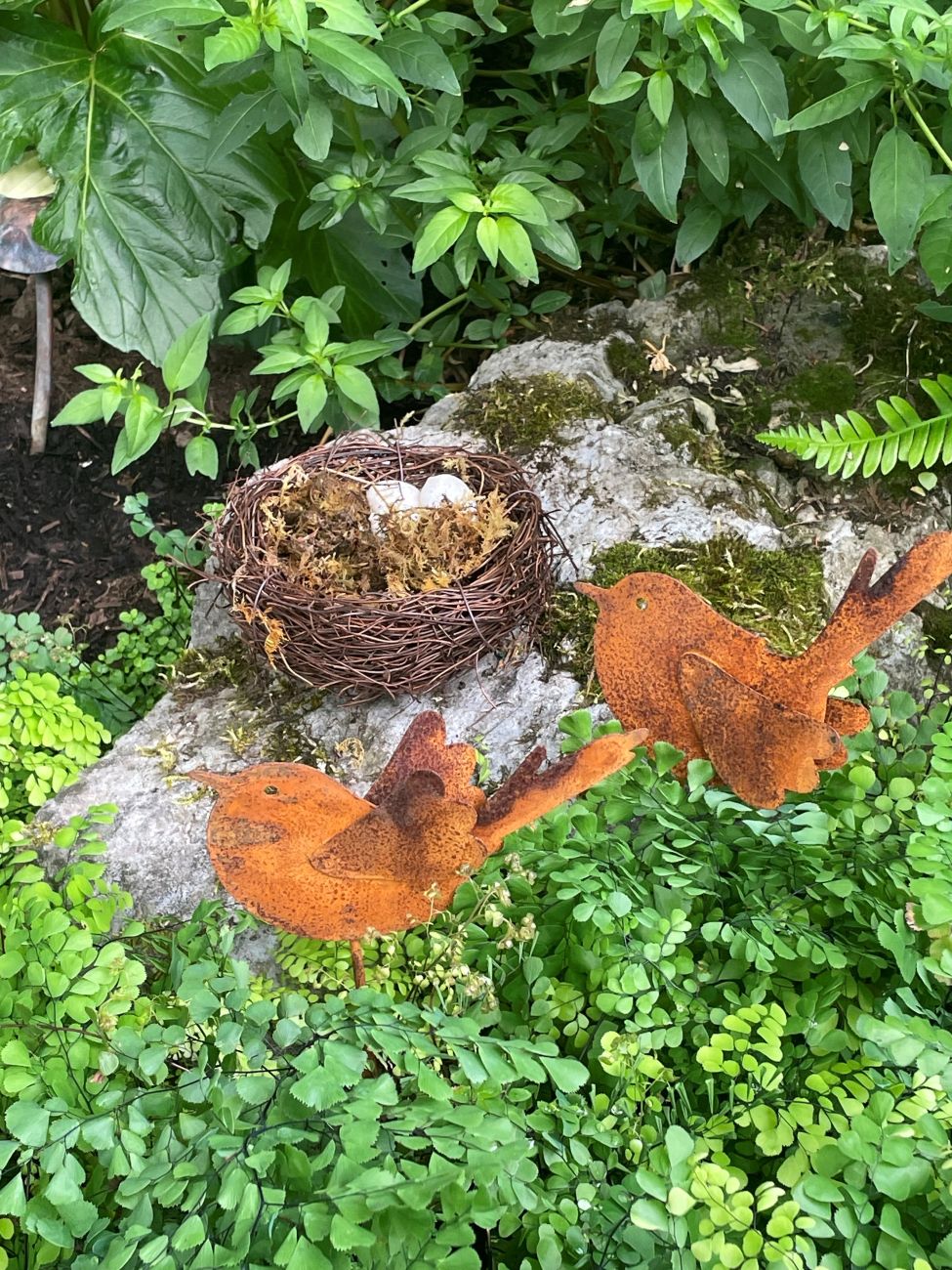
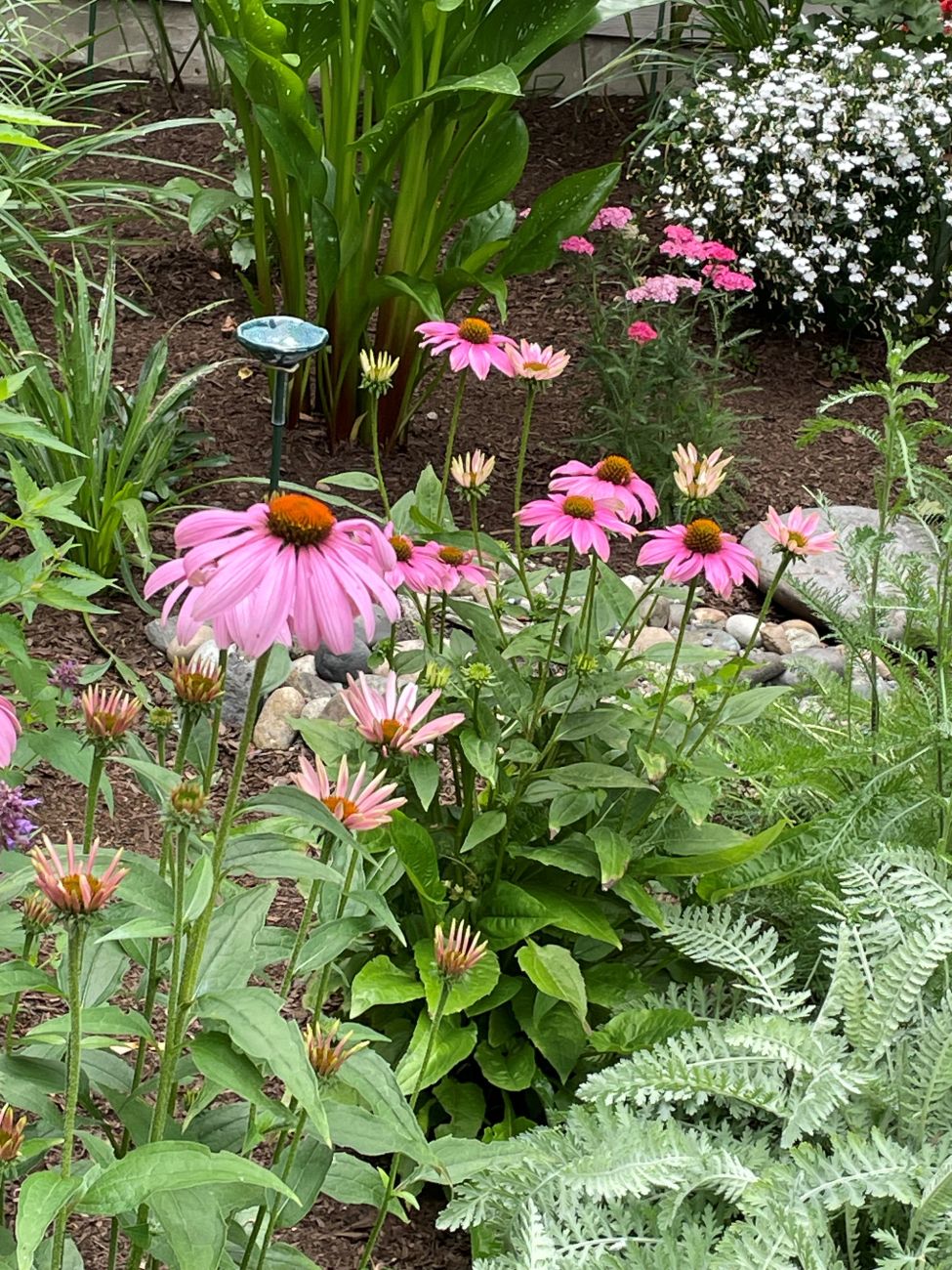
The woodland area of the garden leans into a sense of playfulness. Johnson has placed metallic, rusted bird ornaments amidst mossy rocks and ferns, creating a "whimsical" vignette that feels integrated into the natural environment. Beyond the aesthetics, the garden is a functional habitat. The butterfly garden is a testament to the importance of pollinator-friendly design, featuring a robust collection of purple coneflowers (Echinacea purpurea), yarrow (Achillea millefolium), and white euphorbia. The presence of active hummingbird feeders and diverse plant life serves as a poignant reminder that private gardens are essential corridors for local wildlife.
The Implications of Interactive Gardening
The success of the “Where Every Garden Tells a Story” tour suggests a shifting paradigm in how garden clubs should approach public engagement. By documenting the failures and successes of a garden over more than a decade, owners can move past the "curated perfection" trope and instead offer visitors a relatable, educational experience.
The integration of QR codes and digital storytelling is particularly significant. It addresses the common visitor question, "How did you do that?" by providing immediate, granular data about plant care, growth cycles, and design evolution. This approach democratizes the gardening process, making the hobby feel more accessible to novices who might otherwise feel intimidated by the pristine, finished look of professional garden displays.
Looking Toward the Future of Garden Advocacy
The enthusiasm surrounding the Mill Creek tour underscores a growing public interest in horticultural education. For organizers and garden owners, the implications are clear: the future of gardening lies in collaboration and open-source knowledge sharing.
The “Giving Through Gardening” program is currently inviting new participants to join the movement. By submitting their own photos and narratives, gardeners from across the country can contribute to a larger dialogue about the importance of domestic green spaces. Whether it is a small collection of succulents on a balcony or an expansive woodland estate, every garden represents a unique environmental and personal history that is worth documenting.
How to Get Involved
For those inspired by the work of Lila Johnson, the path to contributing is straightforward. The “Garden Photo of the Day” (GPOD) initiative serves as a digital platform for enthusiasts to showcase their work. Submissions should include:
- High-quality imagery: A selection of 5–10 photos that highlight specific plant combinations or garden features.
- Contextual data: Information on the garden’s location, the gardener’s experience level, and the story behind the featured plants.
- Personal narratives: Documentation of successes, lessons learned from failures, and future aspirations for the space.
As the industry continues to evolve, the intersection of community philanthropy and personal passion remains the most effective way to ensure that the art of gardening continues to thrive for generations to come.
Concluding Thoughts
The Mill Creek garden tour stands as a model of how to effectively blend horticultural excellence with community service. Lila Johnson’s willingness to open her gates—and her archives—provides a roadmap for others to follow. By celebrating the process, embracing the "whimsy" of personal design, and prioritizing the education of the public, gardeners can transform their private plots into public assets.
As we look toward the next growing season, let us consider the stories our own gardens have to tell. Whether it is the planting of a new tree, the struggle against a persistent pest, or the joy of a first bloom, every act of cultivation is a chapter in a much larger, ongoing narrative of stewardship and growth. Join the conversation, share your progress, and help keep the spirit of "Giving Through Gardening" alive.
