

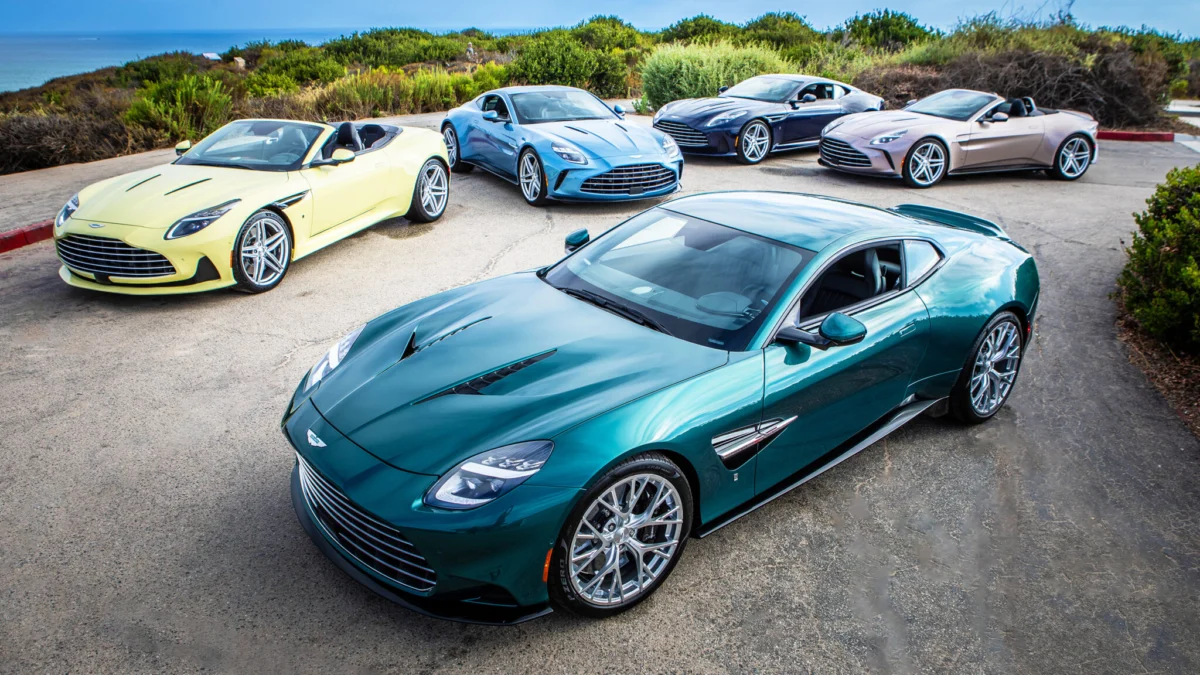
As the automotive world turns its gaze toward the prestigious Monterey Car Week, Aston Martin has orchestrated a masterclass in brand storytelling. In a move that bridges the gap between its storied past and its high-performance future, the British manufacturer has unveiled a bespoke "Heritage Collection." Developed in collaboration with Aston Martin Newport Beach and the brand’s elite customization division, "Q by Aston Martin," this five-car series represents a curated journey through the marque’s most iconic color palettes from the 1950s, 60s, and 70s.
These aren’t simply new cars with a coat of paint; they are a deliberate reclamation of identity. By applying historical hues to the cutting-edge architecture of the current DB12 and Vantage lineups, Aston Martin is inviting collectors to drive the brand’s history while benefiting from the technological prowess of the modern era.
The Genesis of the Collection: A Celebration of Provenance
The Heritage Collection comprises five individual, one-off commissions: a DB12 Volante, a DB12 Coupe, a Vanquish Coupe, a Vantage Coupe, and a Vantage Roadster. The decision to limit this series to just five vehicles underscores the exclusivity that defines the "Q by Aston Martin" bespoke service.
While the engineering under the hood remains consistent with the pinnacle of current Aston Martin performance, the exterior and interior appointments have been meticulously re-imagined. Each vehicle serves as a canvas for colors that have not been part of the standard production catalogue for decades. This effort is not merely about aesthetic choice; it is about architectural resonance, ensuring that the silhouette of a modern sports car complements the nuanced tones of the mid-century classics that inspired them.
A Chronological Walkthrough: From 1958 to the Modern Day
To understand the significance of these vehicles, one must look at the historical archives from which they draw their inspiration.
The Pale Primrose DB12 Volante
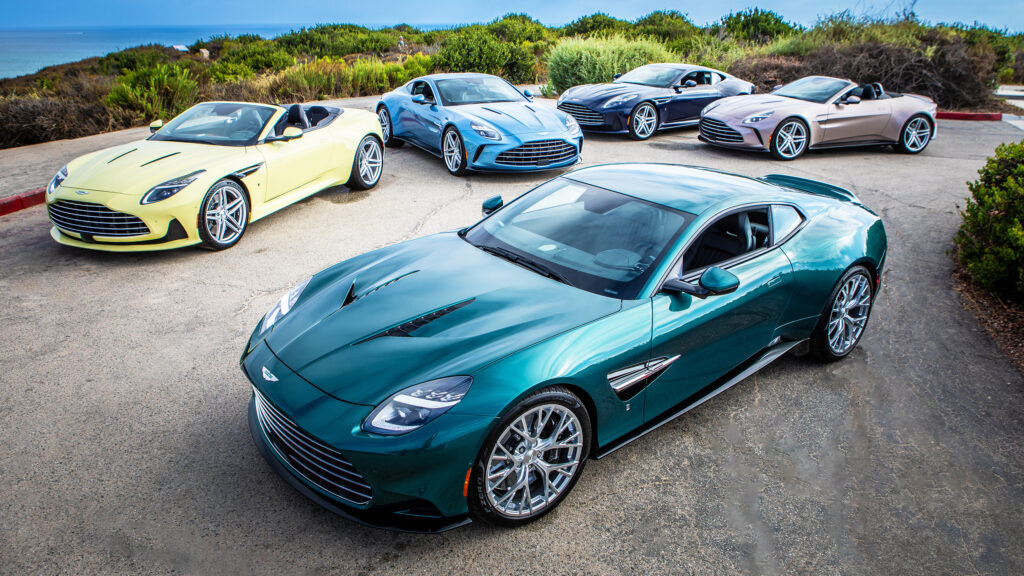
The star of the collection, the DB12 Volante, is finished in "Pale Primrose." For the true enthusiast, this color needs no introduction. It was the signature shade of the Aston Martin DB4 and famously graced the cover of the 1958 sales brochure. Seeing this light, optimistic yellow on the aggressive, aerodynamic body of a 2026 DB12 Volante is a striking visual paradox. Inside, the cabin is adorned with Dark Walnut Open Pore wood inlays, a nod to the traditional luxury of the 1960s, finished with bespoke "Q Heritage" embroidery on the center armrest and commemorative sill plaques.
The Pacific Blue DB12 Coupe
Accompanying the Volante is the DB12 Coupe, rendered in "Pacific Blue." This deep, evocative hue was a staple for the legendary DB4, DB5, and DB6—the very cars that cemented Aston Martin’s reputation as the gold standard of grand touring. By applying this color to the modern DB12, the design team has created a vehicle that feels timeless, bridging the gap between the classic touring aesthetic and the current high-output V8 performance.
The Tudor Green Vanquish
The Vanquish Coupe in the collection shifts the focus to the 1970s, sporting a "Tudor Green" finish. This deep, rich, and sophisticated green captures the essence of a decade defined by distinct stylistic shifts. Notably, this model debuts the new "Q bespoke perforated fluted seats." These seats are not just a design choice; they are a technical feat, blending period-accurate aesthetics with the ergonomic requirements of a 21st-century driver.
The Vantage Duo: Winchester Blue and Mink Silver
The collection is rounded out by two Vantage models. The Vantage Coupe is finished in "Winchester Blue," another 1970s classic that highlights the aggressive lines of the modern Vantage. Meanwhile, the Vantage Roadster takes a softer approach with "Mink Silver," a shade originally offered on the iconic DB6. Both cars feature the signature fluted seating, tying the collection together with a cohesive interior language that emphasizes craftsmanship over mass production.
Technical Specifications and Bespoke Artistry
Beyond the colors, the "Q by Aston Martin" division has focused on tactile excellence. The inclusion of the Dark Walnut Open Pore wood in the DB12 models is a specific decision to move away from the cold, clinical carbon fiber often found in modern sports cars, favoring instead a material that ages with grace.

The fluted seats represent a significant investment in specialized manufacturing. Unlike standard upholstery, these seats require precision stitching and perforation techniques that mimic the look of the mid-century era while maintaining the cooling and heating capabilities required for contemporary luxury vehicles. Every "Heritage Edition" sill plaque is laser-etched, ensuring that the driver is reminded of the vehicle’s unique lineage every time they enter the cockpit.
Official Commentary and Brand Strategy
Aston Martin’s leadership has framed this collection as a vital component of its broader strategy to emphasize "ultra-luxury." By leveraging the "Q" division, the company is effectively decentralizing the design process, allowing clients—in this case, working closely with the Newport Beach dealership—to act as curators of their own automotive history.
"Our goal with the Heritage Collection was to show that our current performance, as breathtaking as it is, can be elevated by the elegance of our heritage," said a representative from the brand. "We are not just selling cars; we are selling the ability to own a piece of Aston Martin’s history that is uniquely tailored to the individual."
The collaboration with Aston Martin Newport Beach is also strategic. As one of the highest-volume luxury markets in the United States, Southern California is a natural hub for collectors who value both technical performance and historical narrative. By launching this collection in proximity to the Monterey Car Week, the brand is targeting the most discerning segment of the automotive market.
Implications for the Future of Automotive Luxury
The success of the Heritage Collection has significant implications for the future of the automotive industry. It signals a shift away from the "one-size-fits-all" production model that has dominated the last decade. As electrification and automation threaten to homogenize the driving experience, brands like Aston Martin are doubling down on the "human touch."

- The Rise of "Heritage Customization": We are likely to see more manufacturers digging into their archives to offer "legacy colors" and "heritage trims" as high-cost, high-margin options.
- The Dealer-Manufacturer Partnership: The success of the Newport Beach collaboration suggests that regional dealers will play an increasingly active role in the creative process of bespoke vehicle development.
- Resale Value and Collectibility: By limiting production to just five units, Aston Martin has effectively guaranteed that these vehicles will become "instant classics." This move bolsters the brand’s reputation for long-term value retention.
Conclusion: A Testament to Endurance
The Heritage Collection is more than a marketing exercise; it is a testament to the endurance of the Aston Martin design language. Whether it is the soft yellow of a 1958 sales brochure or the deep, moody green of the 1970s, these colors remind us that great design is not subject to the expiration dates of automotive trends.
As these five vehicles make their debut at Monterey, they stand as a reminder that the best way to look forward is to understand where you have been. For the lucky few who will secure these models, they are not just buying a car—they are inheriting a legacy, meticulously curated and expertly brought into the modern day. In a world of fleeting automotive trends, Aston Martin has reminded us that some things, when treated with the right level of care and reverence, truly are timeless.
