

In the modern era of health and wellness, we are often obsessed with the aesthetic appeal of a toned physique. However, as we cross the threshold into our 60s and beyond, the focus must shift from vanity to vitality. Maintaining muscle mass is no longer just about looking good; it is the fundamental currency of independence, mobility, and long-term metabolic health.
Recent scientific data indicates that humans naturally lose muscle mass at a rate of 3% to 8% per decade starting as early as our 30s. This decline accelerates significantly after age 60, a condition medically referred to as sarcopenia. To combat this decline, experts are turning to functional, compound movements that can be performed from the comfort of home.
The Science of Sarcopenia: Understanding Muscle Decline
Sarcopenia is the degenerative loss of skeletal muscle mass and strength associated with aging. While it is a natural biological process, it is not an inevitable sentence to frailty. The muscles in our bodies act as the "engine" for our daily existence. They allow us to carry groceries, climb stairs, maintain balance, and recover from accidental trips or falls.
When we lose muscle, we lose more than just volume; we lose metabolic power. Muscle tissue is metabolically expensive, meaning it requires energy (calories) to maintain. As muscle mass diminishes, our basal metabolic rate drops, often leading to unwanted weight gain, insulin resistance, and decreased bone density. By prioritizing strength-building exercises, we are not just sculpting our bodies; we are safeguarding our structural integrity.
Expert Insight: Why Compound Movements Rule
To understand how to effectively reverse this trend, we spoke with Jacob Siwicki, founder and head coach of Siwicki Fitness. With a pedigree that includes being a former Dartmouth football player, a top-tier Equinox group fitness instructor, and a recognized leader in the fitness industry, Siwicki emphasizes that one does not need a gym membership or heavy iron to turn back the clock.
"I emphasize compound exercises because they require multiple muscle groups to work in concert," Siwicki explains. "An isolation exercise—like a bicep curl—might build a specific muscle, but a compound movement mimics the way we actually move in the real world. It gives you a much higher return on investment."
Siwicki’s philosophy centers on the idea that your body is the ultimate piece of equipment. By mastering "pushing, stabilizing, and moving" through different planes of motion, you can build a resilient body that is ready for the rigors of everyday life.
The Four Pillars of Functional Fitness
The following four exercises, recommended by Siwicki, are designed to be accessible to almost any fitness level. They prioritize safety, stability, and functional strength.
1. The Sit-to-Stand (Squat Foundation)
The ability to stand up from a chair without assistance is one of the most critical indicators of long-term independence. The Sit-to-Stand exercise strengthens the quadriceps, hamstrings, and glutes—the primary drivers of human movement.
- The Technique: Begin seated on a sturdy chair. Keep your chest tall and core engaged. Drive through your heels to stand up fully, squeezing your glutes at the top. Slowly lower yourself back down with control.
- Progression: As you get stronger, try doing this without using your hands for support. If it feels too difficult initially, use a higher chair or a cushion to reduce the range of motion.
2. Counter Pushups (Upper Body Power)
Pushups are the gold standard for upper body strength, targeting the chest, shoulders, triceps, and the stabilizer muscles in the core. For those who find floor pushups challenging, a countertop provides the perfect angle to build foundational strength.
- The Technique: Place your hands on a stable kitchen counter. Step your feet back until your body forms a straight, solid line. Lower your chest toward the counter, keeping your elbows tucked at a 45-degree angle to your body, then push back up.
- Progression: Lower the surface height as your strength improves. A lower surface increases the angle of resistance, making the movement more challenging.
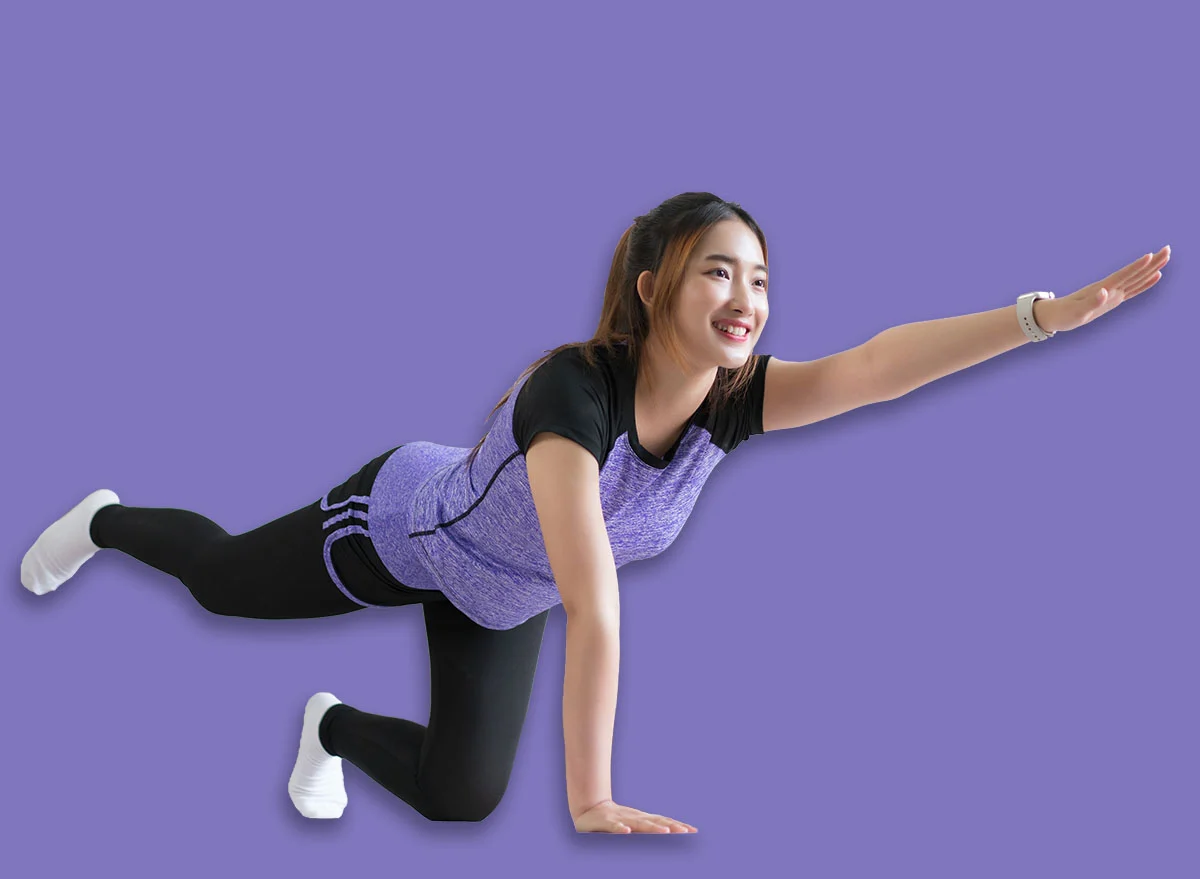
3. The Bird Dog (Core and Spinal Stability)
Stability is often overlooked in favor of raw power, yet a strong core is what protects your spine and prevents back pain. The Bird Dog is a brilliant, low-impact exercise that forces the core to stabilize the body while the limbs are in motion.
- The Technique: Start on your hands and knees in a tabletop position. Simultaneously extend your right arm forward and your left leg backward, keeping your back flat and your hips level. Hold for a second, then return to the start and switch sides.
- The Goal: The aim is to move with zero rotation in your torso. This builds a "braced" core that can handle heavy lifting and unexpected shifts in balance.
4. Chair-Supported Reverse Lunges (Balance and Coordination)
Lunges are essential for unilateral leg strength—the ability to put your weight on one leg at a time. This is vital for walking, climbing stairs, and preventing falls. Using a chair for support allows you to focus on form and depth without the fear of losing your balance.
- The Technique: Stand behind a sturdy chair, holding the backrest for support. Step one foot backward into a lunge, lowering your back knee toward the floor. Keep your front knee aligned with your toes. Push through the front heel to return to standing.
- Progression: Slowly decrease the amount of pressure you apply to the chair until you can perform the movement with only a light touch or no support at all.
Implications for Longevity
The implications of adopting a routine like this are profound. When you integrate these movements into your daily life, you are essentially "future-proofing" your body.
- Metabolic Health: Increased muscle mass improves insulin sensitivity, helping to manage blood sugar levels and combat Type 2 diabetes.
- Fall Prevention: Balance-focused exercises like the Bird Dog and Reverse Lunge significantly reduce the risk of debilitating falls—a leading cause of injury in the elderly population.
- Bone Density: Through the principle of mechanical loading, resistance exercises signal to the body that bones need to be denser and stronger to support the muscle load, which is a primary defense against osteoporosis.
A Call to Action for Every Decade
It is important to remember that these movements are not just for those currently in their 60s. They are for anyone in their 30s, 40s, and 50s who wants to ensure their "golden years" are truly golden.
"The best time to start is now," Siwicki says. "You don’t need a gym membership. You don’t need fancy equipment. You need consistency and the willingness to move your body through these patterns every single day."
The goal is not to be a bodybuilder; the goal is to be capable. By dedicating just 15 to 20 minutes a day to these four movements, you are investing in your future self. You are choosing to maintain the ability to travel, play with grandchildren, perform household chores, and move through the world with confidence. In the end, muscle mass is more than just tissue—it is the very foundation of your freedom.
As you embark on this journey, remember that progress is rarely linear. Some days you will feel strong, and others you may feel fatigued. The key to long-term success is the commitment to the routine. Whether you are doing five repetitions or fifty, the most important step is the first one. Start today, stay consistent, and give your body the strength it deserves to carry you through every chapter of your life.
