


For many men, the transition into their sixties is marked by subtle, often overlooked physiological shifts. It begins with the realization that a flight of stairs, once navigated with ease, now requires a moment of pause. It’s the slight hesitation before rising from a low-slung armchair or the newfound reliance on handrails for stability. These are not merely signs of aging; they are clear indicators that the body’s foundation—its leg strength—is beginning to wane.
Maintaining functional mobility is the cornerstone of a high quality of life as we age. By reintroducing targeted, movement-based training into a daily routine, men can not only halt this decline but actively rebuild the capacity required for daily independence.
The Physiology of Decline and the Case for Intervention
As we cross the threshold of sixty, our bodies undergo a process known as sarcopenia—the natural, age-related loss of muscle mass and strength. If left unaddressed, this decline creates a widening gap between one’s current physical capabilities and the demands of everyday life. The consequences extend beyond just inconvenience; they impact balance, metabolic health, and bone density.
However, research consistently demonstrates that the aging neuromuscular system remains remarkably plastic. Even in our seventh decade, the muscles are highly responsive to resistance training. The key is not necessarily high-intensity, heavy-load training, but rather "functional robustness"—training the specific movement patterns that the body relies on most to navigate the world.
The Six Pillars of Functional Leg Strength
To rebuild foundational strength, one must look beyond isolation exercises that target single muscles in a vacuum. Instead, the focus should be on compound, multi-joint movements that mirror the mechanics of real-world activity: squatting, lunging, stepping, hinging, moving laterally, and hip stabilization.
1. The Squat: The Foundation of Independence
The squat is the ultimate "life skill." It trains the muscles responsible for every sit-to-stand motion, from using the bathroom to getting out of a car. Many men find that their weakness manifests on the descent, struggling to control the weight of their own body.
- The Benefit: By practicing the squat, you train the quadriceps, glutes, hamstrings, and core to work in unison.
- Form Note: If a free-standing squat feels unstable, utilize a box or a bench. The objective is to sit back with purpose and stand with control, avoiding the temptation to bounce at the bottom of the movement.
2. The Walking Lunge: Unilateral Stability
Walking lunges are an excellent diagnostic tool. They expose imbalances between the left and right sides, forcing each leg to catch your weight independently and stabilize the body before driving into the next step.
- The Benefit: This movement challenges your balance and forces the calves and core to engage, providing a dynamic workout that mimics the act of walking or climbing uneven terrain.
- Form Note: If full walking lunges feel precarious, start with a static reverse lunge or use a wall for light support until your confidence and stability improve.
3. The Step-Up: Conquering Vertical Obstacles
Whether it is a curb, a trail rock, or a staircase, the ability to lift your center of mass onto an elevated surface is vital. The step-up replicates this exactly.
- The Benefit: This exercise strengthens the posterior chain and requires significant core engagement to maintain balance throughout the lift.
- Form Note: The most common error is "pushing off" with the trailing foot. To maximize the benefit, ensure the working leg does 100% of the lifting. Choose a lower step initially to prioritize form over height.
4. The Romanian Deadlift: Protecting the Posterior Chain
Many fitness programs for men are "quad-dominant," ignoring the hamstrings and lower back. The Romanian deadlift (RDL) fills this critical gap by training the "hinge"—a movement pattern essential for picking up items from the floor without straining the spine.
- The Benefit: By loading the hamstrings and glutes, you create a stronger, more resilient back and improve overall posture.
- Form Note: Keep the weights close to your shins throughout the movement. Focus on pushing the hips backward rather than bending the knees forward.
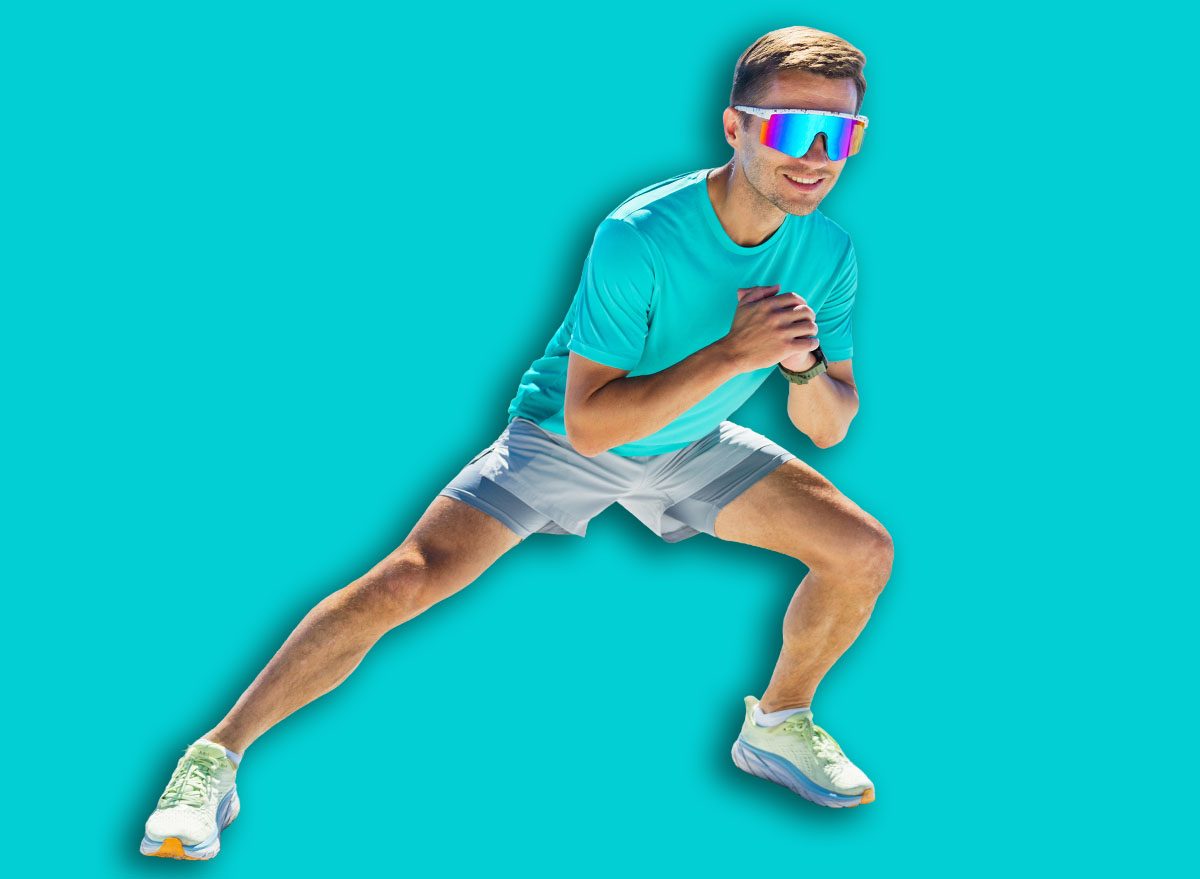
5. The Lateral Lunge: Training the Forgotten Plane
Most human movement occurs in the sagittal plane (forward and back), but life happens in all directions. A lateral lunge prepares the body for the unexpected—a side-step to avoid a fall, or reaching for an object while standing.
- The Benefit: This movement strengthens the inner thighs and outer hips, which are critical for pelvic stability and preventing common knee issues.
- Form Note: "Show your shirt" by keeping your chest high. Push your hips back as you descend to ensure the glutes, rather than just the knee, bear the load.
6. The Glute Bridge: The Floor-Based Powerhouse
The glute bridge is a low-impact, high-reward exercise. By training from the floor, you remove the instability of standing, allowing you to focus entirely on isolating and strengthening the gluteal muscles.
- The Benefit: Stronger glutes support the lower back and make all standing movements, from walking to rising from chairs, significantly easier.
- Form Note: Squeeze the glutes at the top of the movement. Avoid the urge to arch your lower back; the power should come from the hips.
Structuring Your Routine: A Strategic Approach
Consistency is the enemy of stagnation. You do not need to overhaul your entire lifestyle to see results; you need a sustainable "strength menu."
The Weekly Rotation:
- Frequency: Aim for 3 to 4 sessions per week.
- Volume: Pick three or four of the exercises above for a shorter, high-focus session, or perform all six at a lower intensity for a full-body conditioning day.
- Progression: On days when you feel stiff or fatigued, opt for supported variations (using chairs or walls). On days when you feel strong, increase the resistance by holding a light dumbbell or water bottle.
- The Golden Rule: Leave the workout feeling capable. The goal is to stimulate the muscles, not exhaust them to the point of injury. You should always feel like you could return to the workout the following day.
Scientific Implications: Why This Matters Now
Medical literature emphasizes that for men over 60, exercise is the closest thing we have to a "fountain of youth." Research indicates that resistance training improves bone mineral density, mitigates the risks associated with metabolic syndrome, and significantly lowers the risk of falls—a leading cause of hospitalization in older adults.
When we move, we aren’t just building muscle; we are signaling our nervous system to maintain coordination and balance. A body that is trained to squat and lunge is a body that remains capable of navigating the world with confidence.
Conclusion: Investing in Your Future
The changes you feel in your sixties are not a signal to retire from physical activity; they are a signal to change your approach. By incorporating these six fundamental movement patterns, you are not just exercising—you are investing in your long-term autonomy.
Whether you start with just a few minutes of glute bridges in the morning or a dedicated session of squats and lunges at the gym, the most important factor is the intent behind the movement. Keep your reps clean, keep your form steady, and treat your body with the care it deserves. By doing so, you ensure that the "gap" between what you want to do and what you can do never grows beyond your reach.
