

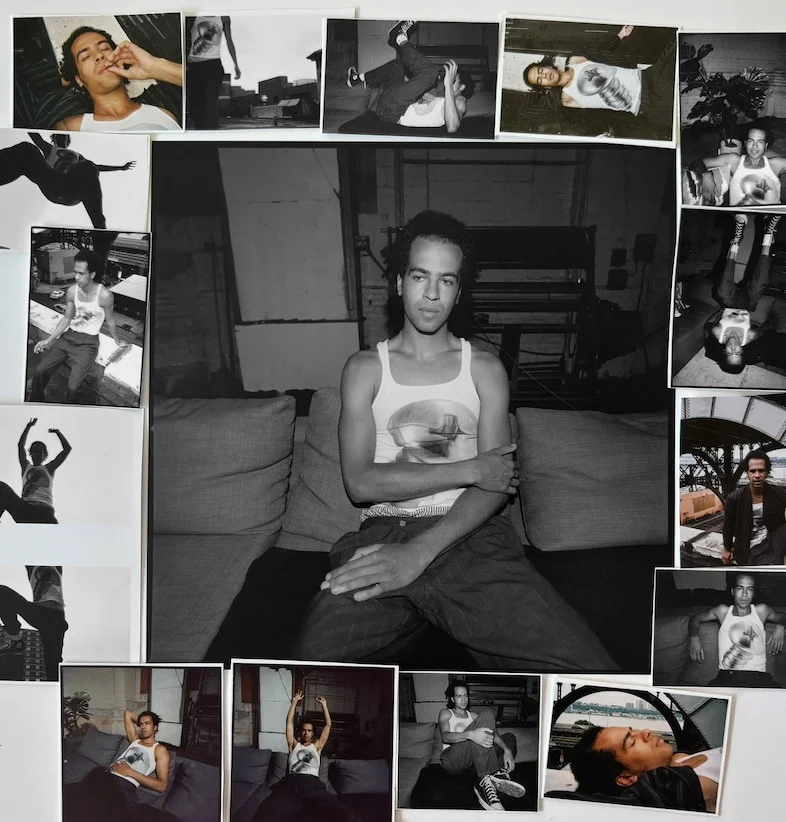
In the quiet tension of an empty room or the sudden, sharp clarity of a chance encounter, the work of the contemporary artist and musician known simply as Cato finds its resonance. His practice, characterized by layered, saturated canvases and an obsession with the kinetic energy of urban existence, has become a focal point of the contemporary art scene. As featured in the Autumn/Winter 2026 issue of AnOther Magazine, Cato’s creative philosophy is deeply indebted to the sparse, haunting prose of American writer Raymond Carver. By embracing the power of the "open-ended moment," Cato invites viewers into a dialogue where intuition outweighs explanation.
The Literary Genesis: An Affinity for Carver’s Minimalism
For Cato, the act of painting is not a process of dictation, but one of suggestion. His fascination with Raymond Carver—specifically the short story "Why Don’t You Dance?"—serves as a cornerstone for his artistic methodology. The story, which depicts a middle-aged man staging his entire domestic life for sale on his front lawn, acts as a parable for the human condition.
"Sometimes I’ll read one of Raymond Carver’s stories and think, am I reading too much into this?" Cato reflects. The artist notes that the "magic" inherent in Carver’s work is largely a product of the editorial intervention of Gordon Lish. Lish’s propensity for stripping narratives to their bare bones left ample space for the reader to project their own experiences into the gaps. "In the unedited version of Why Don’t You Dance?, Carver tells you a bit too much," Cato explains. "But the edited version is so sparse it makes you trust your instincts. I think that’s useful in life and in the way I work—not to overexplain things."
This commitment to visual economy allows Cato to cultivate a narrative ambiguity that is both unsettling and profoundly inviting. When audiences engage with his work, their interpretations become part of the art itself. "If people tell me what they think is happening in one of my paintings and it surprises me, that’s the best feeling," he adds.
A Chronology of Influence and Artistic Evolution
Cato’s journey to his current style is a tapestry of diverse visual influences. His career has been marked by a constant oscillation between the collective experience of street life and the intimate, often surreal, interiority of his subjects.
- Early Explorations: Cato began his career by documenting the energy of the street, pulling figures from found imagery and his own candid photographs of strangers.
- The Development of the ‘Oversized’ Aesthetic: A pivotal shift occurred when he began isolating these figures, granting them disproportionately large heads that hover above their bodies. This stylistic choice, which lends his work a stop-motion, cinematic quality, allowed him to elevate the "everyman" into something mythic.
- The Integration of Mediums: Over the last decade, Cato has refined a process that blends photography, collage, and airbrushing. By layering these techniques, he achieves a tactile surface that feels both modern and deeply rooted in the history of 20th-century art.
- Present Day: As of 2026, his work has matured into a sophisticated exploration of color theory—utilizing deep, metallic blacks juxtaposed against vibrant, saturated hues—to capture the enigmatic nature of scenes in barbershops, cafés, and domestic living rooms.
Supporting Data: Mapping the Artistic Lineage
Cato’s work does not exist in a vacuum. Art historians and critics have frequently noted the lineage of his aesthetic, which draws from a wide array of historical and cultural touchpoints. His practice can be understood as a contemporary synthesis of three primary schools of thought:
- Studio Portraiture: The influence of Malick Sidibé is evident in Cato’s focus on the individual within a social setting. Like Sidibé, Cato finds a unique, unforced exuberance in the way his subjects occupy space.
- Rhythmic Street Scenes: The rhythmic, kaleidoscopic nature of Romare Bearden’s collages provides a template for how Cato arranges his figures. There is a musicality to the way he composes scenes, suggesting that these figures are moving in time with a rhythm only they can hear.
- Surrealist Fragmentation: The fragmented, jarring approach to composition found in Hannah Höch’s photomontages informs Cato’s use of scale and placement. By subverting the expected proportions of the human form, he forces the viewer to confront the "strangeness" of the familiar.
These influences culminate in a style that is "wholly his own—cinematic, lively and warm," according to recent critical assessments. The interplay between these disparate sources creates a visual language that feels familiar to the viewer yet remains stubbornly impossible to fully categorize.
Official Perspectives: The Value of the Unsaid
While the artist prefers the canvas to do the talking, the response from the art community has been unequivocal. Critics emphasize that Cato’s work is a necessary antidote to the hyper-connected, information-saturated age of 2026. By choosing to "not overexplain," he creates a sanctuary for the viewer’s imagination.
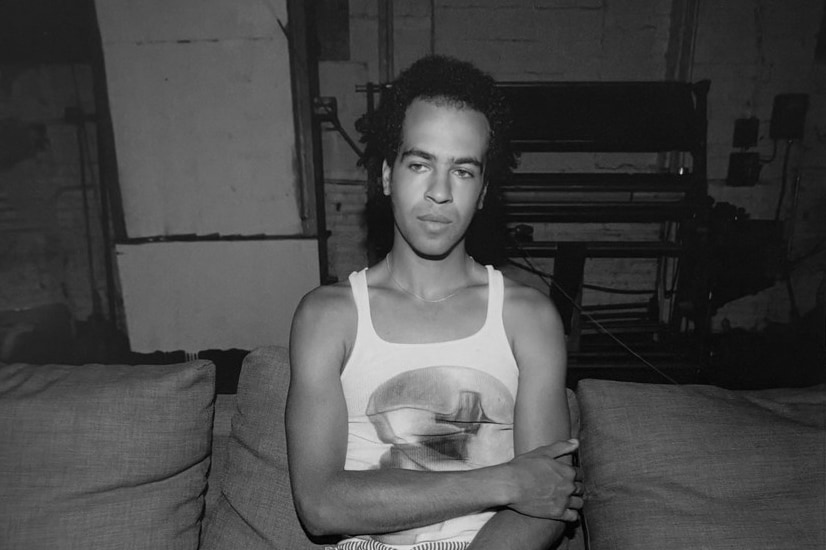
In his recent dialogue with AnOther Magazine, Cato articulated that this philosophy is not just a stylistic choice, but a lifestyle. In an era where digital platforms demand constant context and captioning, his refusal to provide a narrative "key" for his paintings is a radical act of trust in the viewer. He posits that the moment of engagement—the point at which the viewer decides who the people in his paintings are, what they are saying, and what they have lost—is the only moment that truly matters.
The Broader Implications for Contemporary Painting
The implications of Cato’s work for the broader art market and cultural landscape are significant. As we move deeper into the latter half of the 2020s, there is a visible trend toward "New Minimalism"—not in the sense of austerity, but in the sense of emotional and narrative focus.
The Return of the Human Element
Cato’s paintings are resolutely human. Despite his use of airbrushing and abstract color blocks, the focus remains on the figure. This serves as a reminder of the enduring relevance of figurative painting in an age dominated by generative AI and digital synthesis. The "handmade" quality of his work—the tactile nature of his surfaces—serves as an authentic marker of human presence.
The Democratization of Narrative
By placing his figures in mundane, relatable settings like cafés and barbershops, Cato democratizes the "subject" of art. He removes the need for grand, historical, or religious themes, opting instead to find the epic within the everyday. This echoes the mission of Raymond Carver, who famously sought to find the extraordinary weight in the ordinary lives of the working class.
The Longevity of Ambiguity
Finally, Cato’s work proves that ambiguity is a durable currency. In a world that often demands immediate clarity, his paintings require the viewer to slow down. They are not designed to be "consumed" in a feed or a gallery walk-through; they are designed to be lived with, to be revisited, and to change as the viewer changes.
Conclusion
As Cato continues to evolve, his work remains a testament to the power of the unsaid. By synthesizing the editorial precision of Raymond Carver with the visual traditions of the 20th-century avant-garde, he has created a unique space in contemporary art. His canvases are not mere images; they are open-ended questions posed to the viewer. Whether in the metallic sheen of a darkened room or the vibrant, oversized gaze of a stranger, Cato invites us to look closer, to trust our instincts, and to embrace the beauty of the unknown.
This story features in the Autumn/Winter 2026 issue of AnOther Magazine, marking 25 years of publication. The issue is available internationally, standing as a landmark in the history of fashion and art journalism.
