

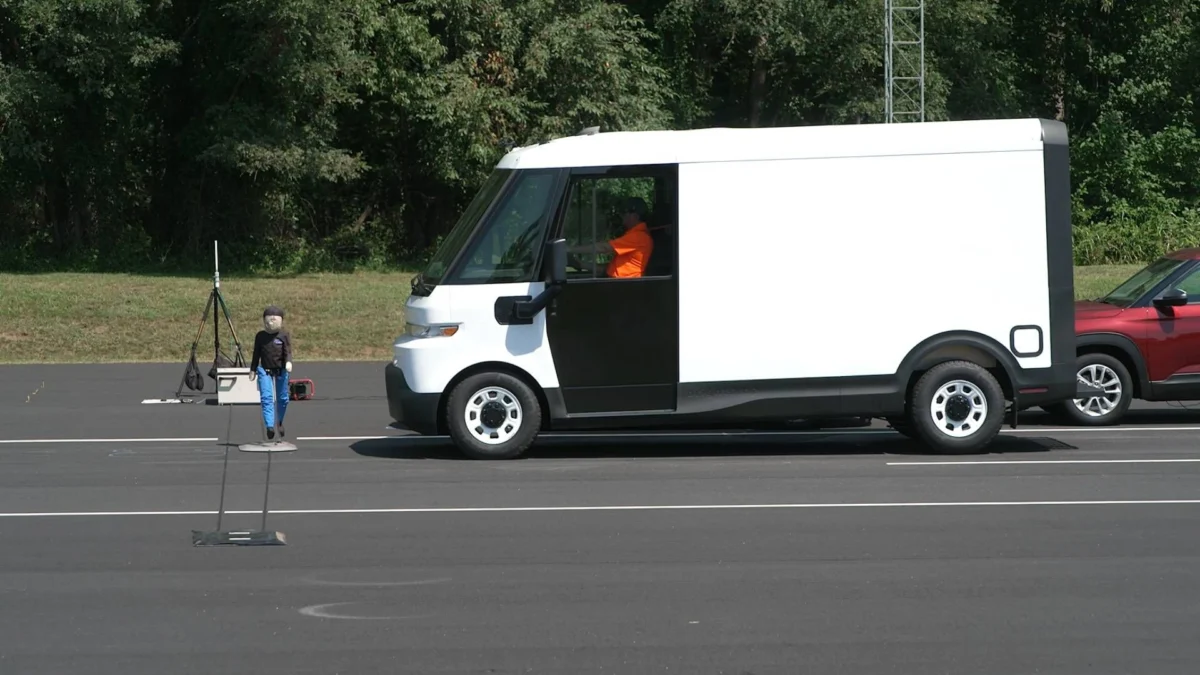
The Insurance Institute for Highway Safety (IIHS) has released a sobering assessment of the safety technology currently being deployed in the heavy-duty truck and commercial van sector. In a comprehensive series of crash-avoidance evaluations, the organization found that the automated systems designed to protect pedestrians and prevent vehicle-to-vehicle collisions are, in many instances, falling drastically short of expectations.
With commercial vehicles accounting for a significant and growing portion of roadway fatalities, the IIHS’s latest findings highlight a dangerous gap between marketing promises and real-world performance. As the industry races toward greater automation, this report serves as a stark reminder that when it comes to massive, heavy-duty vehicles, the margin for error is razor-thin—and currently, many manufacturers are missing the mark.
The State of Play: Testing Methodology and Core Findings
The IIHS testing protocol for this cohort was rigorous, designed to simulate the unpredictable nature of modern traffic. The evaluations focused on Forward Collision Warning (FCW) and Automatic Emergency Braking (AEB) systems, testing these technologies across varying speeds. The targets included passenger car surrogates, motorcycle targets, and, in a nod to the realities of highway freight, semitrailer targets.
The results were largely underwhelming. The testing revealed that motorcycles represent a particularly difficult challenge for current sensor suites. In several instances, the vehicles under test failed to decelerate entirely, while others provided warnings so late that they were rendered useless for the driver.
The most concerning aspect of the data is the sheer frequency of "Poor" ratings. Among the 11 vehicles subjected to the full battery of tests, nine earned a "Poor" rating. To put that into perspective, if the BrightDrop 400 and the Mercedes-Benz Sprinter 2500—the only two vehicles to achieve a combination of "Good" and "Acceptable" marks—were removed from the sample, the number of "Poor" ratings would equal all other positive outcomes combined.
Pedestrian Avoidance: A Fragile Safety Net
While the performance against vehicle targets was disappointing, the performance regarding pedestrian safety provided a mix of cautious optimism and systemic failure.
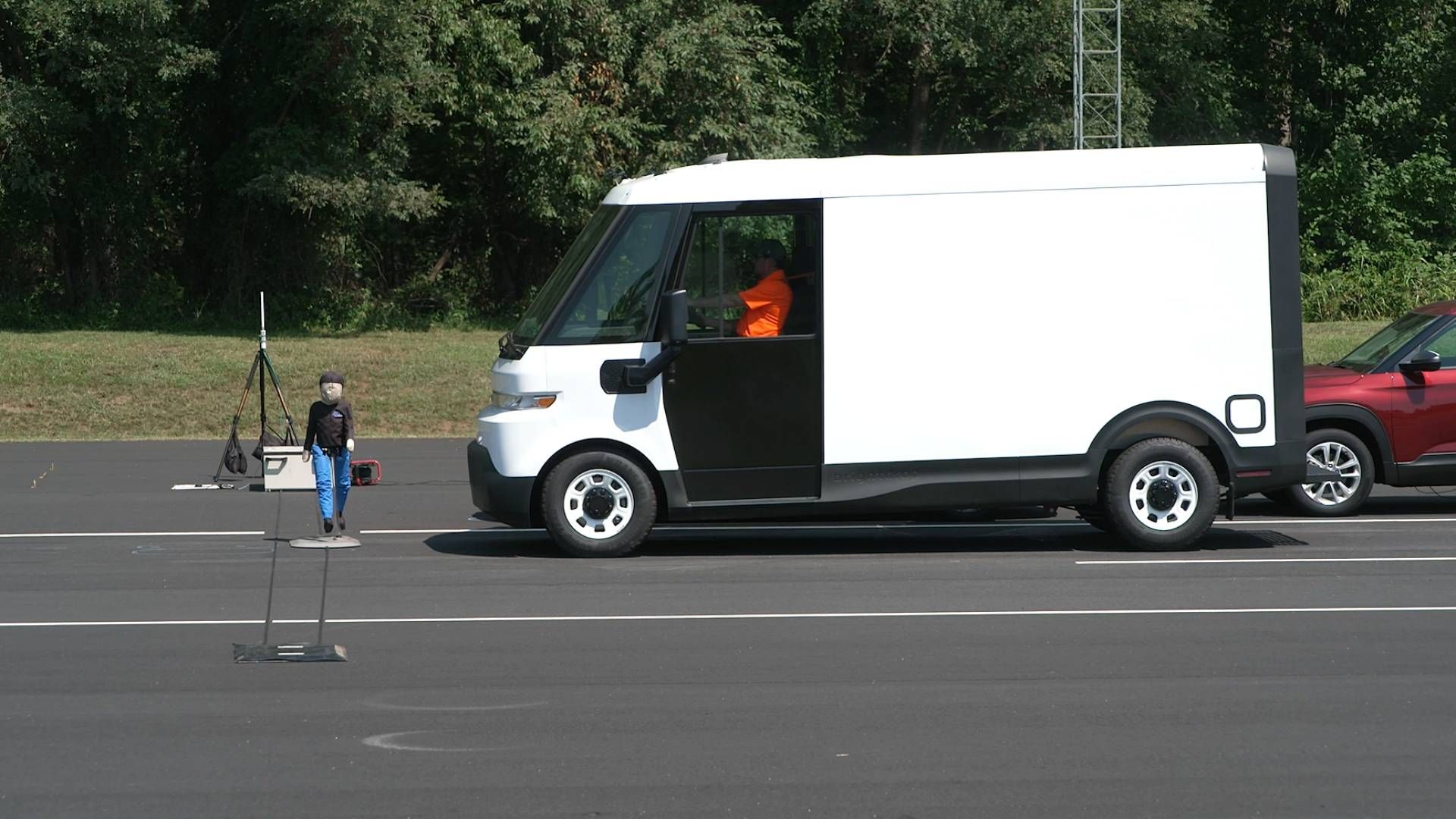
Generally, the vehicles fared better in pedestrian warning and avoidance scenarios than in vehicle-to-vehicle tests. Among cargo vans, the BrightDrop 400 and RCV-Delivery 500 managed to secure "Good" ratings, while the Sprinter 2500 earned an "Acceptable" mark. In the Class 3 pickup segment, the Ford F-350 and the Ram 3500 both managed "Acceptable" ratings.
However, the devil is in the details. A recurring theme across the testing was the inability of these systems to consistently detect children. Many of the trucks, including the better-performing models, struggled significantly more with child targets during daylight hours than with adult targets at night.
The IIHS suggests a structural cause for this failure: sensor placement. Most of these systems rely on sensors positioned near the rearview mirror. At that height, the field of view may be optimized for detecting passenger vehicles or standing adults, but it leaves a "blind spot" for smaller individuals. In some test runs, the sensors would initially lock onto the child dummy at a distance, only for the detection to vanish as the vehicle approached, likely because the child dropped below the camera’s optimal focal plane.
Even more alarming were the failures in low-light conditions. The GMC Savana 2500 and Chevrolet Express 2500, both of which received "Poor" ratings for pedestrian avoidance, failed to engage the brakes at all during nighttime trials involving an adult dummy.
The Human Cost: Why the IIHS is Pivoting to Heavy-Duty
The recent focus on heavy-duty pickups and commercial vans is not merely an academic exercise; it is a response to a mounting public health crisis. According to the IIHS, 2024 saw approximately 6,215 deaths in the United States involving crashes with medium- or heavy-duty vehicles and light commercial vans. These incidents account for a staggering 16% of all roadway fatalities.
"Front crash prevention is especially important for these larger, heavier vans and trucks because of the danger they pose to other road users," noted IIHS experts. Because of their sheer mass, these vehicles possess significantly higher kinetic energy than standard passenger cars. When an automated system fails to initiate or provide a timely warning, the results are rarely minor; they are catastrophic.

The shift toward testing these segments reflects the changing landscape of the North American automotive market. With the rise of e-commerce, the number of delivery vans navigating residential streets has skyrocketed, and the increased popularity of heavy-duty trucks as personal-use vehicles means these massive machines are sharing the road with pedestrians and cyclists more than ever before.
Engineering and Design Implications
The "Poor" ratings across the board for the majority of the fleet suggest that the automotive industry is currently struggling with a "size mismatch" in its safety software. Many of these AEB systems were initially developed for compact cars and SUVs. Adapting that software for a vehicle with a significantly higher hood line and greater curb weight is not as simple as a software update; it requires a fundamental rethink of sensor architecture.
If the sensor is too high, it misses the child. If the software is calibrated for a passenger car’s stopping distance, it may fail to account for the increased momentum of a three-ton cargo van. The fact that only two vehicles in the test could balance these requirements indicates that the industry is still in the "trial and error" phase of heavy-duty safety integration.
Furthermore, the "disappearing act" of targets during testing suggests that the algorithms currently in use are susceptible to losing track of objects when they are in close proximity to the vehicle. For a delivery driver navigating a tight parking lot or a busy crosswalk, this is a dangerous vulnerability.
Looking Forward: A Call for Standardization
The IIHS findings are expected to send ripples through the automotive engineering departments of major manufacturers. The disparity in performance suggests that the technology exists to prevent these accidents, as evidenced by the "Good" ratings achieved by a select few. However, the lack of consistency across the market suggests that safety, in the heavy-duty sector, is currently treated as an optional feature rather than a baseline requirement.
Industry analysts suggest that the IIHS report will likely serve as the foundation for future safety mandates. Just as the NCAP (New Car Assessment Program) evolved to include mandatory AEB for passenger vehicles, the commercial and heavy-duty sector may soon face similar regulatory pressure.

For consumers and fleet managers, the takeaway is clear: the presence of "Automatic Emergency Braking" on a spec sheet does not guarantee equal performance across all vehicle classes. As the IIHS continues to shine a light on these performance gaps, the burden will remain on manufacturers to recalibrate their sensors and refine their software to ensure that these vehicles—often the most dangerous on the road—are finally held to the highest possible standard of safety.
Conclusion
The IIHS’s recent testing of heavy-duty trucks and vans has exposed a significant weakness in the current trajectory of vehicle safety technology. While the industry has made monumental strides in protecting occupants of smaller passenger cars, the same cannot be said for the massive vehicles that dominate our commercial lanes.
With nine out of 11 tested vehicles falling into the "Poor" category, it is evident that the current state of automation is insufficient to handle the complexities of mixed-traffic environments, particularly when vulnerable road users like pedestrians and cyclists are involved. As we move forward, the focus must shift from simply "checking the box" for AEB inclusion to ensuring that the technology is robust, reliable, and capable of functioning across the diverse range of vehicles that populate our modern infrastructure. Until then, the safety of pedestrians and fellow motorists remains at risk, overshadowed by the very technology that was meant to protect them.
