

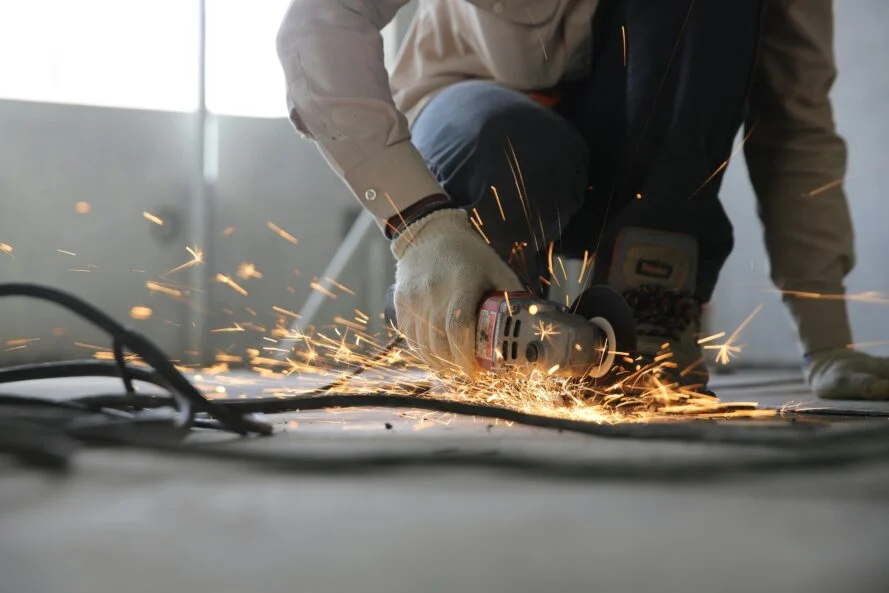
In the modern workshop, efficiency is defined by the ability to execute high-quality finishes regardless of the workpiece’s geometry. While stationary belt sanders and large-format bench grinders remain the workhorses for broad, flat surfaces, they often prove to be "square pegs in round holes" when confronted with the intricate, confined, or curved architecture of modern fabrication. Whether you are a professional metalworker refining stainless steel railings or a furniture maker navigating complex joinery, the transition to portable, specialized sanding technology is no longer a luxury—it is a technical necessity.
The Evolution of Material Removal: Main Facts
The shift toward compact, handheld abrasive tools represents a fundamental change in how we approach surface finishing. Unlike traditional machines that require the workpiece to be transported, leveled, and secured to a stationary bed, portable belt sanders bring the abrasive medium directly to the object. This mobility is critical for large-scale projects where the workpiece is fixed in place or too unwieldy to move.
The primary advantage of these tools lies in their design architecture: thin, elongated sanding arms and adjustable tracking systems that allow for precise contact in areas previously accessible only by tedious, inconsistent hand sanding. By concentrating the abrasive force onto a narrower path, these tools offer a higher degree of control, preventing the accidental gouging or "flat-spotting" often associated with aggressive, large-diameter machines.
A Chronology of Precision: From Manual Labor to Power Abrasives
Historically, the finishing of intricate metalwork and complex timber joints was a time-consuming, manual endeavor. Craftsmen relied on hand files, rasps, and sandpaper blocks, a process that demanded immense physical labor and significant time to achieve uniform results.
- The Era of Manual Finishing: Before the mid-20th century, surface refinement was limited by the human hand’s ability to maintain consistent pressure and movement.
- The Rise of Stationary Power: As workshops modernized, large stationary belt sanders became the standard, drastically improving speed but sacrificing the ability to handle non-linear workpieces.
- The Portable Revolution: The development of the portable belt sander—and eventually the specialized pipe-sanding configuration—marked the third phase. By miniaturizing the motor and belt-tracking mechanisms, engineers provided fabricators with the ability to "wrap" abrasives around complex shapes, effectively combining the speed of machine-sanding with the maneuverability of hand-tooling.
Supporting Data: Selecting the Right Configuration
Choosing a portable sanding solution is an exercise in balancing technical specifications against project requirements. Data from industrial application tests suggests that the following five factors are the primary determinants of performance:
- Belt Width vs. Surface Area: Narrow belts (typically 1/4 to 1/2 inch) are ideal for detailed metalwork and reaching into corner joints. Wider belts are more efficient for rapid material removal but lack the maneuverability required for detailed, curved work.
- Variable Speed Control: The ability to adjust motor RPM is non-negotiable for professional results. High-speed settings are optimal for aggressive stock removal, while lower speeds are essential to prevent heat-induced discoloration in stainless steel or surface burning in hardwoods.
- Arm Articulation: The most advanced portable sanders feature pivoting arms. This allows the operator to maintain a comfortable, ergonomic wrist position even when working underneath a frame or around an overhead tube.
- Abrasive Compatibility: A machine’s performance is limited by its media. Professionals should prioritize tools that support a wide range of grits—from coarse, heat-resistant zirconia for weld removal to fine-grit ceramic or non-woven belts for final polishing.
- Tracking Stability: A high-quality tool must include a reliable tracking adjustment knob. Poor tracking leads to uneven belt wear, internal housing damage, and, most importantly, inaccurate surface finishing.
Official Perspectives: Industry Standards and Best Practices
Leading manufacturers in the abrasive tool sector emphasize that operator control is the ultimate metric of a successful sander. According to technical documentation from companies like VEVOR, which produces specialized pipe and belt systems, the "best practice" involves a three-step approach:

- Test Pass: Always perform a light, low-pressure pass on a piece of scrap material with similar composition to the workpiece.
- Heat Management: Especially with metal, overheating is the enemy. By utilizing variable speeds and keeping the tool moving, the operator prevents the "work hardening" of metals and the degradation of the abrasive belt.
- Ergonomic Integration: Industrial safety boards highlight the importance of "balanced handling." Because these tools can generate significant torque, a two-handed grip is standard for safety. Models that offer adjustable handles allow for prolonged use without the fatigue that leads to sloppy, inconsistent work.
Implications for Modern Fabrication
The adoption of specialized portable sanding technology has profound implications for both aesthetic and structural integrity in manufacturing.
Precision in Weld Cleanup
When cleaning up a weld, the objective is to create a seamless transition between the weld bead and the base metal. Traditional grinding often results in a "divot" or flattened area that ruins the structural profile. A portable belt sander, by contrast, allows for a guided, controlled removal of material. The belt’s flexibility permits it to conform slightly to the surface, ensuring that the surrounding material is preserved while the weld is brought to a flush, professional finish.
The Pipe-Sanding Advantage
For the construction of railings, tubular frames, and stainless steel architectural elements, the pipe belt sander is a game-changer. These machines utilize a wrap-around belt mechanism that covers 180 to 270 degrees of the tube’s circumference. This ensures that the finish is consistent around the entire diameter of the pipe, a feat virtually impossible to replicate with a standard, flat-belt machine.
Dust and Particle Management
In the context of health and safety, the transition to portable tools has also improved shop air quality. Many modern compact sanders come equipped with integrated vacuum ports. When connected to a HEPA-rated dust extraction system, these tools capture the vast majority of wood dust or metallic swarf at the source. This is critical not only for lung health but also for preventing the accumulation of combustible dust in environments where sparks—common in metal grinding—might be present.
Conclusion: Matching the Tool to the Task
The decision to invest in a specific type of portable sander should be driven by a systematic audit of your regular workload. Ask yourself:
- Am I working primarily with straight-line timber joinery or complex tubular steel?
- Do I need to remove heavy weld slag, or am I performing light surface prep for painting?
- Is my workspace limited, requiring a tool that can navigate tight, awkward angles?
If your projects frequently involve round tubing, a dedicated pipe-sander is an investment that will pay for itself in saved time and superior finish quality within the first few jobs. Conversely, for the woodworker or general metal fabricator, a compact belt sander with an adjustable arm provides the versatility to handle everything from intricate furniture detail to edge deburring.

Ultimately, the goal of any high-quality tool is to disappear into the operator’s workflow. By choosing a machine that matches the material, provides adequate control through variable speeds, and offers the physical reach required for your specific projects, you move away from fighting the equipment and toward mastering the material. In a world where precision is a competitive advantage, the right portable belt sander is the difference between a project that looks "good enough" and one that stands as a testament to true craftsmanship.
Frequently Asked Questions (FAQs)
Q: How often should I change my sanding belt?
A: A belt should be replaced as soon as you notice a reduction in cutting efficiency or signs of "loading" (clogging with material). Using a dull belt forces you to apply more pressure, which increases the risk of overheating the material and damaging the tool.
Q: Can I use a wood-sanding belt on metal?
A: It is generally not recommended. Metal-specific belts (often ceramic or zirconia-based) are designed to withstand higher heat and resist the clogging caused by metal particles. Using wood belts on metal can lead to rapid degradation and fire hazards due to heat buildup.
Q: What is the most common mistake when using a portable belt sander?
A: The most common mistake is "forcing" the tool. Professionals know that the abrasive should do the work. If you find yourself leaning heavily on the machine, your belt is likely too fine or too dull. Let the speed of the motor and the grit of the belt remove the material at a steady, controlled pace.
Q: How do I maintain the tracking on my sander?
A: Most sanders have a tracking adjustment knob near the front or side of the arm. While the machine is running (at a slow speed), turn the knob until the belt is centered on the rollers. Check this regularly, as vibration can cause the tracking to drift over time.
