

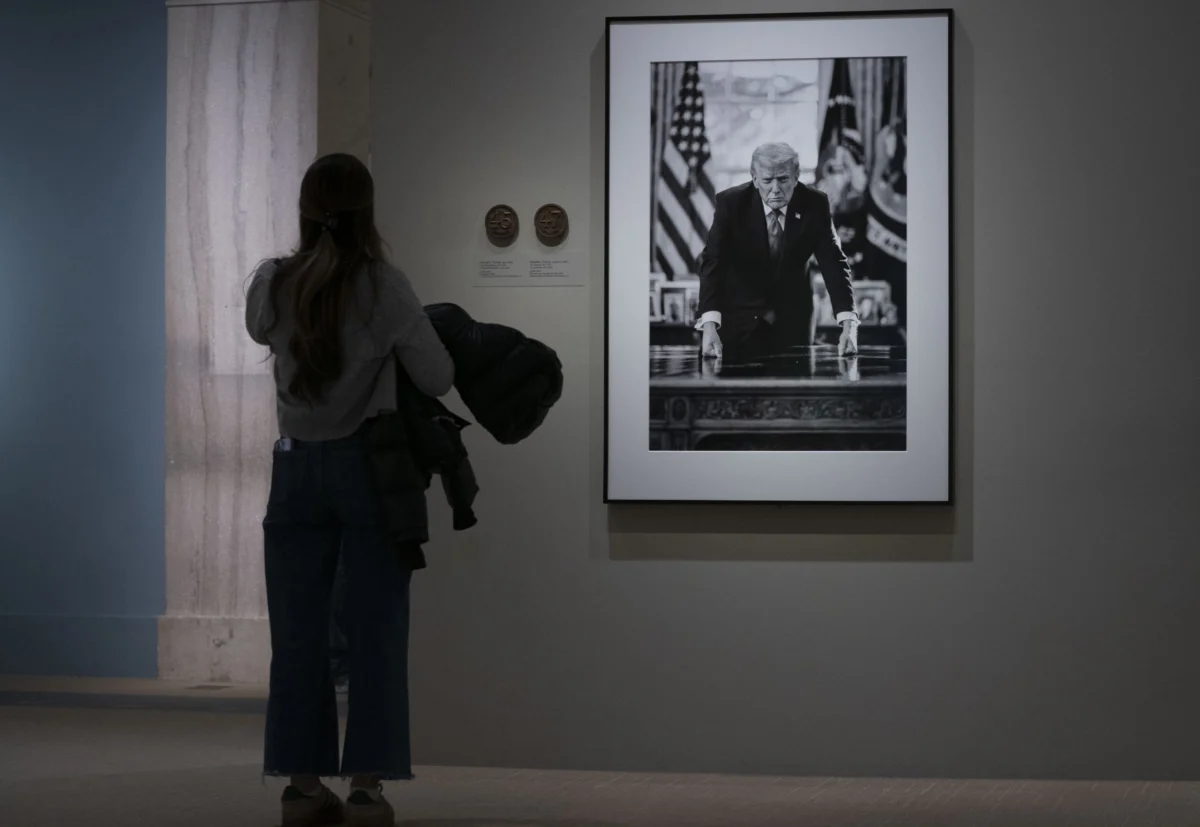
In the hallowed halls of the Smithsonian’s National Portrait Gallery in Washington, D.C., a single placard accompanying a presidential portrait has become the latest epicenter of an intensifying national debate over historical legacy, institutional independence, and the role of cultural gatekeepers in documenting modern political turbulence. Following a period of intense scrutiny and public outcry, the museum has reinstated specific references to Donald Trump’s two impeachments, opting to include the context of those proceedings in the updated wall text dedicated to the 45th President of the United States.
The move marks a significant—if contentious—conclusion to a recent chapter of administrative tension between the Smithsonian Institution and the White House. For historians and museum curators, the episode underscores the precarious nature of defining "truth" within a public-facing institution during a period of extreme political polarization.
The Chronology of a Controversy: From Erasure to Reinstatement
The controversy began when eagle-eyed visitors and political observers noted that the National Portrait Gallery had scrubbed all references to the events leading to Donald Trump’s historic dual impeachments from the summary text accompanying his portrait in the gallery’s presidential exhibition.
The original, more comprehensive text had been explicit, stating: "Impeached twice, on charges of abuse of power and incitement of insurrection after supporters attacked the U.S. Capitol on January 6, 2021, he was acquitted by the Senate in both trials."
When this language vanished, replaced by a version that notably minimized the circumstances surrounding the impeachment charges, the Smithsonian found itself under immediate pressure. The change coincided with a period of heightened oversight from the executive branch, which had expressed deep dissatisfaction with the original framing of the Trump presidency. Sources close to the situation confirmed that the White House had raised direct complaints regarding the previous wall text, sparking concerns among museum staff and the broader cultural community that political interference was dictating the curatorial narrative of a taxpayer-funded institution.
Following a wave of criticism from academics and public watchdogs, the gallery performed a pivot. The new text, while adhering to a more uniform, abbreviated format used for other presidents in the exhibit, once again includes the fact of the impeachments. It balances these events alongside other aspects of the Trump administration, such as the facilitation of the Abraham Accords and the development of the COVID-19 vaccine, while also acknowledging the January 6, 2021, attack on the U.S. Capitol and the administration’s response to the 2020 civil unrest following the murder of George Floyd.

Curatorial Intent vs. Political Pressure
At the center of the dispute is Mindy Farmer, the National Portrait Gallery historian who spearheaded the textual revisions. According to Farmer, the changes were part of a long-gestating project that began in 2022, aimed at standardizing the labels for all presidential portraits to ensure a consistent, concise style across the exhibition.
"We followed all the normal review processes for the labels," Farmer told the New York Times, emphasizing that the overhaul was a standard periodic review rather than a reactionary measure. Despite the timing of the update—occurring precisely as the White House intensified its critiques of the institution—Farmer maintains that the institution did not yield to external political pressure.
However, the intersection of the revision process and the White House’s vocal disapproval has created a perception of compromise. For many, the "standardization" of labels, while administratively sound in theory, creates a vacuum in practice. By reducing the complex, constitutional gravity of two impeachments to a single line in a list of policy achievements, critics argue that the institution risks sanitizing history to avoid the appearance of bias.
Official Responses and the "Missing" Record
The reaction from the Trump administration has been nuanced, reflecting a desire to frame the narrative on their own terms. While a spokesperson for the White House described the revised, reinstated text as "fair and accurate," they simultaneously signaled that the battle over the historical record is far from over.
"There are still many missing accomplishments from President Trump’s historic first term," the spokesperson stated in an interview with the Times. This statement highlights a fundamental tension: the administration views the museum’s wall text not as a neutral historical summary, but as a platform for legacy-building. The demand that the museum include "missing accomplishments" suggests an expectation that the National Portrait Gallery should function as a venue for the administration’s own curated history.
This creates an ethical dilemma for the Smithsonian. As a government-affiliated institution, it must balance its mandate to provide objective historical context with the political reality of its funding and leadership structure. When an administration defines its own history so aggressively, the museum’s role as an independent arbiter of that history becomes increasingly fraught.

Implications for Public Institutions
The controversy at the National Portrait Gallery serves as a microcosm of the broader struggle for the soul of American public history. Museums, once viewed as static, neutral repositories of the past, are increasingly being recognized as active participants in the construction of national identity.
The Erosion of Institutional Neutrality
The core implication of this event is the potential erosion of trust in the Smithsonian as an independent entity. If the public perceives that wall texts—often treated as definitive historical summaries—are subject to negotiation with the executive branch, the credibility of the museum’s entire presidential collection is jeopardized. The fear among historians is that such interference could lead to "self-censorship," where curators might preemptively soften language to avoid the wrath of political figures.
The Role of the Board and Oversight
The scrutiny placed on the Smithsonian’s board has also been highlighted by this incident. Recent reports have pointed to an effort by the current administration to exercise greater control over the institution’s governance, effectively creating a top-down influence that permeates the lower levels of the organization. If the board is populated by political appointees who prioritize the "accomplishments" of a particular administration over a neutral historical assessment, the museum risks losing its character as a scholarly institution.
Defining "Historical Significance"
Finally, the incident forces a conversation about what constitutes a "fair" label. In the case of a president who faced two impeachments, is it possible to be "fair" while being concise? By grouping the January 6th insurrection alongside policy achievements like the vaccine rollout, the museum is effectively making an editorial choice about the weight of these events. The debate over whether these items belong in the same paragraph is not just about word count; it is about the hierarchy of historical importance.
Conclusion: The Long View
As the National Portrait Gallery moves forward, the reinstated text serves as a reminder that history is never truly settled, especially when it concerns the recent past. The museum has attempted to thread a needle between administrative consistency and the demand for transparency, but the lingering dissatisfaction from the White House and the ongoing debate among historians suggest that the label will remain a flashpoint.
Ultimately, the Smithsonian must determine whether it will act as a guardian of a rigorous, critical historical record or as a collaborator in the crafting of political legacies. In the digital age, where every word on a museum wall is captured, shared, and debated in real-time, the stakes for getting the record "right" have never been higher. For now, the plaque remains on the wall—a fragile, contested, and deeply significant testament to a presidency that continues to challenge the boundaries of the American story.
