

For automotive enthusiasts and professional builders, the journey toward maximum performance inevitably leads to a single, critical juncture: engine management. While bolt-on modifications like high-flow intakes, performance exhausts, and upgraded forced induction systems provide the hardware for increased output, they are essentially inert without the correct software to command them. In the realm of modern performance, achieving optimal efficiency and power requires a standalone Engine Control Unit (ECU).
Among the giants in this space, two names consistently rise to the top: Haltech and Link. Both offer robust, track-proven solutions, yet they approach the challenge of engine management with distinct philosophies. Whether you are building a dedicated drift machine, a drag-strip monster, or a high-performance street car, understanding the nuances between these two systems is essential to your build’s success.
Main Facts: Defining the Standalone ECU
At its core, a standalone ECU replaces the factory computer, granting the tuner total control over every variable of engine operation—fueling, ignition timing, boost pressure, and auxiliary functions. Unlike "piggyback" systems that attempt to intercept and modify signals sent to the factory ECU, a standalone unit is the sole authority.
The Haltech Philosophy
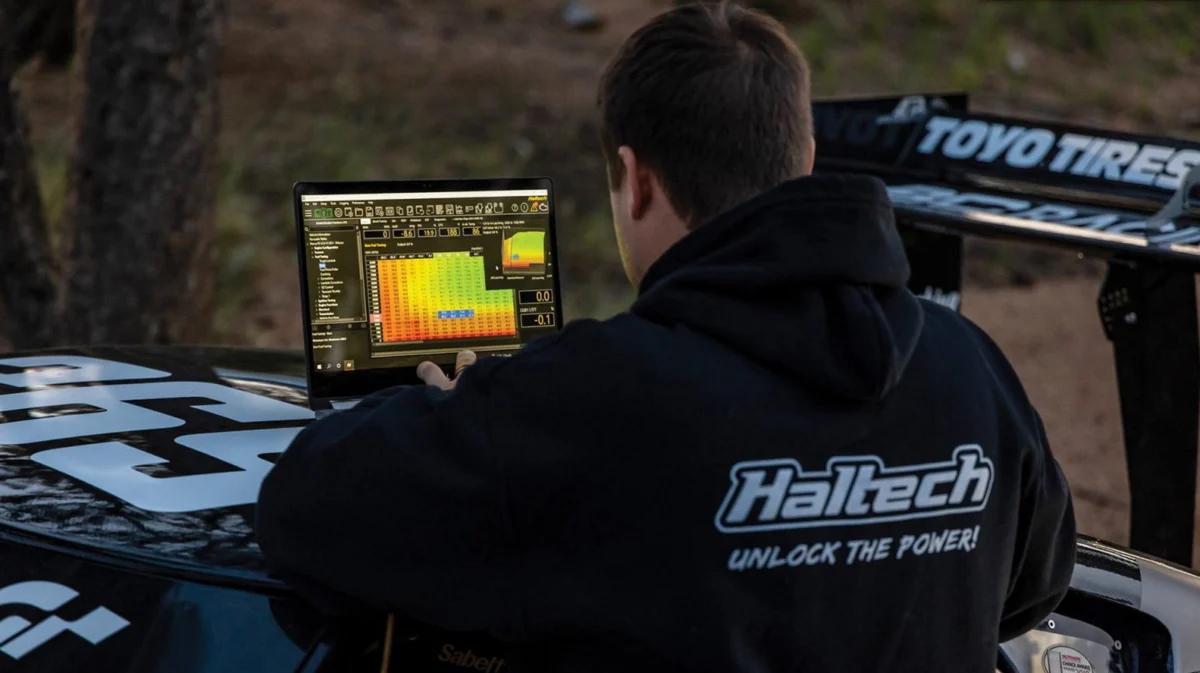
Haltech has carved out a reputation for being an all-encompassing powerhouse. Their flagship Nexus series, particularly the R3 and R5 units, represents a departure from traditional ECU design. These units are not merely engine controllers; they are integrated vehicle management systems. By combining the ECU, data logging, wideband O2 control, and a Power Distribution Module (PDM) into a single chassis, Haltech offers a "brain" that can manage the entire electrical architecture of a race car.
The Link Philosophy
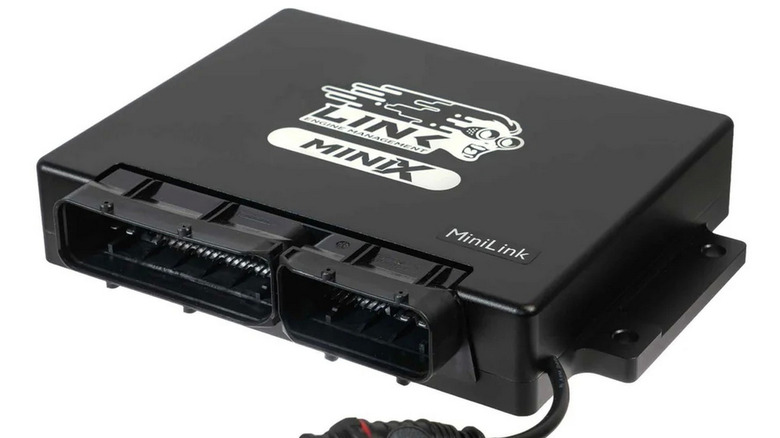
Link Engine Management, conversely, tends to favor a modular and specialized approach. Their G4X platform is renowned for its versatility and massive catalog of plug-in units, which are designed to replace factory ECUs with minimal wiring modifications. While Link offers power distribution solutions like the Razor PDM, they maintain a focus on keeping the engine management system focused and distinct, providing tuners with a highly refined interface for precision calibration.

Chronology of Development
The evolution of these two companies tracks closely with the rise of the digital age in automotive tuning.
- Early Foundations: Both companies emerged from the need for affordable, accessible engine management in the 1990s and early 2000s, a time when factory ECUs were notoriously difficult to "crack" or re-flash.
- The Plug-and-Play Revolution: Recognizing that customers were intimidated by complex wiring, both brands began developing vehicle-specific plug-in ECUs. This development allowed users to retain factory sensors and wiring harnesses, making the transition to standalone power significantly more approachable for the average enthusiast.
- The Modern Era (G4X vs. Nexus): Within the last five years, both companies have pivoted toward higher processing power and integrated features. Link’s introduction of the G4X platform brought faster communication speeds and enhanced data logging capabilities. Meanwhile, Haltech’s leap into the Nexus ecosystem represented a paradigm shift, moving the industry toward centralized vehicle management where the ECU acts as a digital circuit breaker and power distribution hub.
Supporting Data: Feature Comparison
When evaluating these systems, it is helpful to look at how they manage the essential functions of a high-performance engine.
| Feature | Haltech (Nexus Series) | Link (G4X/G5 Series) |
|---|---|---|
| Primary Focus | Integrated Vehicle Management | Engine Management Focus |
| Wiring Requirements | Often requires custom harness (for Nexus) | Strong emphasis on plug-in options |
| Software Interface | Nexus Software Programmer (NSP) | PCLink |
| PDM Integration | Integrated into the ECU hardware | External (Razor PDM) |
| User Base | Pro-race teams and complex builds | Enthusiasts, semi-pro, and circuit racing |
Software and Usability
Haltech’s NSP (Nexus Software Programmer) is designed for modern, touch-friendly workflows, providing a highly visual environment for managing complex power distribution. PCLink, used by Link, is widely regarded by tuners for its stability and logical, text-based navigation. Many professional tuners find PCLink’s "hot-key" system and depth of configuration to be superior for rapid adjustment during high-stakes dyno sessions.
Official Perspectives: The Expert Consensus
The consensus among professional engine builders is nuanced. In discussions regarding the "best" brand, the answer almost always circles back to the end-user’s specific goals and the tuner’s existing expertise.
Industry experts, such as those at NZPerformance, emphasize that compatibility is the ultimate tie-breaker. "If only one brand makes a plug-in for your exact car, that usually settles it," they note. This practical advice underscores the reality that hours of labor saved on wiring can often be redirected toward better sensors or more extensive dyno time.
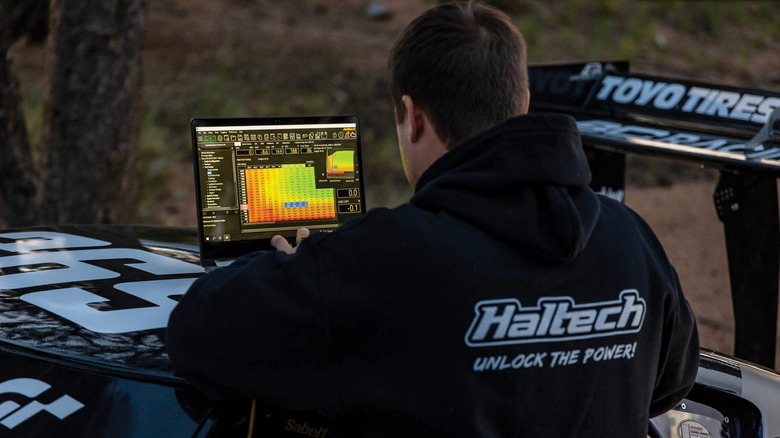
Furthermore, both manufacturers have invested heavily in technical support. Haltech is known for its extensive library of video tutorials and "base maps," which provide a strong starting point for DIY tuners. Link, meanwhile, is lauded for its robust documentation and the community support surrounding its PCLink software, which is often described as one of the most stable platforms in the industry.
Implications: How to Choose for Your Build
Choosing between Haltech and Link is rarely about which brand produces "more power." Given the correct tune, both systems can extract the maximum potential from any engine. Instead, the decision should be guided by three critical factors:
1. Your Tuner’s Preference
This is the single most important factor. If your local tuner is a wizard with PCLink but has never opened the NSP interface, you should choose Link. A tuner who is intimately familiar with a platform works faster, more safely, and more effectively. In an industry where dyno time is billed by the hour, paying for a tuner’s "learning curve" on a new system is an unnecessary expense.
2. The Scope of the Project
Are you building a car that needs to manage lights, fans, fuel pumps, and wipers alongside the engine? If you are building a stripped-out race car from the ground up, the Haltech Nexus series offers a level of integration—using one device to handle everything—that can clean up your engine bay and simplify your electrical system. If you are modifying a street-driven car while keeping the factory dash and creature comforts, a Link plug-in ECU is likely the more efficient path.
3. Future-Proofing
Consider your long-term goals. If you plan to stick with the same engine platform for years, a plug-in solution is convenient. If you are an experimental builder who enjoys swapping engines or adding complex sensors (like multi-stage nitrous, flex-fuel, or advanced traction control), look at the input/output (I/O) capacity of the units you are considering. Both companies offer "pro" level units that can grow with your project, but the way they handle external data logging and expansion modules differs significantly.
The "Software Test"
Before purchasing, both companies offer their software for free download. Download Haltech’s NSP and Link’s PCLink. Spend an hour clicking through the menus. Does the interface make sense to you? Can you find the fuel maps, the timing tables, and the sensor calibration menus easily? Your ability to navigate the software—even if you are not the one doing the final tune—will make you a more informed owner and a better collaborator with your tuner.
Conclusion
The rivalry between Haltech and Link is a testament to the health of the aftermarket industry. Both brands have reached a level of maturity where reliability, processing speed, and feature sets are exceptional. Whether you opt for the total integration of a Haltech Nexus system or the precision and plug-and-play ease of a Link G4X, you are choosing a world-class tool. The ultimate success of your build will not come from the logo on the ECU, but from the synergy between your hardware, your tuner’s expertise, and your own dedication to a well-planned, well-executed electrical architecture.
