

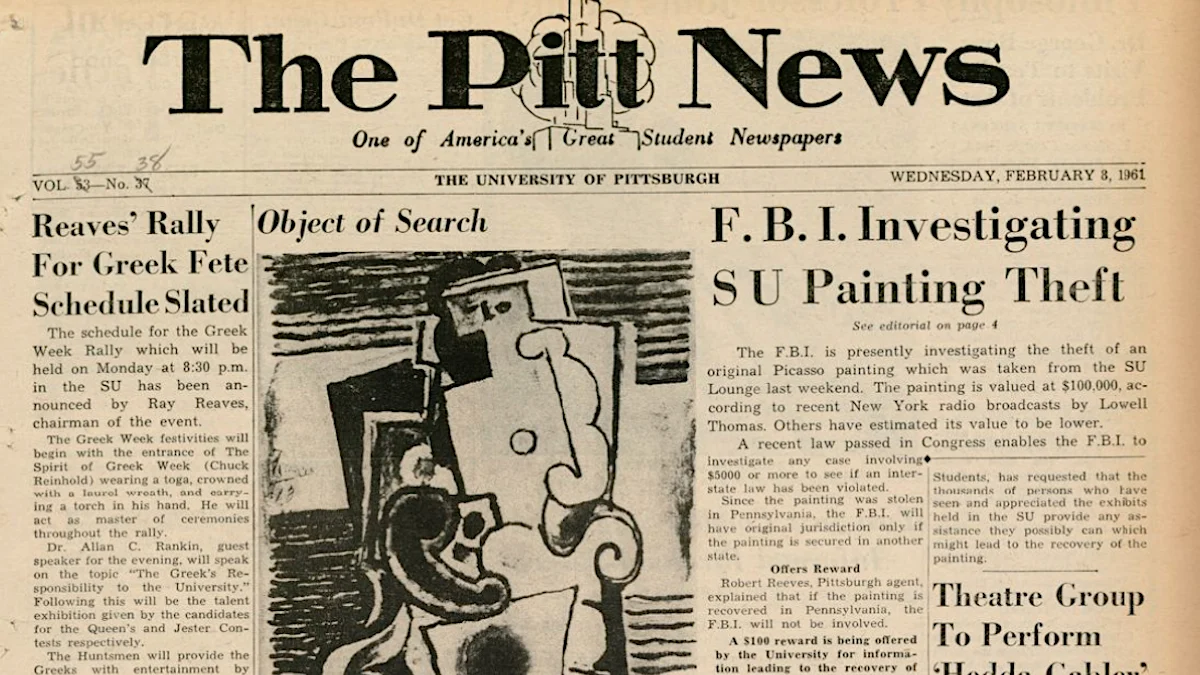
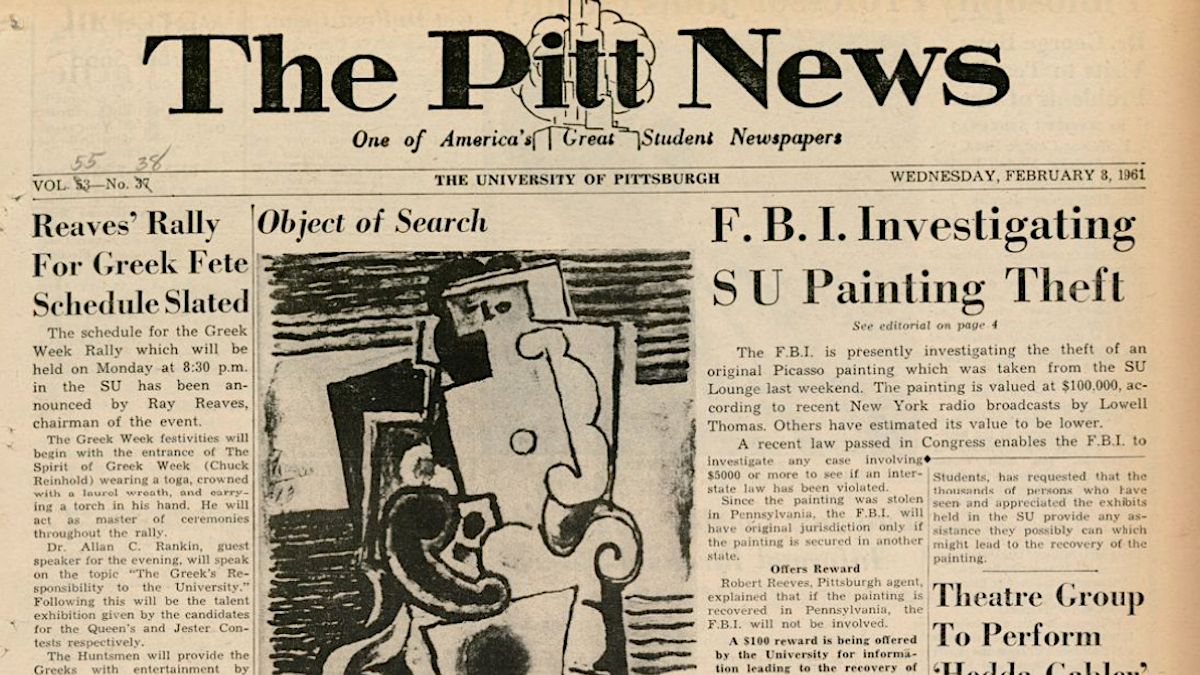
For over sixty years, the mystery surrounding the disappearance of Pablo Picasso’s Femme dans un fauteuil (1918) served as a cautionary tale in the world of art provenance and institutional security. What began as a brazen theft from the University of Pittsburgh in 1961 has finally transitioned into a new chapter of legal theater, as the Solomon R. Guggenheim Foundation has officially filed a lawsuit to reclaim the oil painting. This development marks a significant turning point in a cold case that once baffled the FBI and left a permanent scar on the history of university-based art collections.
The Disappearance: A Cold Morning in 1961
The timeline of this vanishing act began on the morning of February 6, 1961. The setting was the University of Pittsburgh’s Student Union building, where the 13.5-by-10.5-inch painting was being showcased as part of a curated exhibition on loan from the Solomon R. Guggenheim Foundation.
When a graduate student, acting in their capacity as a dormitory aide, arrived at the gallery space, the wall was bare. The theft was reported immediately to the Pittsburgh Police Department, and the Federal Bureau of Investigation was quickly tapped to lead the search. Despite the high profile of the artist and the prestige of the lender, the trail went cold almost as quickly as it began. In the ensuing months, the museum issued public notices to galleries and auction houses across North America, and a substantial reward was offered for information leading to the painting’s recovery. For six decades, however, Femme dans un fauteuil became a ghost—a noted entry in the Art Loss Register that seemed destined to never resurface.

The Rediscovery and the Legal Path Forward
The recent emergence of the painting has shocked the art world, though details regarding its whereabouts during the interim remain a focal point of the Guggenheim’s ongoing litigation. Senior Editor Valentina Di Liscia, who has tracked the nuances of this case, notes that the museum is now pursuing a aggressive legal strategy to re-establish ownership.
The core of the legal argument rests on the principle of original title. Museums generally maintain that stolen art remains the property of the rightful owner regardless of how many times it has been sold or traded in the secondary market. By filing this lawsuit, the Guggenheim is signaling that it intends to aggressively pursue the return of its asset, potentially setting a precedent for other institutions struggling with long-lost historical artifacts.
Beyond the Picasso: A Landscape of Rediscovery
The world of art history is currently experiencing a wave of "lost and found" narratives. Parallel to the Picasso case, staff writer Anna Lee has reported on a significant discovery within the archives of the National Museum of Norway. A 17th-century Flemish still life, which had been relegated to the anonymity of a storage facility for years, has been identified as a long-lost work by the esteemed artist Clara Peeters.
The process of re-attribution is a painstaking one, requiring chemical analysis of pigments, brushstroke comparison, and deep archival research. For the National Museum of Norway, this represents not just a bureaucratic success, but a cultural one: reclaiming the legacy of a female artist whose contributions have often been obscured by the passage of time and the mislabeling of historical catalogues.
The Cultural Pulse: Philadelphia’s Art Renaissance
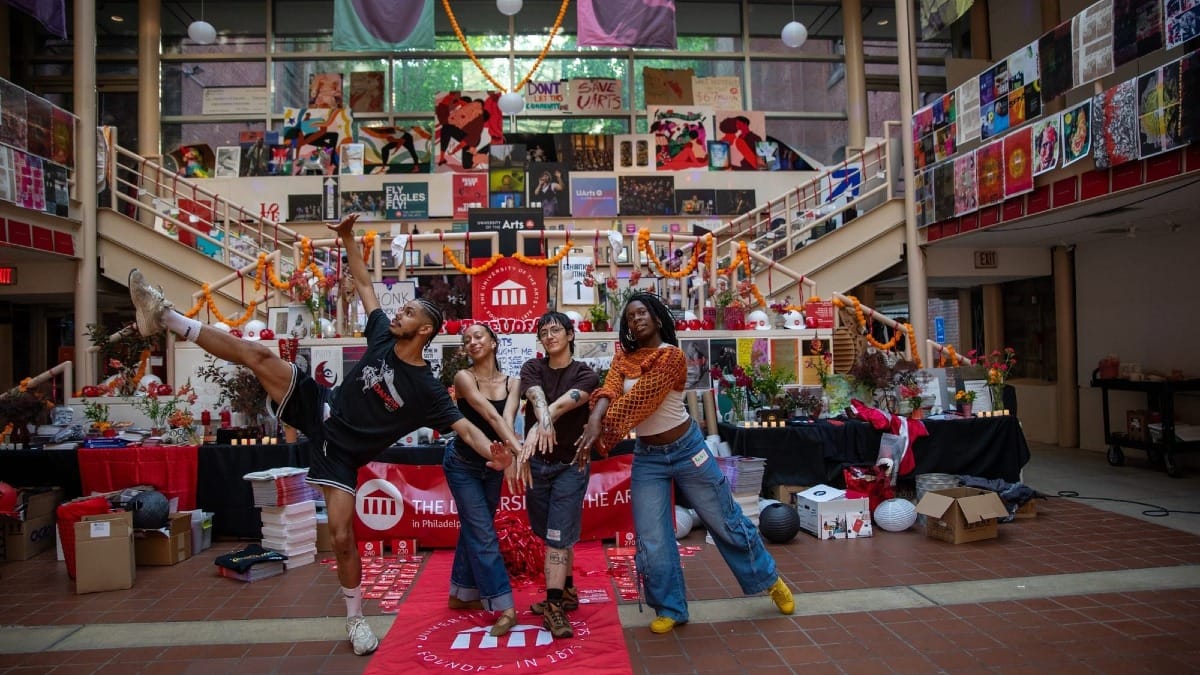
While the headlines are dominated by the recovery of lost masters, the living, breathing art scene continues to evolve. Recent activity in Philadelphia has captured the attention of critics and observers alike. Following a visit to the BlackStar Film Festival—an event noted for its profound focus on films concerning art and resistance—it has become increasingly clear that Philadelphia is currently the site of a vital creative surge.
A compelling intersection of these events is the work of the nonprofit "Village of Industry & Art." This organization is currently spearheading an initiative to transform the city’s shuttered university dormitories into affordable housing units for working artists. By repurposing vacant infrastructure into living space, the project addresses the chronic housing insecurity that plagues many urban artist communities. The success of this initiative could provide a blueprint for other cities grappling with the dual crises of real estate development and the displacement of the creative class.
Institutional Implications: Security vs. Accessibility
The Guggenheim’s situation raises a critical question for modern museums: how does an institution balance the mission of public accessibility with the harsh realities of theft and security? In the 1960s, university galleries were often far more porous than they are today. The theft of the Picasso was a product of its time, occurring in an era before the sophisticated biometric and digital surveillance systems that protect modern collections.
However, the legal repercussions are timeless. The lawsuit reminds all private collectors, galleries, and auction houses that "due diligence" is a perpetual obligation. If a painting was stolen, the taint of its provenance does not wash away with the passage of time. Collectors who purchased the Picasso in good faith—if such a provenance trail exists—may now find themselves in the precarious position of losing their investment, a reality that underscores the importance of thorough research before acquisition.
The Digital Erasure: A Broader Context
The struggle to preserve art and history is not limited to physical paintings. As noted by critic Christopher Knight, the encroachment of AI companies on human creative output is, in a sense, another form of "pulping." When AI models scrape the sum total of human artistic production without consent or compensation, they threaten to erode the value of original human expression.

This tension between the physical preservation of historical works and the digital exploitation of contemporary creativity forms the backdrop of our current cultural moment. Whether it is a 1961 Picasso or the collective intellectual property of today’s writers and artists, the fight remains the same: the defense of authorship, the sanctity of the object, and the necessity of keeping our cultural history in the hands of the public rather than the shadows of private or algorithmic vaults.
Conclusion: Looking Ahead
The return of the Picasso to the Guggenheim is not merely an administrative matter; it is the closure of a chapter that has spanned two generations. As the legal proceedings unfold, the art community will be watching closely to see how the court balances the claims of the museum against the rights of the current possessors.
Simultaneously, the revitalization of Philadelphia’s creative infrastructure and the re-attribution of works by artists like Clara Peeters suggest that while the past is never fully behind us, the future of the art world is being actively built through both preservation and community-focused development. Whether through the lens of a courtroom or the doors of an affordable housing unit for artists, the efforts to secure our cultural heritage continue to define the health of our society.
As we track these developments, the message is clear: the history of art is a living, breathing entity, constantly being lost, found, re-evaluated, and fought for. We remain committed to bringing you the most thorough coverage of these stories as they continue to evolve, from the cold cases of the 20th century to the burning questions of the 21st.
