

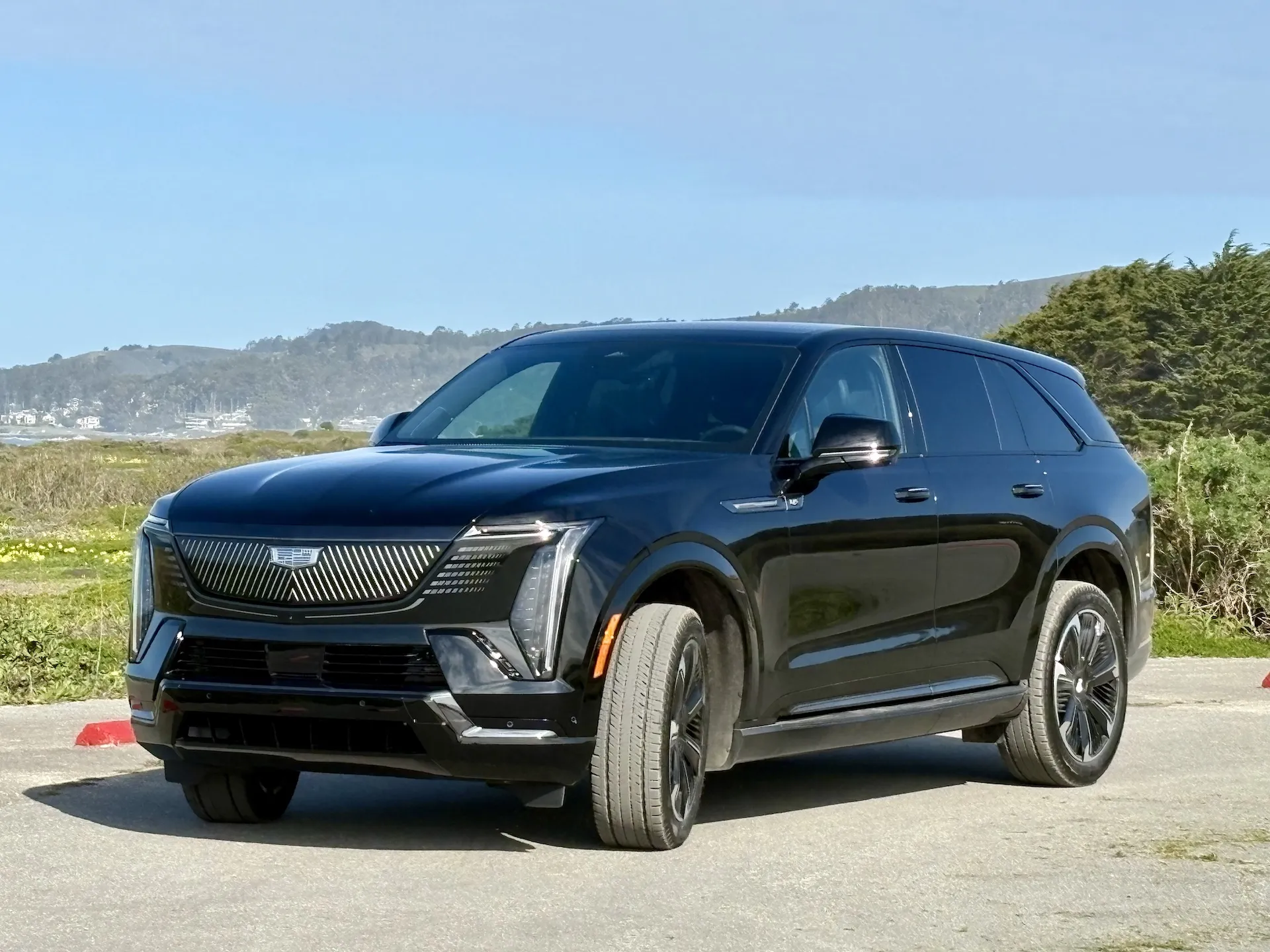
For decades, the Cadillac Escalade has stood as the undisputed heavyweight champion of the American luxury landscape. It is a cultural monolith—a vehicle defined by its chrome-heavy silhouette, massive displacement, and an aura of invincibility that has made it a fixture in everything from suburban driveways to high-stakes Secret Service motorcades. However, for all its prestige, the Escalade remained a traditionalist, seemingly insulated from the rapid electrification transforming the automotive sector.
That era of stubborn tradition has officially ended. With the introduction of the 2025 Cadillac Escalade IQ, the brand has finally made the "electric leap," trading its internal combustion roots for a high-voltage, intelligent future. The "IQ" suffix is more than mere marketing; it signifies a total rethink of what a flagship Cadillac should be in an era dominated by software, battery density, and silent, effortless power.

Main Facts: The New Standard for Electric Luxury
The 2025 Cadillac Escalade IQ represents a clean-sheet approach. While it shares a nameplate with the iconic gas-powered SUV, it shares almost nothing else. Built on a dedicated electric architecture—the same foundation supporting GM’s heavy-duty electric trucks and SUVs—the IQ is a three-row luxury vessel that eschews the "more is more" mentality of gas-guzzling performance for a more sophisticated, tech-forward experience.
The vehicle is powered by a dual-motor all-wheel-drive system drawing energy from a massive 205-kWh battery pack. This setup produces a staggering 750 horsepower and 785 lb-ft of torque in "Velocity Max" mode, propelling the multi-ton behemoth from 0 to 60 mph in just 4.8 seconds. Beyond raw speed, Cadillac claims the IQ is the longest-range electric SUV currently on the market, positioning it as a direct challenge to premium rivals like the Lucid Gravity and the electric Mercedes-Benz G-Wagen.
Chronology: From Fossil Fuels to the Ultium Era
The journey to the Escalade IQ began in the shadow of GM’s pivot toward an "all-electric future." As the industry shifted, Cadillac faced a dilemma: how do you evolve an icon without alienating its fiercely loyal, traditionalist customer base?
- The Planning Phase: GM engineers sought to leverage the Ultium battery platform to maintain the Escalade’s imposing footprint while drastically improving its efficiency.
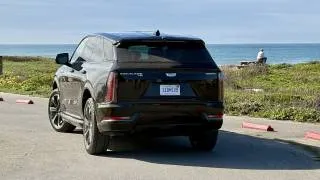
- The Design Reveal: The IQ was unveiled as a sleeker, more aerodynamic departure from the blocky, upright aesthetic of its predecessors. By lowering the drag coefficient by roughly 15%, designers focused on optimizing the SUV for highway cruising.
- The Market Entry: With the 2025 model year, the Escalade IQ hit the market in two distinct trim styles—Luxury and Sport—with varying levels of equipment.
- Future Outlook: Looking toward 2026, the company has already signaled the arrival of the extended-wheelbase "IQL" model, which will further expand the platform’s utility to compete with the long-wheelbase ESV versions of the traditional Escalade.
Supporting Data: Performance and Technical Specifications
To understand the Escalade IQ, one must look at the numbers. It is a masterclass in balancing massive physical scale with high-tech agility.
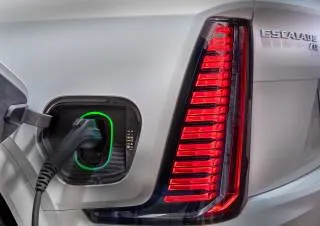
- Battery and Charging: Utilizing an 800-volt architecture, the IQ is capable of rapid charging that adds 100 miles of range in just 10 minutes at a 350-kW DC fast charger. For home users, it supports 19.2-kW charging, providing roughly 37 miles of range per hour.
- Suspension and Handling: The vehicle employs four-corner air suspension paired with Magnetic Ride Control 4.0. This combination allows for a variable ride height (up to 1 inch of lift or 2 inches of lowering) and provides an uncanny level of comfort that masks the vehicle’s immense weight.
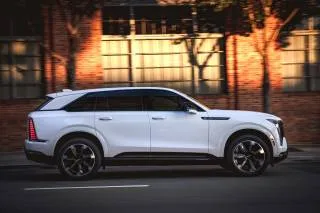
- Dimensions: At 224.3 inches long, it is nearly identical in length to the long-wheelbase ICE Escalade. However, the internal packaging differs significantly; while the first two rows are cavernous, the third row remains a compromise, reflecting a shift in priority toward cabin luxury over pure passenger volume.
- Towing: Despite its electric nature, the IQ maintains utility with an 8,000-pound towing capacity, ensuring it retains the "workhorse" reputation of the Escalade brand.
Official Responses and Strategic Vision
Cadillac leadership has framed the Escalade IQ not just as a product, but as a repositioning of the entire brand. According to company engineers, the goal was to provide "interior quiet" and "glide-path" performance. By prioritizing silence and smoothness, the brand is targeting a new generation of buyers who equate luxury with serenity rather than the raw roar of a V8 engine.
The decision to omit support for Apple CarPlay and Android Auto—in favor of a native, Google-integrated infotainment system—is perhaps the most controversial aspect of the launch. Cadillac officials maintain that this is a strategic move to ensure total integration between the vehicle’s complex hardware and software, though it remains a point of friction for tech-centric consumers. Furthermore, the exclusion of Dolby Atmos in the 2025 model (which will be standard in 2026 models) is described by insiders as a "timing and hardware" bottleneck, rather than a lack of intent.
Implications: A Shift in the Luxury Paradigm
The arrival of the Escalade IQ has profound implications for the high-end SUV market.
The End of the "Traditional" Luxury SUV
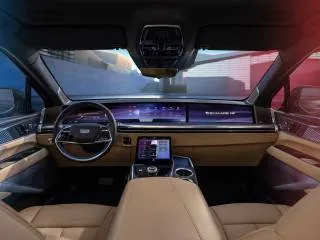
For decades, luxury in an SUV was measured by the size of the engine and the amount of wood grain on the dashboard. The Escalade IQ suggests that the new measure of luxury is computational. Features like the 55-inch panoramic display, the "Velocity Max" drive mode, and advanced Super Cruise hands-free driving capabilities represent a fundamental shift. Luxury is no longer just about the ride; it’s about the digital experience and the integration of the vehicle into a broader home-energy ecosystem.
Sustainability vs. Status
There is an inherent irony in a 9,000-pound electric vehicle, yet the Escalade IQ succeeds by meeting the consumer where they are. It offers the status and comfort of a flagship SUV without the environmental guilt (or the gas station visits) associated with its combustion-powered counterparts. By embracing bidirectional charging and vehicle-to-grid capabilities, Cadillac is also positioning the IQ as an asset for home energy management, a step toward viewing the vehicle as a mobile power plant.
Market Competition and Future-Proofing
The Escalade IQ is entering a crowded space. With the Mercedes-Benz G 580 and the Range Rover EV on the horizon, the battle for the "Electric Ultra-Luxury" crown is intensifying. Cadillac’s decision to launch with a price point starting at $129,990—and climbing toward $159,000—positions it squarely against the most expensive vehicles in the world.

The success of the Escalade IQ will ultimately depend on whether consumers view it as a legitimate evolution of the Escalade legend or a separate entity entirely. The "IQ" branding is a clever bridge, but the vehicle’s ability to deliver a seamless, high-tech experience will be the true test.
Conclusion
The 2025 Cadillac Escalade IQ is more than a flagship; it is a declaration of intent. It proves that a brand known for the opulence of the past can successfully navigate the complexities of the future. While it faces challenges—ranging from its third-row space limitations to the ongoing debate over the lack of smartphone mirroring—the overall package is a compelling argument for the electric transition. By combining the soul of an American icon with the brains of a modern computer, Cadillac has created a vehicle that is not just smarter than its predecessor, but perhaps, in its own way, more regal. Whether it will satisfy the die-hard, V8-loving purists remains to be seen, but for the next generation of luxury buyers, the Escalade IQ is clearly the new standard.
