

We are socialized from our earliest years to view existence through a competitive lens. From the playground to the corporate boardroom, the phrase "the game of life" is ubiquitous, serving as both a description of our social order and a prescriptive roadmap for how to navigate it. Whether through self-help literature on Amazon promising "how to win at life" or the enduring cultural footprint of the Milton Bradley board game—first introduced in 1860 and still a staple in American households—we are constantly nudged toward the idea that life is a tournament.
However, a growing body of psychological research and philosophical inquiry suggests that this metaphor is not merely reductive; it is profoundly corrosive. By framing life as a zero-sum game, we risk sacrificing the very elements that make existence meaningful: genuine connection, personal autonomy, and internal fulfillment.
The Chronology of a Cultural Obsession
The conceptualization of life as a game has deep historical roots, evolving alongside the rise of industrial capitalism. In the mid-19th century, Milton Bradley’s The Checkered Game of Life provided a framework that mirrored the Victorian emphasis on morality and industriousness. Players navigated a board designed to reward "virtue" and punish "vice," essentially gamifying the Protestant work ethic.
As the 20th century progressed, the "game" shifted from moral instruction to meritocratic competition. The commercials of the 1960s, 80s, and 90s for the updated Game of Life shifted the focus toward material accumulation: getting the bigger car, the more prestigious career, and the more expensive home. This transition mirrored broader societal shifts, where success became increasingly tethered to objective, measurable metrics. We moved from a society that asked, "Are you a good person?" to one that asks, "What is your net worth?" and "Where did you go to school?"
The Mechanics of the "Game"
In the real world, the rules of this competition are rarely codified, yet they are universally understood. To "win," one must accumulate specific trophies: high-status careers, aesthetic perfection, social capital, and elite educational credentials.
Sociologists have noted that this internalization of the competitive framework has created a "status anxiety" epidemic. When individuals view life as a game, they stop viewing life as an experience to be savored and begin viewing it as a series of hurdles to be cleared. This perspective turns the passage of time into a scoreboard, where every missed promotion or perceived social slight feels like a devastating loss.
Supporting Data: The Psychology of Comparison
Why is this framework so destructive? The answer lies in the psychological impact of constant, objective comparison.
The Subjectivity of Satisfaction
Research into subjective well-being consistently shows that human happiness is not derived from objective status markers, but from internal alignment—what psychologists call "intrinsic motivation." The components of a truly "good life"—ethics, deep relationships, and meaningful labor—are fundamentally subjective.
Consider the challenge of quantifying a meaningful relationship. There is no metric for the depth of a friendship, yet we often reduce our social standing to "how many people envy my life" or "who has the better network." When we prioritize things that can be measured (like the size of a house or the prestige of a job), we inadvertently subordinate the intangible, meaningful aspects of life that cannot be measured. This creates a "poverty of meaning" even among the financially wealthy.
The Erosion of Empathy
Competition, by definition, requires a loser. When we view our peers as competitors, our brain’s empathy centers are effectively dampened. In a zero-sum worldview, another person’s success—be it a promotion, a stable marriage, or a child’s achievement—is viewed as a relative loss for the self. This creates a state of "ambiguous relationship," where we are expected to support our friends and family while simultaneously resenting their success because it threatens our position on the "leaderboard."
The Philosophical Implications: Finite vs. Infinite Games
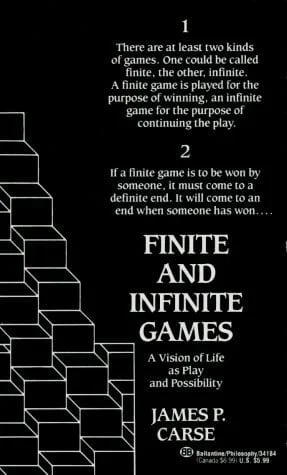
The philosopher James Carse, in his seminal work Finite and Infinite Games, provides a vital framework for understanding this crisis. A finite game is played for the purpose of winning—it has fixed rules, clear boundaries, and an end point. An infinite game is played for the purpose of continuing the play.
The Danger of the Finite Trap
When we treat life as a finite game, we surrender our autonomy. We accept rules created by corporations, social media algorithms, and outdated cultural norms. We chase goals formulated by others, leading to what economists call a "Pyrrhic victory"—a success so costly it is indistinguishable from defeat. By the time an individual achieves the "win" (e.g., reaching a high-level executive role at the cost of their health and family), they often find that the game they were playing was never worth the prize.
Autonomy and Value Alignment
The alternative is to treat life as an infinite game, where the goal is to expand the boundaries of the game itself—to grow, learn, and deepen connections. This requires a radical shift in perspective:
- Rejecting Objective Metrics: Stop equating self-worth with external status.
- Cultivating Internal Rules: Define success based on your own values, not the market’s.
- Prioritizing Connection: Actively celebrate the success of others, thereby reinforcing the community rather than the competition.
Official Responses and Societal Shifts
In recent years, institutional leaders and wellness experts have begun to push back against the "gamification" of success. Educational institutions, once the primary architects of this competitive pressure, are increasingly emphasizing "social-emotional learning" over pure academic output. Meanwhile, the "slow living" movement has gained traction as a direct rejection of the high-stakes, hyper-competitive lifestyle that defined the late 20th century.
Despite these shifts, the pressure remains high. The digital age, with its constant stream of "highlight reels" on social media, forces us to play a game of constant, global comparison. The "specter of public defeat" has never been more visible, as failure is now often broadcasted for all to see.
Implications for the Future
If we continue to view life as a game, we are destined to deal with an ever-increasing burden of shame and disappointment. The reality is that 99.99% of the population will not reach the pinnacle of the traditional "success" pyramid. If we accept the premise of the game, we essentially guarantee that the vast majority of people will feel like losers.
However, by decoupling our self-worth from the competitive framework, we open the door to a more resilient, compassionate, and authentic existence. The goal is not to stop playing games—sports, hobbies, and friendly competition remain excellent avenues for fun and skill-building—but to recognize when the "game" has bled into areas of life that are far too important to be kept on a scoreboard.
Conclusion: Reclaiming the Human Experience
Comparing ourselves to others offers no sustainable pathway to happiness. It leads either to the hollow arrogance of the "winner" or the crippling insecurity of the "loser." Neither state allows for the growth, vulnerability, or joy that defines the human experience.
Ultimately, the most successful people are those who stop playing by the world’s rules and begin writing their own. It is time to treat our careers, our families, and our ethics as things to be nurtured, not as assets to be ranked. We must realize that life is not something to be won; it is something to be lived. By stepping out of the arena of competition, we finally gain the freedom to define what a "good life" actually means for us.
