

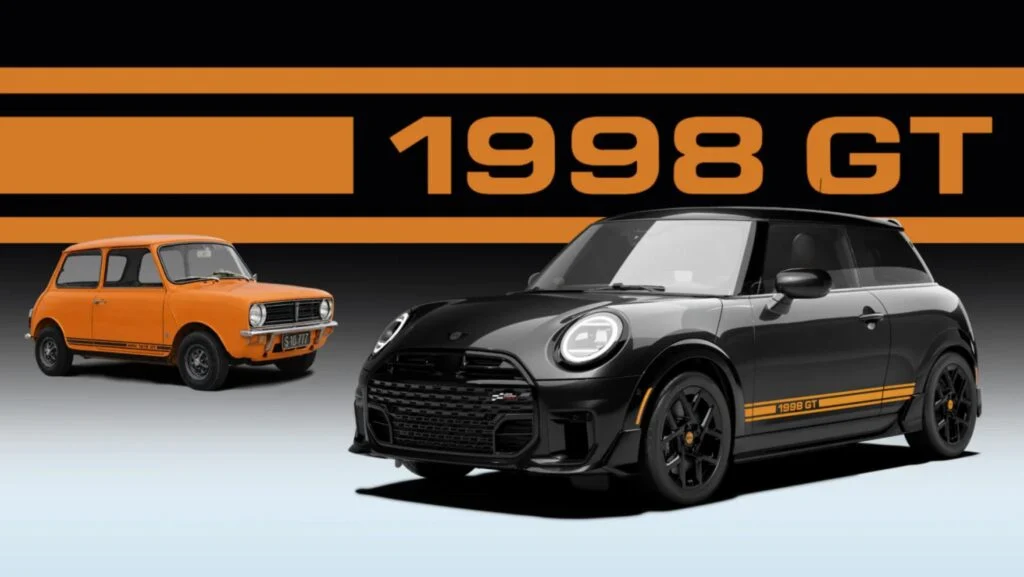
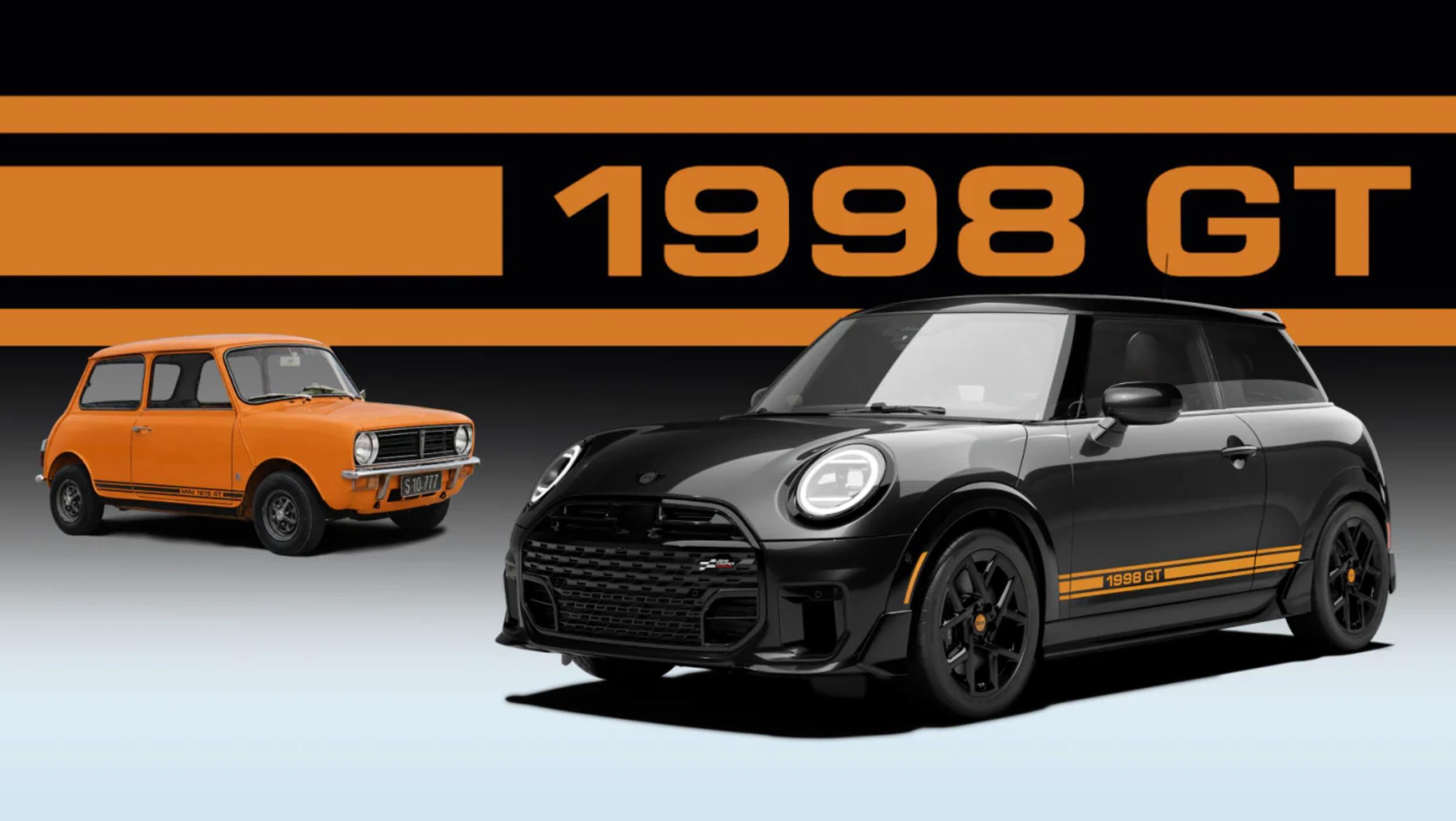
In the sprawling landscape of automotive special editions, few manufacturers manage to mine their own heritage as effectively as Mini. With the unveiling of the 2027 Mini 1998 GT Edition, the brand has once again turned to its archives, pulling inspiration from the legendary Mini 1275 GT of 1969. While the moniker might lead Gen-Z enthusiasts to assume it is a nostalgic nod to the year 1998, the truth is rooted in engineering: the name honors the 1,998cc displacement of the turbocharged four-cylinder engine nestled within its engine bay.
This release represents the sixth installment in Mini’s ambitious "Icon Drops" series for 2026—a campaign designed to keep the brand’s color and trim department in a state of perpetual creative motion. However, beneath the striking Midnight Black Metallic paint and vibrant orange accents lies a complex value proposition that forces consumers to weigh the allure of exclusivity against the cold, hard reality of performance metrics.
The Core Facts: Aesthetics vs. Athletics
At its heart, the 1998 GT is a stylistic departure from the standard Mini Cooper C, yet it shares the same powertrain. The vehicle is propelled by a 2.0-liter turbocharged four-cylinder engine, producing a modest 161 horsepower (120 kW). In an era where the Cooper S delivers a more robust 201 horsepower and the full-fat John Cooper Works (JCW) variant pushes 228 horsepower, the 1998 GT occupies a curious middle ground.
While it lacks the sheer mechanical punch of its stablemates, Mini has attempted to bridge the gap with chassis-focused enhancements. The car is equipped with a sport-tuned suspension and upgraded braking hardware sourced directly from the JCW division. These additions are intended to provide the driver with a more "tossable" and precise handling experience, suggesting that the 1998 GT is designed more for the winding B-road enthusiast than the drag-strip competitor.
Visually, the vehicle is unmistakable. The Midnight Black exterior is punctuated by aggressive orange striping that traces the bodywork, complemented by bespoke "1998" decals and GT emblems mounted on the C-pillars and tailgate. The 17-inch JCW Sprint Spoke alloy wheels, finished in black with signature orange center caps, tie the aesthetic together, while the full JCW aerodynamic body kit—including specialized bumper extensions, side skirts, and a prominent roof spoiler—ensures the car looks every bit the part of a track-bred machine.
A Chronological Legacy: From 1275 to 1998
The lineage of the "GT" badge within the Mini family is a storied one, stretching back to the late 1960s. The original Mini 1275 GT (1969) was a game-changer for the brand, introducing a boxier nose that departed from the traditional rounded silhouette. It became a symbol of the era’s burgeoning interest in compact performance.

Mini’s tradition of using displacement-based naming continued into the modern era, most notably with the 1499 GT released in 2021. That vehicle, much like the 1998 GT, used a smaller-displacement engine to evoke the spirit of the original while packaging it in a modern, limited-run aesthetic. The 1998 GT is the natural successor to this philosophy, serving as the sixth chapter in a planned eight-part "Icon Drop" cycle. This strategy of iterative, short-run special editions has allowed Mini to maintain high consumer interest without the need for significant R&D overhauls, turning the standard Cooper platform into a canvas for ever-changing design narratives.
Supporting Data: The Cost of Exclusivity
The financial positioning of the 1998 GT is perhaps its most controversial attribute. With a starting MSRP of $36,875 (plus a $1,350 destination fee), the car finds itself in a precarious market position.
Pricing Comparison (Estimated US Market)
- Mini Cooper S: $32,800
- Mini 1998 GT Edition: $36,875
- Mini JCW (Flagship): $38,900
By charging a premium over the more powerful Cooper S, Mini is banking heavily on the brand’s "cult of personality." Buyers are effectively paying a surcharge of over $4,000 for the privilege of owning a serialized, limited-production model. For the average consumer, this math is difficult to justify; however, for the dedicated "Mini-phile," the value lies in the interior appointments.
Inside, the 1998 GT is treated to a premium JCW-spec cabin. The seats are wrapped in "Black Vescin," a high-durability synthetic leather featuring a distinct vintage knit pattern. Further touches include a heated JCW steering wheel, paddle shifters, and consistent "1998 GT" branding across the scuff plates, floor mats, and the Miko Box storage compartment. These tactile upgrades aim to justify the price hike by creating an environment that feels substantially more upscale than the base Cooper C.
Official Responses and Strategic Vision
Mini’s decision to continue the "Icon Drops" program is a calculated move to maintain relevance in a market that is increasingly dominated by electrification and utilitarian SUVs. By leaning into the "ICE" (Internal Combustion Engine) legacy of the brand, Mini is courting traditionalists who may be wary of the company’s impending shift toward a full-electric lineup.
In internal discussions, Mini executives have highlighted that these editions are not merely about power-to-weight ratios. Instead, they are about "curated lifestyle experiences." By partnering with the JCW division to tune the suspension, Mini is attempting to offer a "best-of-both-worlds" scenario: the everyday driveability of the base Cooper C combined with the visual and handling flair of a track car. Whether this "lifestyle-first" approach will resonate with the hardcore performance crowd remains to be seen, but the initial reservation numbers suggest that there is a significant appetite for collectible, design-forward variants.

Implications: Where Does Mini Go From Here?
The 1998 GT Edition serves as a microcosm of the current challenges facing premium small-car manufacturers. As global emissions standards tighten and the transition to electric vehicles accelerates, the internal combustion engine is increasingly being relegated to a "specialty" status.
The Implications for the Brand:
- Niche Monetization: Mini is demonstrating that even as a brand pivots toward the future, it can monetize its past. By keeping the mechanical core consistent, the company can generate significant margin on base-level models by simply upgrading the trim and aesthetic.
- Market Differentiation: In a segment crowded with generic hatchbacks, the 1998 GT stands out as a "pre-packaged" custom car. It appeals to a buyer who wants a vehicle that looks modified from the factory without the headaches of aftermarket tuning.
- The "Last Hurrah" Sentiment: There is a palpable sense of finality to these special editions. As rumors swirl about the next generation of Cooper models potentially exploring rear-wheel-drive platforms or full-electric architectures, the 1998 GT feels like a love letter to the front-wheel-drive, turbocharged, manual-adjacent heritage that made the brand a global icon.
Conclusion
The 2027 Mini 1998 GT Edition is a fascinating paradox. It is a car that asks you to pay more for less horsepower, yet it delivers that request with such confidence and style that it remains inherently desirable. It is not designed for the stopwatch or the dyno; it is designed for the garage that already has a classic Mini, the owner who values the lineage of the 1275 GT, and the enthusiast who wants a modern daily driver that feels like a piece of rolling history.
As the first deliveries are scheduled for this fall, the market will soon decide if the 1998 GT is a masterclass in branding or a reach for a bygone era. Regardless, for those who value the "Mini" experience above all else, this special edition serves as a timely reminder that sometimes, the most important part of a car isn’t the number on the spec sheet—it’s the story the car tells when it’s parked at the curb.
