


As the calendar turns, the biological imperative to maintain physical autonomy becomes paramount. For those navigating their sixth decade and beyond, the focus of fitness often shifts from aesthetic gains to the preservation of functional capacity. Central to this pursuit is the humble squat—a fundamental movement pattern that acts as a barometer for your long-term vitality, bone density, and metabolic health.
According to Dr. Andrew Gorecki, PT, DPT, FAFS, owner of Superior Physical Therapy in Traverse City, Michigan, and co-founder of the remote therapeutic monitoring platform MovementRx, building a steady, resilient lower body is not merely an exercise goal; it is a prerequisite for aging with dignity and independence.
The Science of Functional Movement After 60
The physiological changes that occur after age 60—including sarcopenia (age-related muscle loss) and the natural reduction in bone mineral density—make it essential to "rev up" one’s training regimen. Squats are uniquely positioned to address these challenges because they recruit a vast array of muscle groups simultaneously: the quadriceps, hamstrings, glutes, calves, and the core.
These muscles are the workhorses of daily existence. Whether you are rising from a recliner, stepping into a vehicle, or navigating a staircase, you are executing a variation of a squat. When these muscle groups weaken, the risk of falls, injury, and subsequent hospitalization rises exponentially.
Why Squatting Outperforms Isolated Strength Tests
While many gym-goers focus on isolated movements like leg extensions or curls, Dr. Gorecki argues that these exercises fail to capture the complexity of human movement.
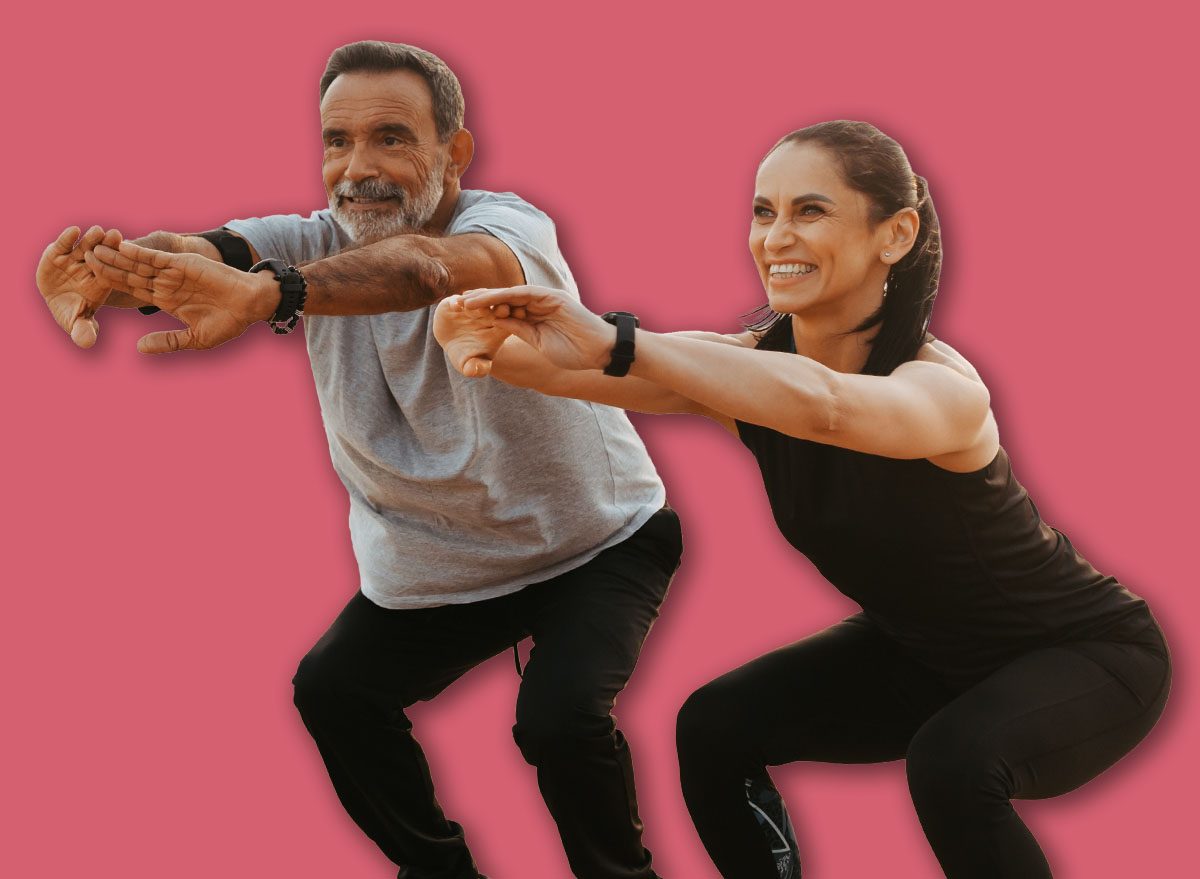
"Squat count is an excellent measure of functional lower-body capacity in those 60-plus," Dr. Gorecki notes. "However, it doesn’t measure ‘pure strength’ in a vacuum. It tests a combination of endurance, neuromuscular coordination, balance, cardiovascular capacity, and the mobility of the ankles and hips. That is precisely why the test is so valuable. It captures the health of the entire system."
When a clinician evaluates a patient, they aren’t looking for a record-breaking barbell squat. They are looking for system integrity. If a patient’s squat capacity drops, it is often a diagnostic red flag that the "whole system" is struggling, serving as a precursor to mobility loss.
Chronology of Functional Decline and Recovery
The decline of mobility is rarely an overnight event; it is a gradual erosion. Understanding this chronology is key to intervention.
- Phase One (The Subtle Shift): In the early stages, an individual might notice difficulty rising from deep chairs without the use of armrests. This is often attributed to fatigue or "just getting older," but it is actually the first signal of diminished quadriceps and gluteal activation.
- Phase Two (Compensatory Mechanics): As strength wanes, the body begins to compensate. You might notice a forward lean, a loss of balance, or the need to use momentum (swinging the torso) to stand up. This indicates that the core and hip stabilizers are no longer firing in the correct sequence.
- Phase Three (The Stability Gap): If the squat pattern breaks down completely, the risk of falls increases. This is the stage where "independence issues" emerge. Simple tasks like putting on socks or retrieving items from the floor become high-risk activities.
Supporting Data: Benchmarking Your Strength
While there is no "gold standard" for the average person, clinical tools like the 30-second chair stand test provide a reliable framework for assessing where you stand.
The 30-Second Chair Stand Test
Developed by Rikli and Jones as part of the Senior Fitness Test, this metric asks individuals to stand up and sit down as many times as possible in 30 seconds without using their hands.

- Average Performance: Most healthy adults over 60 can perform between 12 and 15 repetitions.
- The Elite Threshold: Dr. Gorecki notes that performing 20 or more repetitions in 30 seconds is considered "elite" for the over-60 demographic. "That number is roughly what fit adults in their 40s produce," he explains.
Bodyweight Squat Estimates
For those who prefer a more traditional squat (thighs parallel to the floor) over a chair-based test, the standards shift. While these are extrapolations rather than standardized clinical norms, they provide a strong target for fitness-minded individuals:
- Men (60+): 25 to 30 continuous bodyweight squats in 60 seconds.
- Women (60+): 20 to 25 continuous bodyweight squats in 60 seconds.
Official Perspective: Dr. Andrew Gorecki on "System Failure"
Dr. Gorecki emphasizes that the reason for a low squat count is often more important than the number itself. "If you can’t do many, the reason might be strength, mobility, balance, cardiovascular capacity, or knee pain resulting from poor form," he says. "Sorting out which one it is matters for how to fix it."
For example, if you have the strength to stand but lack the ankle mobility to keep your heels on the ground, your squat will be unstable. If you have the mobility but lack the core strength, you will experience lower back pain. By isolating the limiting factor, clinicians can prescribe targeted physical therapy that restores function far more effectively than generic exercise.
Clinical Implications: The Cost of Inaction
The implications of ignoring the squat pattern are significant. From a clinical perspective, the ability to squat is a proxy for the ability to live independently.
- Fall Risk Mitigation: A strong lower-body chain is the primary defense against falls. Strengthening the glutes and quads improves reaction time—the ability to catch oneself if a trip occurs.
- Metabolic Health: Squats are metabolically expensive, meaning they burn more energy and improve glucose regulation. This is critical for metabolic health in later years.
- Bone Density Preservation: Weight-bearing exercises like squats are essential for maintaining bone mineral density in the hips and spine, helping to mitigate the risk of osteoporosis-related fractures.
Strategies for Improvement
If your current squat performance is lacking, the goal is not to force high repetitions, but to improve the quality of the movement.
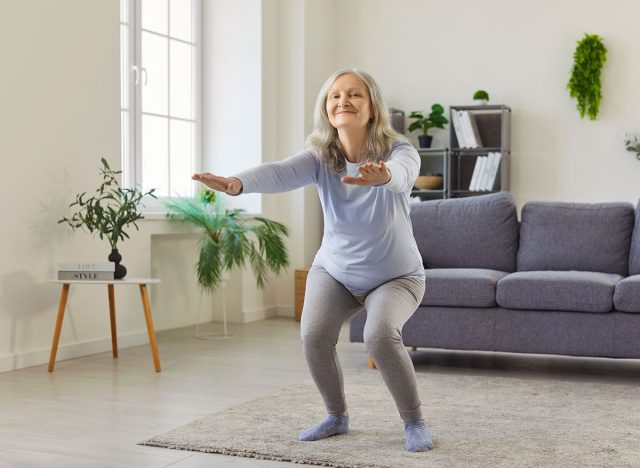
- Start with Range of Motion: If you cannot reach a parallel depth, use a box or a sturdy chair. Focus on controlling the descent (eccentric phase) rather than speed.
- Prioritize Form over Volume: Ensure that your knees track over your toes and your heels remain in contact with the floor. If your heels lift, it is a sign of restricted ankle mobility, which can be addressed with simple calf stretches.
- Consistency is Key: The squat is a skill. Daily practice—even if it is just five controlled repetitions while waiting for the coffee to brew—is more effective than a once-weekly "workout" that leaves you too sore to move.
Conclusion
The "Longevity Squat" is more than a gym exercise; it is an insurance policy for your future. Whether you are aiming for the "elite" threshold of 20 chair stands or simply looking to rise from a chair with ease, the focus remains the same: functional capacity.
As Dr. Gorecki concludes, if you cannot perform these movements effectively, it is not merely a "fitness problem"—it is an issue of independence. By addressing the mechanics of your squat today, you are actively securing your ability to move through the world with strength, stability, and freedom for years to come.
