

In the heart of New Jersey’s most vibrant cultural hub, the Newark Museum of Art (NMOA) has continued its celebrated "Studio Snapshot" series, offering an intimate look into the lives and workspaces of the city’s most compelling contemporary creators. Among the highlights of this series is a deep dive into the practice of artist Patricia Dahlman. Known for her tactile, poignant, and socially engaged works, Dahlman’s career serves as a lens through which we can view the evolving identity of Newark’s art scene and the broader, often turbulent, political climate of the 21st century.
Main Facts: The Intersection of Craft and Commentary
Patricia Dahlman is a multimedia artist whose work defies simple categorization. By utilizing traditional textile techniques—canvas, fabric, and thread—she constructs pieces that bridge the gap between sculpture and social commentary. Her work is not merely decorative; it is a manifestation of the "Studio Snapshot" ethos, which seeks to capture the soul of the artist’s process rather than just the final product.
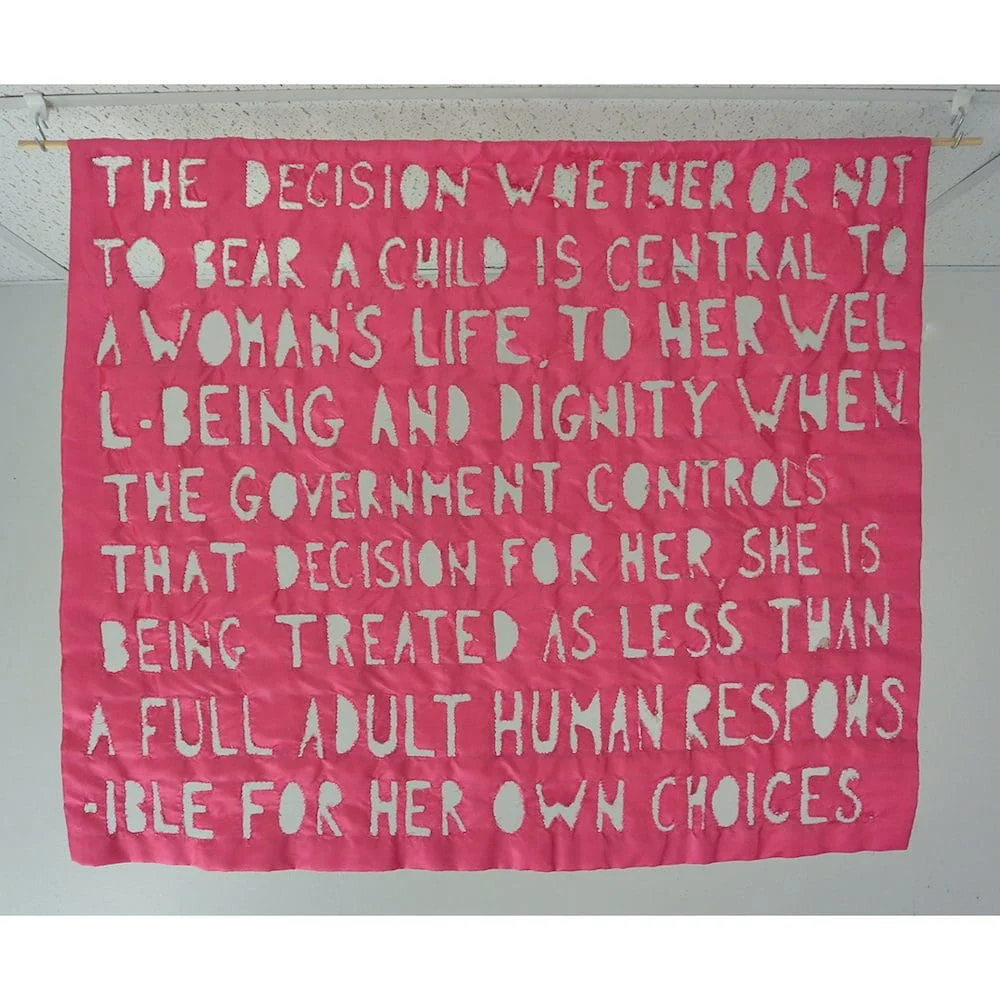
The primary fact of Dahlman’s recent contribution to the Newark artistic discourse is her ability to weave contemporary anxiety and aspiration into physical form. Her work titled Quote from Ruth Bader Ginsburg (2019) stands as a centerpiece of her recent portfolio. Measuring 62" x 34" x 1", this piece utilizes wood, canvas, and thread to immortalize the legal and social legacy of the late Supreme Court Justice. It represents a shift in contemporary art where the "domestic" nature of fiber arts is repurposed to address the heavy, often rigid, structures of national law and justice.
Chronology: A Career Built on Texture and Context
To understand the weight of Dahlman’s current work, one must trace the development of her artistic trajectory:
- Early Development: Dahlman began her journey in the arts by exploring the intersection of industrial materials and soft textures. Her initial interest lay in the tactile nature of sculpture, which led her to experiment with unconventional materials that challenged the viewer’s perception of "high art."
- The Newark Influence: As she integrated herself into the Newark arts community, her work began to reflect the city’s unique position as a historic center for manufacturing and a modern center for creative resurgence. The industrial backdrop of Newark provided a rhythmic consistency to her work, influencing her meticulous, labor-intensive approach to stitching and construction.
- 2019 – The Turning Point: The creation of her Ginsburg-inspired piece marked a pivot toward overt political engagement. In the lead-up to the pandemic, Dahlman’s work began to focus on the fragility of institutions, utilizing materials that represent warmth and human touch to contrast with the cold reality of legal and political dissolution.
- 2021-2024 – The Studio Snapshot Recognition: Through her participation in the Newark Museum of Art’s digital programming, Dahlman gained a broader audience. The "Studio Snapshot" series documented her transition from private studio creator to a prominent public voice in the regional art circuit, culminating in the featured retrospective of April 2024.
Supporting Data: The Materiality of the Work
Dahlman’s process is defined by its rigorous physicality. The data points behind her pieces reveal an artist who values duration and labor as much as concept.
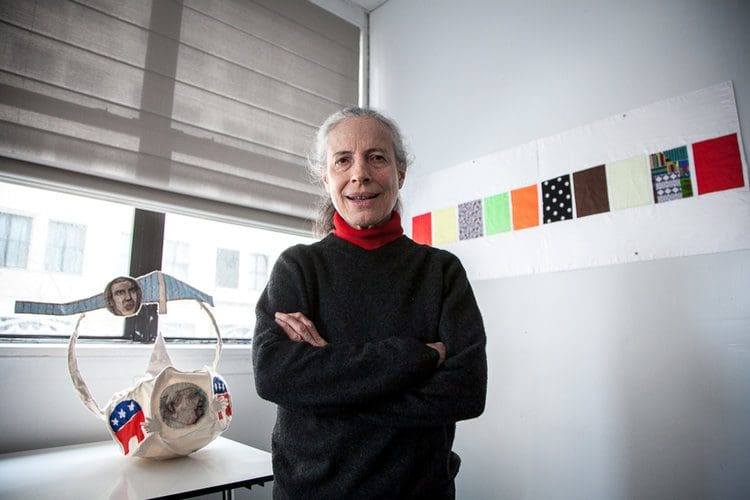
- Material Selection: Her primary medium—canvas, fabric, and thread—is chosen specifically for its historical association with domestic labor. By elevating these materials to the status of museum-grade art, she creates a subtext of "women’s work" as a foundational element of public policy and social discourse.
- Scale and Precision: Her 2019 Ginsburg piece, with its dimensions of 62 by 34 inches, is not merely a sign; it is a physical presence. The depth of 1 inch provides a relief-like quality that demands interaction from multiple angles, forcing the viewer to move through the space to read the full text, effectively mirroring the "journey" of legal interpretation.
- Digital Reach: Since the launch of the NMOA video series, content related to Dahlman’s studio has seen a marked increase in engagement across digital platforms. This underscores a growing public interest in "behind-the-scenes" artistic practice, moving away from the "white cube" gallery experience toward a more transparent, human-centric understanding of how art is made.
Official Responses and Curatorial Perspectives
The Newark Museum of Art has positioned the "Studio Snapshot" series as a cornerstone of its commitment to regional contemporary art. Curatorially, the focus on artists like Dahlman is intended to highlight the "Newark aesthetic"—a blend of grit, sophistication, and raw, unadulterated passion.
"Patricia Dahlman represents the pulse of our city," says a spokesperson for the NMOA. "Her ability to take the softest of materials and create something as hard-hitting as a tribute to a Supreme Court Justice is a testament to the power of the artist’s hand. We are not just showing art; we are documenting the history of our time through the people who are living it."
Critics have noted that Dahlman’s work provides a necessary counterpoint to the digital-first art world. In an era where AI-generated imagery and virtual galleries are on the rise, the physical, tactile, and deeply flawed beauty of thread-on-canvas serves as an anchor. It reminds the audience that the creation of meaning is a human, labor-intensive act.
Implications: The Future of Contemporary Fiber Arts
The implications of Dahlman’s work extend beyond the borders of Newark. Her practice raises important questions about the role of the artist in a fractured political landscape:
1. The Politicization of Domesticity
Dahlman is part of a growing movement of contemporary artists who are reclaiming traditional crafts to engage with political discourse. By using thread and fabric, she challenges the historical marginalization of these media. Her work suggests that the "personal is political" in a very literal sense—that the very fibers of our daily lives are woven into the fabric of our democracy.

2. The Resilience of Local Arts Scenes
The success of the "Studio Snapshot" series highlights the importance of institutional support for local artists. When museums invest in local talent, they effectively create a self-sustaining ecosystem where artists feel empowered to tackle larger, more complex themes. Dahlman’s success proves that a city’s cultural identity is bolstered when its museums act as patrons and documentarians, not just as custodians of historical objects.
3. Responding to "Our Current Times"
Dahlman’s stated goal—to respond to "our current times"—is a challenge that many artists grapple with but few execute with such grace. In an era defined by rapid information cycles and ephemeral digital content, her work offers a slow, meditative approach to processing the world. The act of stitching becomes a metaphor for healing, mending, and carefully assembling a coherent reality from the frayed edges of modern life.
Conclusion: A Thread Through Time
Patricia Dahlman’s work, as featured in the Newark Museum of Art’s "Studio Snapshot," is a profound reminder of the transformative power of art. By centering her practice on the intersection of the personal, the political, and the physical, she has established herself as a vital voice in the Newark creative community.
As the series continues to explore the studios of other Newark-based artists, the legacy of this project will likely be the documentation of a specific moment in history—a moment where artists turned to the most fundamental of materials to make sense of a world that seemed increasingly disconnected. Dahlman’s contribution, characterized by her meticulous attention to detail and her unwavering dedication to the human story, remains a standout example of how art can, and must, continue to speak truth to power.
For those interested in exploring the work further, the Newark Museum of Art continues to offer digital resources, high-resolution imagery, and video interviews that provide a deeper understanding of the processes behind these extraordinary works. In viewing Dahlman’s art, we are invited not just to observe, but to consider our own place in the intricate, ongoing tapestry of our shared history.
