

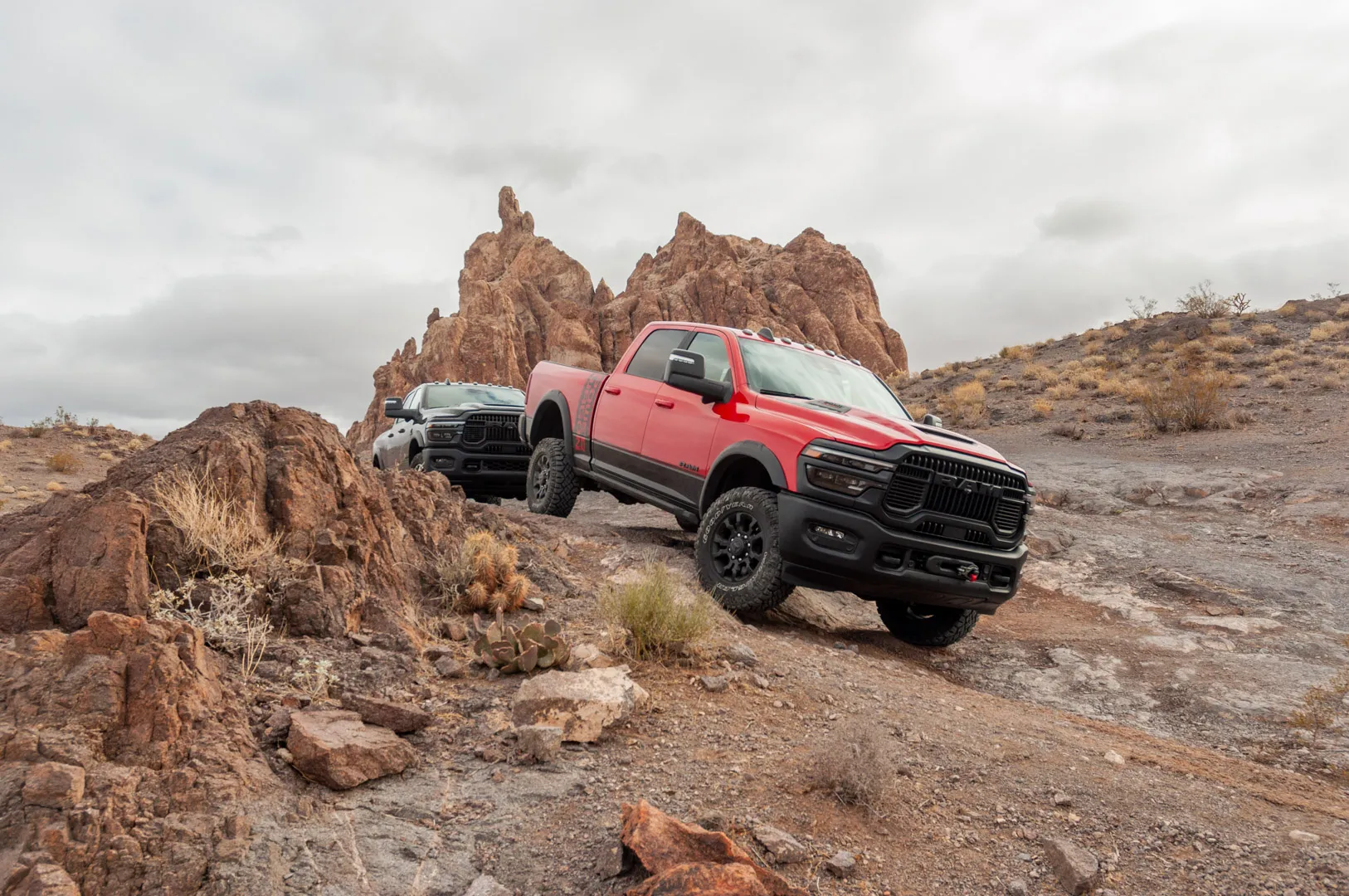
The heavy-duty, off-road-oriented pickup truck segment, once a niche corner of the automotive market, has exploded into a high-stakes arena. For years, the Ram Power Wagon held the title of undisputed king of the trail, a legend built on a foundation of unique mechanical hardware that allowed it to conquer terrain where other trucks feared to tread. However, the landscape has shifted. With the rise of the Chevrolet Silverado HD ZR2 and the refined Ford Super Duty Tremor, the competition is no longer just nipping at Ram’s heels—they are challenging its very identity.
In response, Ram has unveiled the 2025 iteration of its 2500 Power Wagon and 2500 Rebel HD. While these refreshes bring notable technology upgrades and powertrain refinements, the central question remains: Is a collection of incremental updates enough to fend off rivals that are increasingly threatening the Power Wagon’s dominance?

The Core Facts: A Tale of Two Philosophies
The 2025 Ram 2500 lineup is defined by a dichotomy of purpose. The Power Wagon remains the specialist—the rock-crawler, the trail-master, and the purist’s choice. The Rebel HD, conversely, acts as the pragmatist’s bridge, offering a more aggressive stance and off-road capability for those who still need the heavy-duty towing and hauling credentials that the Power Wagon’s specialized suspension sacrifices.
The most significant mechanical shift for 2025 concerns the Rebel HD. While the Power Wagon remains tethered to the aging 6.4-liter Hemi V-8, the Rebel receives major updates to its optional 6.7-liter Cummins inline-six turbodiesel. By replacing the outdated six-speed automatic transmission with a crisp, eight-speed automatic and integrating a new turbocharger and intake manifold, the 2025 Rebel feels significantly more competitive. The results are measurable: 0-60 mph times have dropped from a sluggish 8.0 seconds to a respectable 6.9 seconds.

Yet, despite the buzz, the Power Wagon retains its gas-only powertrain. This decision continues to be a point of friction for enthusiasts who crave the low-end torque of a diesel engine for slow-speed rock crawling.
Chronology of the Off-Road Arms Race
To understand where the 2025 Ram 2500 stands, one must look at the recent timeline of the heavy-duty off-road segment.
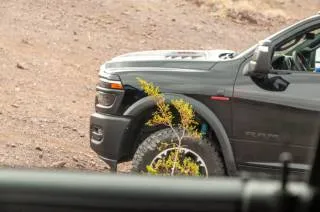
- Pre-2023: The Power Wagon reigned supreme, largely uncontested, utilizing its unique electronic front-locking differential and disconnecting sway bar to set a standard that other manufacturers struggled to match.
- 2023: Ford introduced the refreshed Super Duty Tremor, boasting massive towing capacities and an available 7.3-liter "Godzilla" V-8 that effectively outclassed the Hemi in refinement and power.
- 2024: Chevrolet entered the fray with the Silverado HD ZR2, bringing advanced Multimatic DSSV dampers to the heavy-duty class—a technology previously reserved for high-performance off-roaders like the Colorado ZR2.
- 2025: Ram introduces the refreshed 2500 series. The focus here is on "staying in the game" through tech integration (14.5-inch screens) and powertrain refinement (the updated Cummins/8-speed pairing), rather than a clean-sheet redesign of the suspension geometry.
Supporting Data: Performance, Towing, and Capability
The trade-offs between the two Ram models are stark. The Power Wagon’s “plush” ride quality—achieved through softer Bilstein dampers—is a marvel on gravel and broken terrain, but it limits the truck’s utility. The Power Wagon is capped at a 10,530-pound towing capacity and a 1,570-pound payload.
The Rebel HD, designed to be a "work-harder" alternative, features firmer tuning. This increases its towing capability to 17,130 pounds with the gas engine and nearly 20,000 pounds with the diesel. However, this comes at a cost to the driver’s comfort. On rough surfaces, the Rebel is punishing, a sharp contrast to the Power Wagon’s forgiving nature.
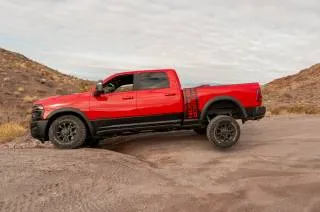
Furthermore, the wheel and tire situation highlights a lingering gap between Ram and its competitors. While the Super Duty Tremor and Silverado HD ZR2 come standard with 35-inch tires, the Ram 2500 Power Wagon and Rebel remain on 33-inch rubber. Ram engineers have confirmed that the current fender and suspension architecture does not allow for 35-inch or 37-inch tires without significant rubbing, leaving the trucks at a slight disadvantage in terms of ground clearance and visual presence compared to the competition.
Official Responses: The "Diesel" Dilemma
During the press launch, Ram Heavy Duty Chief Engineer Doug Killian addressed the elephant in the room: the absence of a diesel-powered Power Wagon. The reason, according to Ram, is not a lack of engineering willpower, but a specific physical conflict. The Power Wagon’s signature electronic disconnecting front sway bar and the front suspension layout currently interfere with the oil pan design of the Cummins turbodiesel engine.
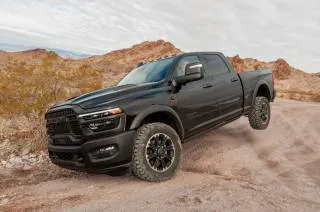
"There is no engineering challenge the team couldn’t handle," Killian noted, emphasizing that the barrier is largely a matter of cost-benefit analysis. While he stopped short of confirming that a diesel Power Wagon is in the works, the acknowledgment that the team is hearing the demand "loud and clear" suggests that the product planners are actively weighing the investment required to re-engineer the front end to accommodate the Cummins engine.
Implications: A Question of Value
The 2025 update brings with it a significant price hike. The Power Wagon now starts at $74,235, a $4,105 increase over the 2024 model. The Rebel HD also saw a price jump, now starting at $70,740. When you add the $12,595 premium for the turbodiesel engine to the Rebel, the total cost enters a territory that makes the Ford Super Duty Tremor look like a bargain.
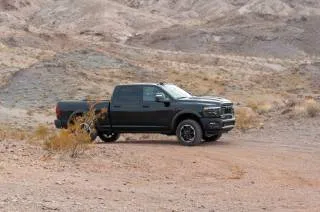
With the Ford Tremor starting near $61,880 and offering a more modern gas engine, as well as the ability to spec a diesel for a total price that competes directly with the gas-powered Ram, the value proposition for the 2025 Ram 2500 is under pressure.
The Road Ahead
The 2025 Ram 2500 Power Wagon and Rebel HD represent a brand that is digging its heels in. While they may have lost their lead in terms of out-of-the-box tire size and pure towing/hauling benchmarks, they maintain a "secret sauce" that the competition cannot replicate. The Power Wagon’s combination of the front locker, the disconnecting sway bar, and the factory-integrated winch remains the gold standard for off-road enthusiasts who value mechanical capability over raw towing numbers.
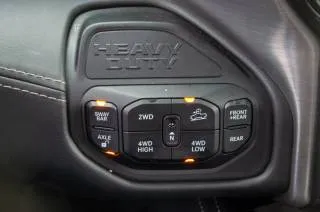
However, the "punishing" ride of the Rebel and the aging architecture of the Power Wagon suggest that Ram is reaching the limits of its current platform. The return of the column-mounted shifter is a win for the loyalists, and the improved infotainment system is a necessary step for modernization. Yet, to truly defend its sandbox, Ram will eventually need to address the tire clearance limitations and the persistent demand for a diesel option in its flagship off-roader.
For now, the Power Wagon remains the king of the trail, but its crown is feeling heavier than ever. The competition has arrived, and it is clear that for the 2026 model year and beyond, incremental changes will no longer be enough. Ram will need to lean into its heritage of innovation—or risk being overtaken by the very rivals it once defined.
