

Introduction: A Silent Collapse
In the hushed, climate-controlled galleries of the British Museum, where the artifacts of human history are curated with surgical precision, a quiet catastrophe has unfolded. On October 4, a 300-year-old porcelain bowl—a prized relic from the legendary Jingdezhen kilns—was discovered in shards within its glass display case. The bowl, part of a rare set accompanied by a matching box, had apparently tumbled from its mounting.
The incident, which occurred in the absence of any witnesses and without apparent damage to the display’s structural integrity, has cast a long shadow over the institution’s stewardship of its most precious assets. As conservators scramble to piece together the fragments of history, the event has ignited a firestorm of international controversy, raising fundamental questions about the security, oversight, and preservation practices of one of the world’s most venerable cultural repositories.
The Chronology of an Unexplained Incident
The Discovery
On the morning of October 4, museum staff conducting routine rounds made a jarring discovery. Inside a secure, glass-enclosed display case, a delicate Jingdezhen porcelain bowl, dating back approximately three centuries to the height of the Qing Dynasty, lay in fragments. Beside it sat its companion piece, a matching box, which had also sustained damage.
Initial reports from the museum indicate that the incident occurred when the gallery was empty, leaving no eyewitnesses to the physical mechanism of the fall. Most puzzling to the museum’s technical staff is the state of the display’s hardware: the custom mount, designed specifically to cradle the ceramic vessel, remained entirely intact and undisturbed. This absence of visible mechanical failure has deepened the mystery, leading to speculation ranging from micro-vibrations in the building’s foundation to material fatigue or undetected defects in the mount’s adhesive.
The Immediate Aftermath
Upon the discovery, the museum’s security protocols were immediately triggered. The gallery section was cordoned off, and the damaged artifacts were carefully recovered by specialized conservators. To maintain transparency while shielding the public from the stark visual reality of the destruction, the museum replaced the original artifact label with a succinct notification stating that the item is currently undergoing "restoration."
Supporting Data: The Weight of the Percival David Collection
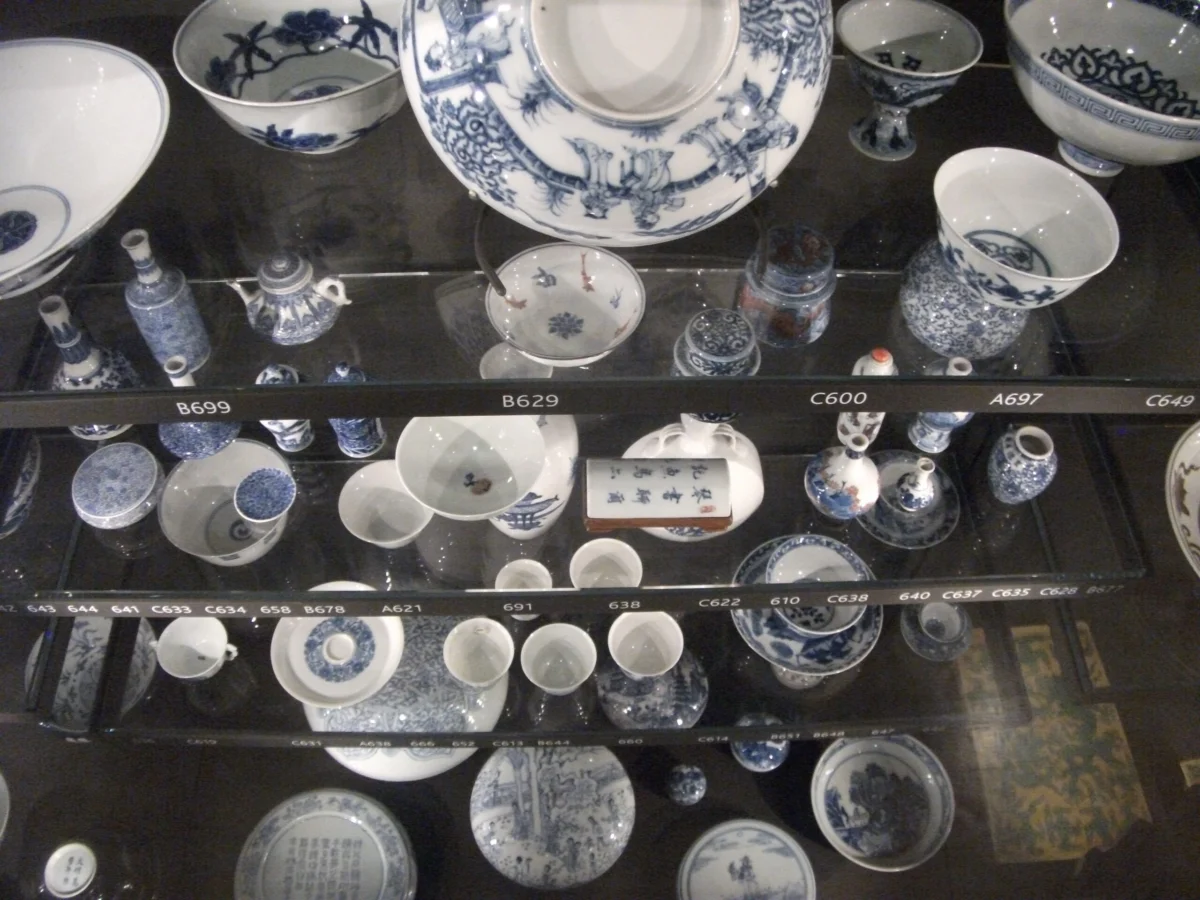
To understand the scale of the loss, one must understand the provenance of the collection. The damaged porcelain is part of the Sir Percival David Foundation collection, a world-renowned assembly of 1,700 items spanning from the third to the twentieth century.
A Billion-Pound Legacy
Assembled by the British financier Sir Percival David during the tumultuous years of the 1920s and 1930s, the collection is widely considered the finest assembly of Chinese ceramics outside of the Palace Museum in Beijing and Taipei. It features extraordinary Imperial ceramics from the Qing and Yuan dynasties—works that represent the pinnacle of ceramic engineering and artistic expression in Chinese history.
In 2025, this monumental collection was gifted to the British Museum, an acquisition valued at approximately £1 billion ($1.3 billion). It stands as the most valuable donation ever received by a UK museum, representing not only a financial windfall but an immense cultural responsibility. The destruction of even a single fragment from such a collection is not merely an accident; it is an irreparable puncture in the continuity of a historical record.
Official Responses and Internal Procedures
The Museum’s Stance
A spokesperson for the British Museum has sought to project a sense of control and competence in the wake of the incident. In a formal statement, the museum emphasized its commitment to the highest standards of preservation. "We take the care of objects incredibly seriously and have stringent measures in place within cases to protect from such incidents occurring," the spokesperson noted.
Despite this, the institution has remained tight-lipped regarding the specific mechanics of the accident. The ongoing internal investigation is reportedly focused on the integrity of the mountings and whether external environmental factors—such as construction vibrations in the historic Bloomsbury area or shifts in climate control settings—could have induced the collapse.
The Critic’s Perspective
The museum’s guarded approach has been met with skepticism from those outside its walls. Pan Jinyu, a London-based tour guide specializing in Chinese history, has been a vocal critic of the institution’s transparency. During a visit to the gallery, Pan observed the shattered remains and questioned staff on-site.
"They seemed surprised that we had seen photos of it," Pan told the Global Times, "but confirmed to me that porcelain had indeed been broken." Pan’s frustration mirrors a growing sentiment that the British Museum—an institution currently undergoing a massive organizational overhaul following high-profile security scandals in recent years—is failing to communicate the reality of its operational challenges to the public.
Global Implications: A Crisis of Trust
The View from China
The incident has transcended the walls of the museum to become a significant diplomatic and social media flashpoint. When photographs of the shattered ceramics began circulating on Chinese social media platforms, the response was one of immediate and profound outrage.
The South China Morning Post has reported that the incident has reignited a fierce, long-standing debate regarding the ethics of keeping cultural heritage pieces in foreign museums. For many in China, these ceramics are not merely "art objects"; they are manifestations of a national identity and a historical legacy that was often removed from its origin under colonial-era circumstances. The sight of these precious remnants lying in pieces on a British floor has been interpreted by many as a failure of stewardship that reinforces arguments for the repatriation of Chinese artifacts.
The Responsibility of Stewardship
The British Museum finds itself in a precarious position. As a "universal museum," it frames itself as a guardian of global history, protecting and displaying items for the benefit of all humanity. However, the recurring nature of security and preservation issues—including the high-profile theft scandals of 2023—has eroded the public’s confidence in this self-appointed role.
Critics argue that the museum’s current internal structure is failing to adapt to the rigors of modern preservation. The "stringent measures" mentioned by the spokesperson appear, in this instance, to have been insufficient. The technical failure of a display mount in a multi-billion-pound collection suggests a potential gap in routine safety audits, a concern that will likely dominate upcoming discussions in the British Parliament and among cultural oversight committees.
Future Outlook: Restoration and Resolution
As conservators work to piece together the porcelain, the question remains: can the work be returned to its former glory, or is its history permanently scarred? Restoration of such high-value ceramics is a delicate process, requiring chemical stabilization and microscopic bonding to ensure the structural integrity of the piece is maintained without altering its original aesthetic.
However, the restoration of the physical object is only half the battle. The British Museum faces the much harder task of restoring its reputation. If it is to continue holding the world’s most precious artifacts, it must demonstrate a level of transparency that goes beyond "stringent measures" and "internal investigations."
Conclusion
The shattered Jingdezhen bowl is more than a broken antique; it is a symbol of the fragility of cultural memory. As the British Museum navigates this latest crisis, it serves as a stark reminder that the stewardship of history is a heavy burden. For the curators in Bloomsbury, the path forward requires not just the glue and tools of the restoration lab, but a fundamental reassessment of how they protect the treasures entrusted to their care—lest the next "incident" prove even more costly to our collective heritage.
The world is watching, and for many, the cracks in the glass case at the British Museum are a reflection of much deeper fissures in the museum’s own foundation. Whether the institution can repair this breach of trust remains to be seen, but one thing is certain: the conversation regarding the safety and ownership of global artifacts has been irrevocably changed by the events of October 4.
