

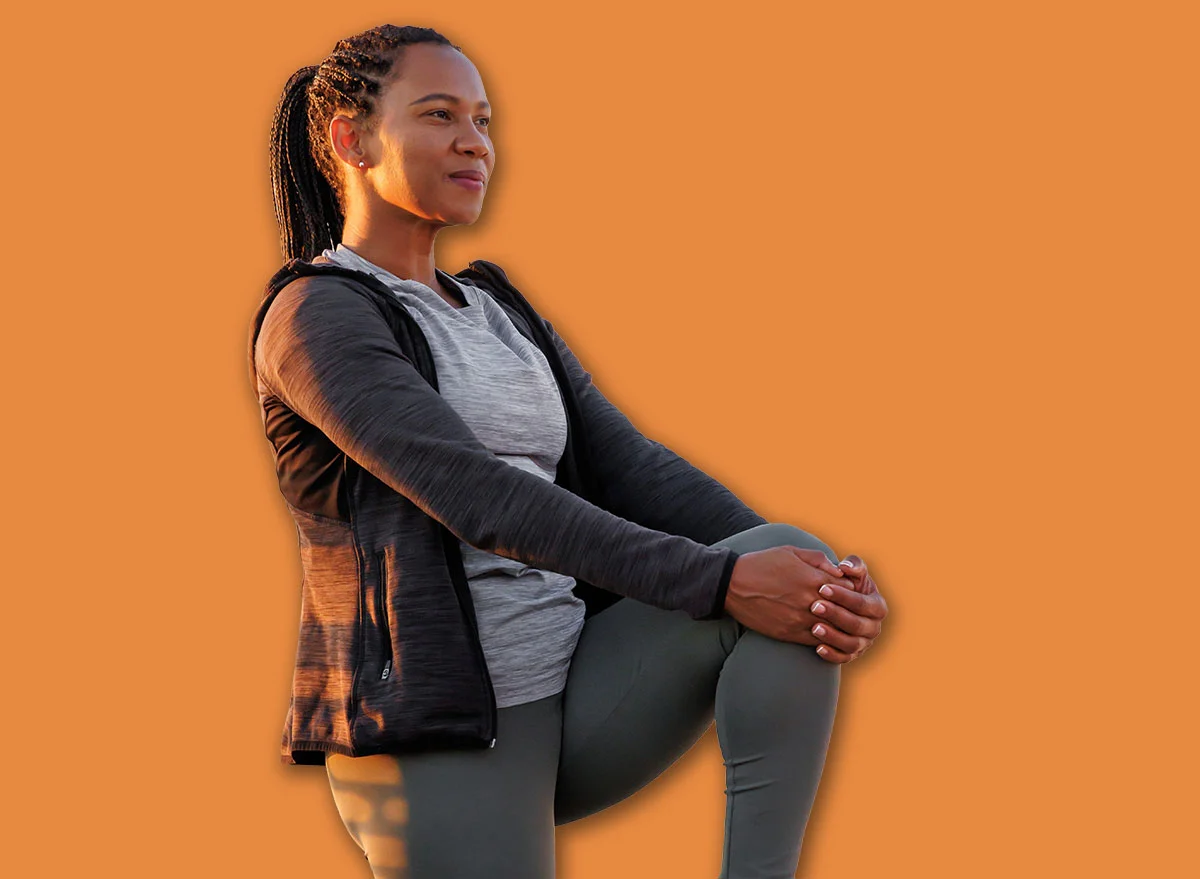
For millions of adults over the age of 60, the morning ritual is often interrupted by a familiar, unwelcome sensation: the sharp stiffness and audible creakiness of the knee joints. It is a common misconception that this discomfort is simply an inevitable byproduct of aging—a sign that the "machinery" is wearing down and the only recourse is to stretch it out.
However, emerging research and expert consensus suggest that the problem is rarely about flexibility. In fact, relying solely on yoga or static stretching to soothe aching knees is like putting a bandage on a structural failure. To truly alleviate pain and restore mobility, the focus must shift from lengthening tissues to strengthening the foundational support system of the leg.
The Misconception of the "Stiff" Joint
When we wake up feeling stiff, our instinct is to reach for our toes or drop into a child’s pose. While yoga and stretching are excellent for nervous system regulation and maintaining range of motion, they fail to address the primary culprit of joint degradation in older adults: muscular atrophy.
According to the National Institute on Aging, strength training is the gold standard for maintaining independence and joint integrity. The knee joint is essentially a hinge caught in the middle of a tug-of-war between the quadriceps, hamstrings, and calves. When these muscles weaken—a natural process known as sarcopenia that accelerates after 60—they lose their ability to act as shock absorbers. Consequently, every step, stair-climb, and chair-rise forces the delicate cartilage and ligaments of the knee to bear the brunt of the body’s weight.
The Science of Stability: Why Strength Matters
To understand why strength is the remedy, one must look at the biomechanics of the human leg. The knee joint does not possess inherent stability; it relies entirely on the dynamic stability provided by the surrounding musculature. When you walk, your quadriceps and hamstrings fire in a complex sequence to stabilize the knee during the "swing" and "stance" phases of your gait.
Recent scholarly research underscores that knee discomfort is frequently a symptom of "mechanical overload." If your quads are weak, your knee joint is forced to absorb stress it was never designed to handle alone. By systematically strengthening these muscle groups, you effectively take the pressure off the joint itself.
We spoke with James Brady, CPT, a certified personal trainer at OriGym, who emphasizes that you don’t need a high-tech gym to reverse this trend. "The goal is to build the muscular armor that protects your joints," Brady explains. "When you strengthen the support structure, the ‘creakiness’ often dissipates because the joint is no longer being pushed to its limit by every movement."
A Five-Step Morning Protocol
Brady has developed a targeted, no-equipment routine designed to be performed first thing in the morning. This sequence is specifically engineered to wake up the muscles, increase blood flow, and provide the functional strength required for daily activities.
Note: Aim for two to three sets of 8 to 15 repetitions for each move, depending on your current fitness level.
1. Chair Sit-to-Stand: The Foundation of Daily Function
The sit-to-stand is the "gold standard" of functional movement. It mirrors the exact mechanics required to get out of bed, rise from a couch, or stand up from a toilet.
- Why it works: It engages the posterior chain—the glutes and hamstrings—while forcing the quads to stabilize the knee through a full range of motion.
- How to do it: Stand in front of a sturdy chair with feet hip-width apart. Hinge at your hips, keeping your chest tall, and slowly lower your hips until they lightly touch the seat. Do not collapse; maintain control. Press through your heels to return to a standing position, ensuring your knees track in line with your toes.
2. Step-Ups: Building Unilateral Stability
As we age, our balance often declines alongside our strength. Step-ups address both by forcing each leg to work independently.
- Why it works: By isolating one leg, you remove the body’s ability to compensate with the stronger limb, effectively forcing the weaker knee to stabilize under load.
- How to do it: Use the bottom step of a staircase or a sturdy, low platform. Step up with one foot, driving through the heel to bring your other foot to meet it. Step back down with control. Keep your core engaged to prevent leaning too far forward.
3. Standing Hamstring Curls: Balancing the Tug-of-War
While the quadriceps are often the focus of knee health, the hamstrings are the silent heroes of joint support.
- Why it works: If the hamstrings are weak, the knee joint can become unstable, especially during the transition between standing and walking. This move creates a "co-contraction" that balances the joint.
- How to do it: Stand behind a chair, holding the back for balance. Shift your weight to one leg. Slowly bend the opposite knee, bringing your heel toward your glutes. Keep your thighs parallel to each other throughout the movement. Squeeze the hamstring at the top before lowering slowly.
4. Supported Calf Raises: Establishing a Solid Base
The ankles and calves act as the foundation for the entire lower body kinetic chain.
- Why it works: Strong calves improve the efficiency of your gait, reducing the amount of force that travels upward into the knee during every step.
- How to do it: Hold onto a chair for balance. Keep your legs straight and rise up onto the balls of your feet. Pause at the peak of the movement, feeling the calf muscles engage, then slowly lower your heels back to the floor.
5. Terminal Knee Extensions: The Finishing Touch
This is perhaps the most critical move for those who feel their knees "give out" or feel weak during the final moments of extending the leg.
- Why it works: Terminal Knee Extension (TKE) targets the vastus medialis—the "teardrop" muscle on the inside of the thigh—which is essential for locking the knee securely.
- How to do it: Stand with your feet slightly apart. You may use a light resistance band if available, but it is not required. Shift your weight onto one leg and slightly bend the knee of the other. Slowly straighten that knee fully, focusing on squeezing the quad to "lock" the joint in place.
The Broader Implications for Longevity
The implications of this shift in focus—from passive stretching to active strengthening—are profound. For the aging population, physical independence is the primary marker of quality of life. When knee pain dictates your activity level, your world begins to shrink. You stop taking the stairs, you avoid long walks, and you eventually struggle to stand from a chair without assistance.
Official health guidelines from organizations like the American College of Sports Medicine consistently highlight that resistance training is the most potent intervention for preventing frailty. By dedicating just 10 to 15 minutes each morning to these five movements, you are not just "fixing" a stiff knee; you are investing in your mobility for the next decade.
Conclusion: A New Morning Ritual
It is time to retire the idea that age-related joint pain is an immutable fact of life. By incorporating these strength-focused movements into your morning routine, you can effectively rebuild the support structures of your knees.
Start slowly, focus on form, and listen to your body. As the muscles surrounding your knee grow stronger, you will find that the "creakiness" fades, replaced by the confidence that comes with a stable, functional, and pain-free stride. Your knees have carried you for sixty-plus years—it is time to give them the strength they deserve.
Disclaimer: Always consult with your primary care physician or a physical therapist before beginning any new exercise program, especially if you have a history of significant knee injury or chronic joint conditions.
