

Introduction: The Myth of the Modern Primitive
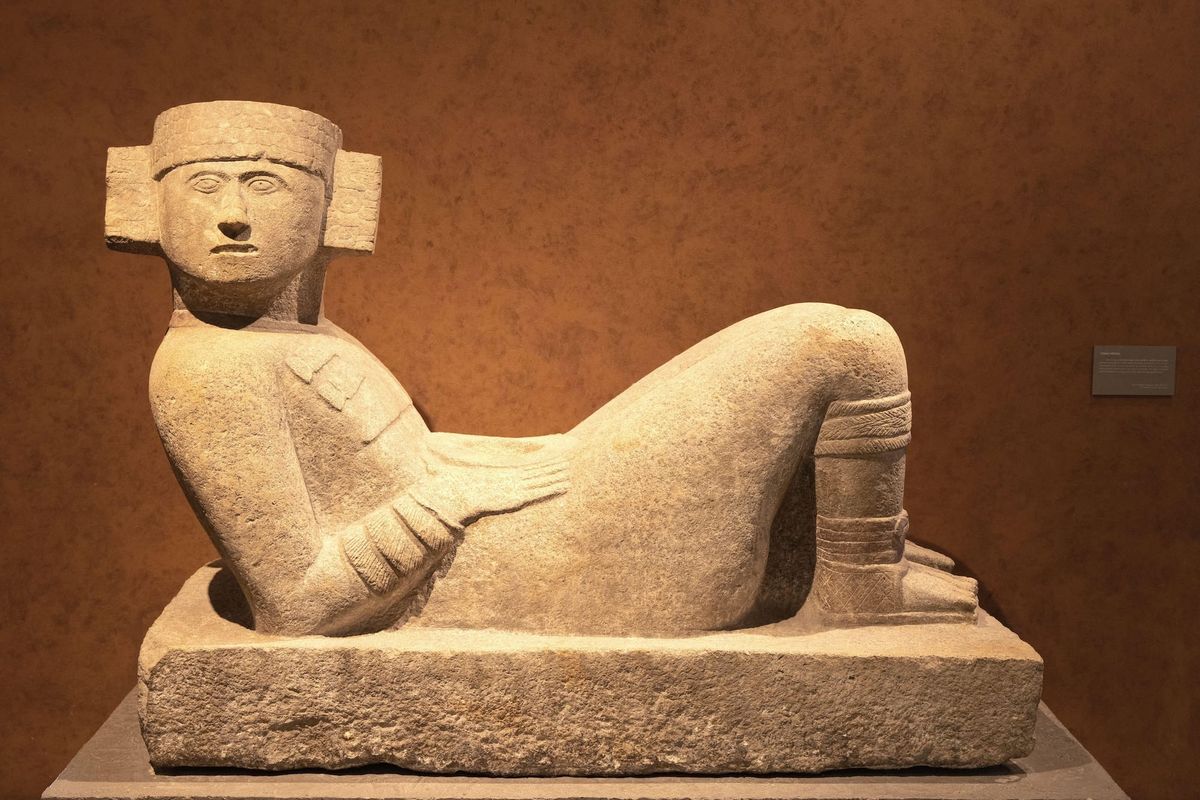
In a hauntingly curated 1940 photograph by the visionary Man Ray, Academy Award-winning actress Teresa Wright poses with a gaze both misty and reverent beside a stone Chacmool—a traditional reclining figure of ancient Mesoamerica. This image serves as a chilling testament to a mid-century cultural obsession: the transformation of sacred, ancient cultural heritage into the ultimate lifestyle accessory for the Hollywood elite.
For decades, the institutional art world—from the Minneapolis Institute of Art to the high-profile galleries of Los Angeles—fell under the spell of "pre-Hispanic" art. Yet, as a new publication reveals, this obsession was built upon a foundation of systematic looting, illicit smuggling, and high-stakes forgery. Artifacts to Art: Collecting Ancient America in Midcentury L.A. (2026), authored by Andrew D. Turner, Mary E. Miller, and Khristaan D. Villela, offers a forensic examination of this era, centered on the nefarious activities of Earl Stendahl, the gallerist who effectively laundered the history of the Americas into the living rooms of the American bourgeoisie.
The Architect of Exploitation: Earl Stendahl
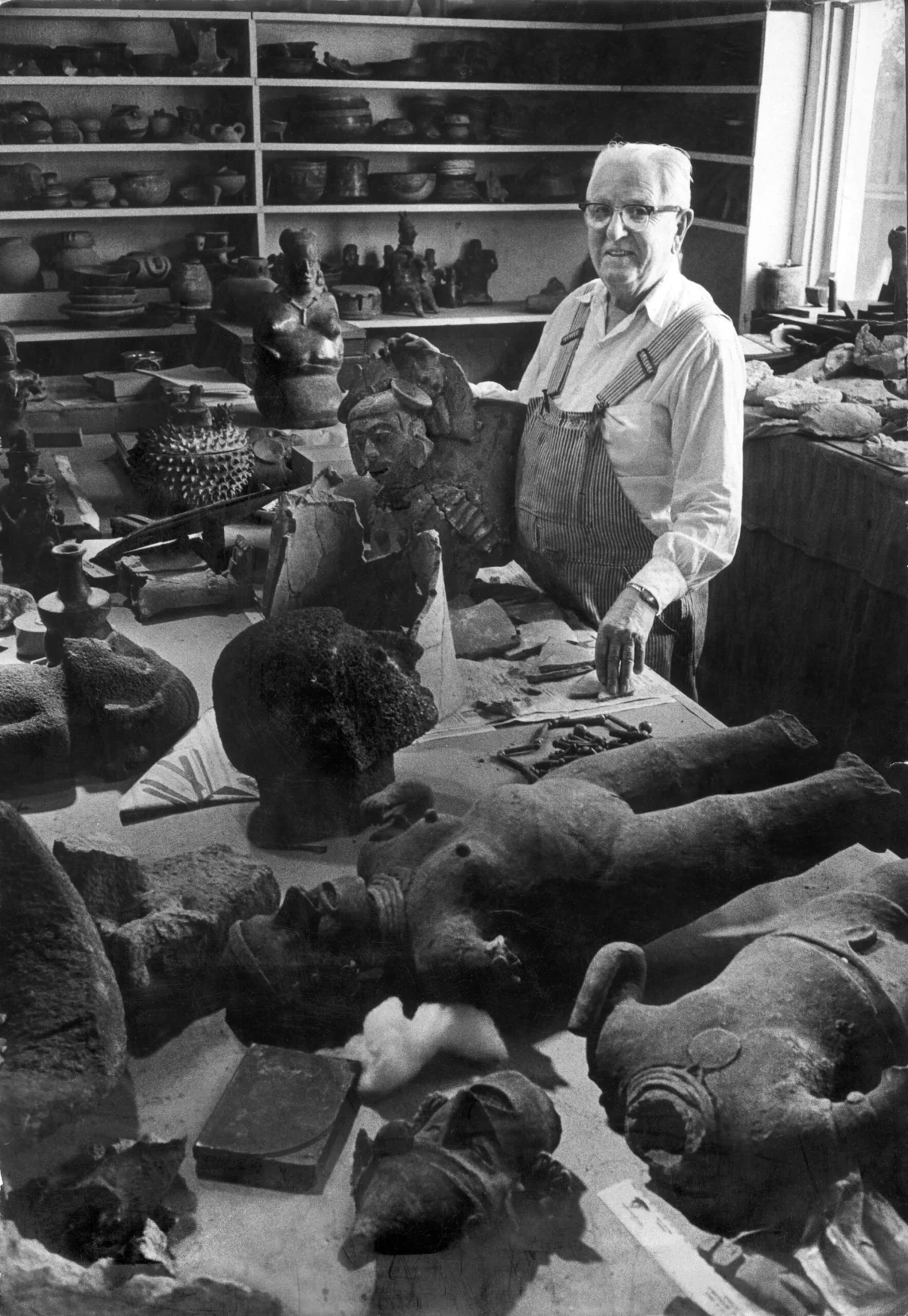
At the center of this narrative is Earl Stendahl, a man who functioned as an impresario of the illicit. Operating the Stendahl Art Galleries, he was not merely a merchant of objects; he was a master of narrative. Stendahl recognized that the burgeoning market for modernism in the mid-20th century provided the perfect aesthetic vehicle for ancient Mesoamerican artifacts. By framing these objects as "modernist" sculptures rather than anthropological remnants, he stripped them of their context and imbued them with a value that could be easily traded among the wealthy and the institutionalized.
The publication of Artifacts to Art is timely, emerging from five years of intensive research into the Stendahl archive, now held by the Getty Research Institute. The book exposes how Stendahl navigated a complex web of looters in Mexico, local smugglers, and unsuspecting (and sometimes willfully blind) museum curators to populate the collections that define our modern understanding of ancient American art.
A Chronology of Deception and Prestige
The history of the Stendahl Galleries is a timeline of cultural erosion. Throughout the 1940s and 50s, the market for "Pre-Columbian" art exploded.
- 1947: The Minneapolis Institute of Art purchases a "King Chak Mool" from Stendahl for $10,000—a staggering sum at the time. The piece is treated as a centerpiece of high culture.
- 1958–1960: The same sculpture is sent on a prestigious European tour, solidifying its status as an "authentic" masterpiece and a cornerstone of the museum’s permanent collection.
- The Late 1960s: A specialist conducting a routine review of the collection makes a devastating discovery: the sculpture is a masterful forgery.
- 2026: The release of Artifacts to Art provides the definitive, non-chronological history of how these objects traveled from the soil of Mexico to the pedestal of a museum, and finally, to the label of "fraud."
This trajectory—from discovery to acquisition, exhibition, and eventually, the unmasking of forgery—was not an anomaly; it was the business model. Stendahl knew that as long as the demand for "primitive" beauty remained high, the provenance of the object mattered less than the aesthetic pedigree he could manufacture for it.
Supporting Data: The Mechanics of the Trade
The research conducted by Turner, Miller, and Villela reveals that the trade was driven by a collision of three distinct forces:
- The Institutional Appetite: Museums were desperate to acquire works that could compete with the rising interest in European modernism. By acquiring Mesoamerican art, they were able to signal a "global" reach, even if the objects were acquired through channels that were technically illegal under Mexican law.
- The Hollywood Influence: As evidenced by the Man Ray photograph, Hollywood stars acted as the ultimate influencers of the era. Their adoption of these objects as home decor elevated them from "artifacts" to "art," creating a demand that Stendahl was all too happy to meet.
- The Looting Pipeline: Stendahl’s influence extended deep into the Mexican interior. By funding local excavations and incentivizing the illicit trade of artifacts, he disrupted the archaeological record of countless sites, stripping objects of their cultural, linguistic, and historical context.
The Getty Research Institute’s archive provides the "paper trail of the crime." Receipts, letters, and shipping manifests reveal a man who viewed cultural history as a commodity to be harvested, rebranded, and liquidated.
Official Responses and Institutional Reckoning
The publication of this book has sent shockwaves through the museum community, particularly in Los Angeles. For curators, the question is no longer just about the objects themselves, but about the ethics of the collections they oversee.
"Why is so much of the cultural heritage of ancient Central and South America preserved in our city’s collections?" asks one curator. The answer provided by the authors of Artifacts to Art is sobering: because Los Angeles was the hub of a black market that treated the history of the Americas as a disposable resource.
The Getty Research Institute, by hosting these archives and publishing the findings, has signaled a shift toward transparency. While the institutions that purchased these works remain, in many cases, in possession of them, the narrative of "discovery" has been replaced by the reality of "theft."
Implications: The Ethics of Provenance
The implications of the Stendahl story extend far beyond the art world. We are forced to confront the legacy of "collector-dealer" models that dominated the 20th century. When we view a stone sculpture in a museum today, we are often looking at a piece that has been severed from its ancestral context, often through violence or theft.

The Problem of "Art" vs. "Artifact"
The book argues that the linguistic shift from "anthropological artifact" to "art object" was the primary mechanism of the crime. By calling these items "art," collectors and dealers could circumvent the ethical considerations that usually apply to archaeological sites. If it is "art," it can be bought and sold. If it is an "artifact," it belongs to the culture that created it. Stendahl was a master of this linguistic sleight of hand.
Moving Toward Restitution
As provenance research becomes more rigorous, the pressure on museums to repatriate these objects grows. The Stendahl archive serves as a roadmap for future restitution efforts. By mapping the movement of these objects, researchers are providing the necessary evidence to initiate conversations about returning stolen cultural heritage to its rightful homes.
Conclusion: A Legacy of Extraction
The story of Earl Stendahl is not just a tale of a singular, greedy man; it is a case study in the broader systemic issues of mid-century collecting. It highlights a period where the global north viewed the global south as an open mine for aesthetic extraction.
As we look back at the photos of Hollywood stars posing with stolen history, we are reminded that "art" is never neutral. Every object has a story, and often, that story is one of loss, exploitation, and the deliberate erasure of indigenous identity. Through the painstaking work of Turner, Miller, and Villela, we are finally beginning to see these objects for what they truly are: not mere decorations for the wealthy, but the enduring, stolen souls of the cultures they represent. The reckoning for the "trafficker who furnished the museums of L.A." has, finally, arrived.
