

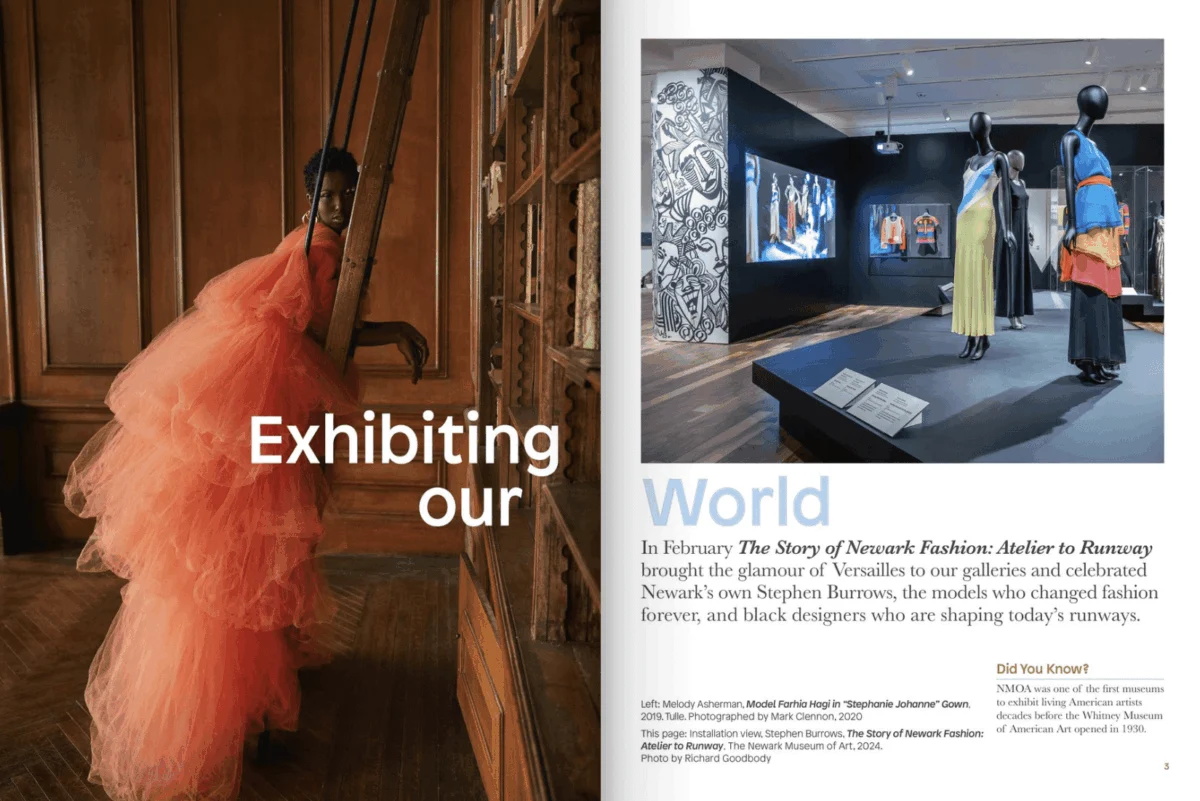
The Newark Museum of Art (NMOA) has officially released its 2024 Impact Report, a comprehensive document detailing a transformative year marked by record-breaking community engagement, ambitious curatorial achievements, and a steadfast commitment to inclusivity. As one of the state’s most significant cultural anchors, the museum’s latest disclosures offer a window into how a modern institution navigates the intersection of historical stewardship and contemporary social relevance.
For the NMOA, 2024 was not merely a year of operation; it was a year of evolution. By leveraging technology to improve accessibility—evidenced by their newly enhanced digital interface—and expanding their physical and intellectual reach, the museum has reaffirmed its role as a vital hub for Newark and the broader region.
The Core Narrative: A Mission in Motion
At the heart of the 2024 report lies a simple yet profound question: How does an art museum remain indispensable in a rapidly changing world? According to the leadership at NMOA, the answer lies in the democratization of art.
The 2024 Impact Report highlights a deliberate shift toward "radical accessibility." This was achieved through a multi-pronged approach that included free programming for local schools, the introduction of specialized digital accessibility features—such as high-contrast modes, dyslexia-friendly fonts, and motion-reduction settings—and a curatorial strategy that prioritized underrepresented voices in the art historical canon.
Chronology of a Transformative Year
To understand the scope of the NMOA’s accomplishments, one must look at the arc of the year. The 2024 calendar was strategically designed to maintain momentum throughout all four seasons.
- Q1: The Foundation of Inclusion. The year began with a heavy focus on infrastructure and digital inclusivity. Recognizing that the museum experience begins before a visitor steps through the front doors, the institution rolled out an extensive digital update to its website. This ensured that those with visual or cognitive impairments could engage with the museum’s digital archive with the same ease as the general public.
- Q2: Educational Expansion. During the spring, the NMOA intensified its partnerships with the Newark Public Schools. Data from the report suggests that educational outreach surged by 15% compared to 2023, with thousands of students participating in guided tours and workshops that bridged the gap between academic curriculum and artistic expression.
- Q3: The Summer of Connection. The summer months saw the unveiling of several headline exhibitions that focused on the intersection of community history and global artistic movements. These exhibitions were complemented by evening programming, which successfully engaged a younger, diverse demographic that had been historically underserved by traditional museum models.
- Q4: Looking Toward the Future. The final quarter of 2024 was dedicated to reflection and strategic planning. By analyzing the visitor metrics and feedback loops established throughout the year, the museum began formulating its roadmap for 2025 and beyond, focusing on sustainability and the continued digitization of its vast collection.
Supporting Data: By the Numbers
The impact of the NMOA is best measured through its quantitative successes, which paint a picture of a flourishing institution.
- Visitor Diversity: Surveys conducted throughout 2024 indicated that 40% of first-time visitors identified as coming from outside the immediate metropolitan Newark area, signaling the museum’s growing status as a regional destination.
- Educational Reach: Over 25,000 students were served through dedicated school-based initiatives, a significant increase that underscores the museum’s commitment to the next generation of creatives.
- Digital Footprint: The implementation of accessibility tools (such as high-contrast interfaces and wide-spacing text) led to a 22% increase in time-on-site for users utilizing assistive technologies. This data point is crucial, as it validates the museum’s investment in inclusive digital infrastructure.
- Exhibition Breadth: The museum hosted 12 major exhibitions, ranging from classical masterworks to contemporary multimedia installations, ensuring that the diverse tastes of their constituents were consistently met.
Official Perspectives: The Philosophy of the NMOA
The release of the report was accompanied by statements from the institution’s leadership, who emphasized that these numbers are not just statistics, but evidence of human connection.
"Our goal has always been to make The Newark Museum of Art a place where everyone sees themselves reflected on the walls," said a representative for the museum during the launch event. "In 2024, we stopped asking how we could bring people to art, and started asking how we could bring the transformative power of art to the people. Whether it is through a high-contrast digital display for a visually impaired visitor or an immersive community workshop in the galleries, every action we take is rooted in the belief that art is a fundamental right."

The leadership further noted that the "Impact Report" is not intended to be a static document of past glory, but a living guide for future accountability. By openly sharing data regarding engagement and accessibility, the museum invites public scrutiny, fostering a relationship of transparency with its donors and the local community.
Societal Implications: Why This Matters
The NMOA’s 2024 report serves as a case study for the "Museum of the Future." In an era where digital fatigue is common and physical institutions are often viewed as relics of the past, the NMOA has managed to stay relevant by addressing the physical and digital barriers that keep people away.
The Role of Digital Accessibility
The inclusion of features like "Pause Animations" and "Dyslexia-Friendly" fonts on their digital platform is a subtle but revolutionary step. By prioritizing these features, the NMOA is signaling that the museum experience is not limited by physical ability. This is a critical development for the cultural sector, which has often lagged behind the private sector in terms of web accessibility.
Community-Centric Curation
The report highlights a trend of "curating for the community." By selecting exhibitions that resonate with the cultural history of Newark—a city with a rich, complex, and vibrant past—the museum has avoided the pitfalls of elitism. The result is a community that views the museum not as an ivory tower, but as a neighborhood asset.
Economic and Cultural Spillover
The report also touches on the economic impact of the museum. By driving foot traffic into the city center, the NMOA contributes to the local ecosystem of restaurants, transit, and retail. When a major exhibition draws thousands of visitors, the benefits are felt throughout the Newark economy, proving that art is a powerful driver of urban revitalization.
Conclusion: A Blueprint for the Future
As the NMOA moves forward, the 2024 Impact Report stands as a testament to what is possible when an institution combines a deep respect for art history with a forward-thinking, inclusive mindset. The challenges of the coming years—shifting demographics, the need for environmental sustainability, and the rapid pace of technological change—are significant. However, if 2024 is any indication, The Newark Museum of Art is well-positioned to meet these challenges head-on.
The report concludes with an invitation: to continue the conversation, to participate in the upcoming programs, and to recognize that the museum is an evolving entity. For those who view art as a catalyst for social progress, the NMOA’s performance in 2024 provides a hopeful, inspiring, and data-backed blueprint for what a 21st-century museum can and should be.
As the calendar turns, the NMOA remains committed to its core mission: sparking curiosity, fostering engagement, and ensuring that the arts remain an essential, accessible, and vibrant part of the fabric of our lives.
