

By Shannon Connellan | July 17, 2026
In an era where the intersection of technology, finance, and political theater has become increasingly blurred, a bizarre and unprecedented scandal has emerged from the heart of the American executive branch. Gabriel Perez, a staffer responsible for operating teleprompters during presidential addresses, finds himself at the center of a federal inquiry. The allegation: that he leveraged his proximity to Donald Trump’s rhetoric to net nearly $100,000 by placing bets on prediction markets.
The incident has sent shockwaves through Washington, sparking a broader debate about the regulation of prediction markets like Kalshi and the ethical standards governing those with access to the most sensitive non-public information in the country.
The Core Allegations: A Case of Political Insider Trading
The allegations against Gabriel Perez are as simple as they are brazen. According to reports, Perez utilized the prediction market platform Kalshi—a site that allows users to wager on the outcomes of real-world events, including economic data and political developments—to place highly specific bets on the vocabulary and phrasing the president would employ during televised speeches.
By knowing exactly what the president intended to say, Perez essentially guaranteed his wins on "word-choice" contracts, a niche segment of the prediction market landscape. By the time internal monitoring flagged the anomalous activity, Perez had reportedly cleared nearly $100,000 in illicit gains. The case has been described by legal experts as a form of "political insider trading," a gray area in current financial law that is rapidly becoming a focal point for federal investigators.
Chronology of a High-Stakes Wager
The timeline of the scandal highlights the ease with which an individual with internal access can exploit market mechanisms.
- Early 2026: The popularity of prediction markets for political events skyrockets, with platforms like Kalshi and Polymarket seeing record-breaking volume.
- Spring 2026: Perez, embedded within the teleprompter operations team, begins testing the platform. Analysts suggest his initial wagers were small, likely to avoid triggering automated fraud-detection algorithms.
- June 2026: As the frequency of high-profile presidential addresses increases, the volume of betting on specific rhetorical phrases grows. Perez allegedly shifts to larger, high-confidence wagers based on finalized speech drafts.
- July 15, 2026: Independent market researchers note unusual spikes in betting patterns moments before major addresses, leading to a tip-off sent to regulatory bodies.
- July 16, 2026: Internal White House security identifies the link between the betting accounts and a specific employee. The news breaks, sending the political media ecosystem into a frenzy.
- July 17, 2026: Public reaction reaches a fever pitch as late-night comedians and political commentators weigh in on the absurdity of the situation.
The Late-Night Response: A Satirical Reality Check
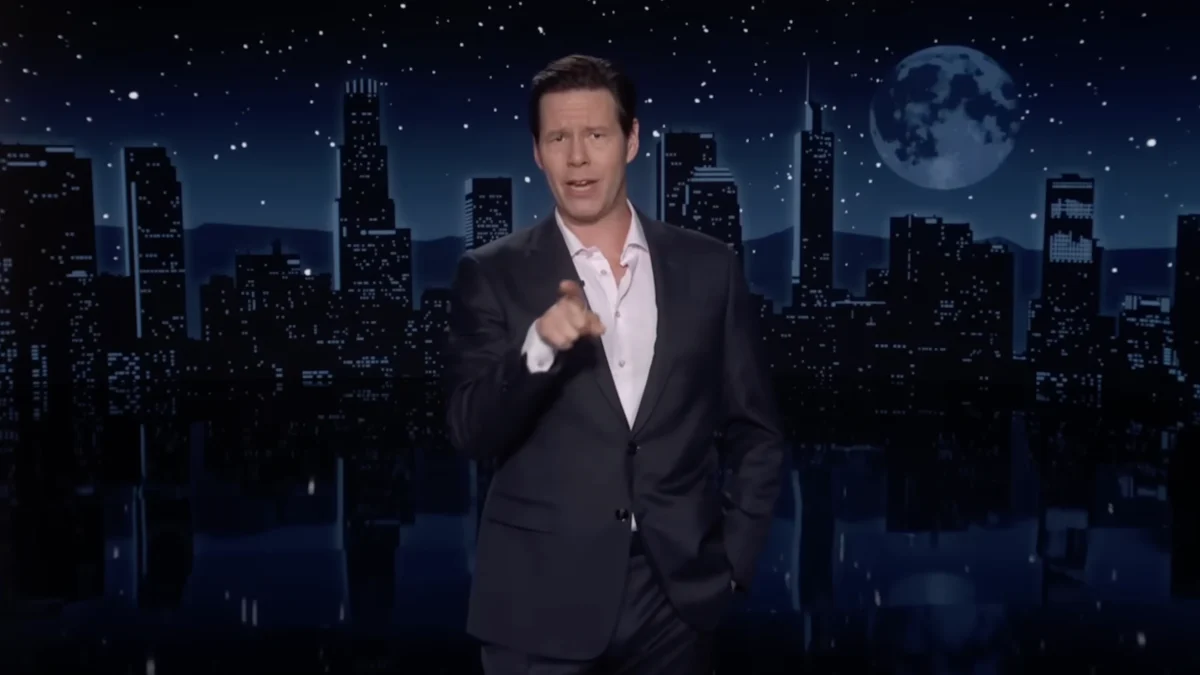
The absurdity of a staffer monetizing presidential speech drafts was not lost on the entertainment world. On Thursday night’s broadcast of Jimmy Kimmel Live!, guest host Ike Barinholtz—known for his sharp wit and recent work on The Studio—addressed the scandal during his opening monologue.
"We learned today that the guy who operates Trump’s teleprompter has reportedly made more than $100,000 betting on stuff that Trump would mention in his speeches, for which he clearly had inside information," Barinholtz remarked. In a nod to the infamous baseball legend Pete Rose, who was banned from the sport for betting on games he managed, Barinholtz quipped, "He’s a regular Pete Rose Garden."
The comparison, while comedic, struck a chord. It highlighted the essential breach of trust: an employee whose job is to facilitate the president’s communication was instead treating the presidential platform as a personal betting parlor.
Supporting Data: The Rise of Prediction Markets
To understand the scale of this scandal, one must understand the rise of prediction markets. Unlike traditional betting, these platforms claim to provide "wisdom of the crowd" data, suggesting that market participants are better at predicting outcomes than professional pollsters.

However, the Perez incident reveals the vulnerability of these systems. Data from market analysts suggests that:
- Concentration Risk: A small number of "whale" accounts often dictate the pricing of political outcomes, making the markets susceptible to manipulation by those with niche information.
- Volume Metrics: Kalshi and similar platforms have seen a 400% increase in trading volume regarding political speech content over the last 12 months.
- Anonymity: Despite "Know Your Customer" (KYC) requirements, the ease of opening accounts allows individuals to mask their identities or affiliations, creating an environment ripe for exploitation by political insiders.
Official Responses and Regulatory Implications
The White House has maintained a stern stance regarding the breach. A spokesperson indicated that a full internal audit is underway to ensure no other staff members have engaged in similar practices. "The integrity of this administration is paramount," the statement read. "The actions of one individual do not reflect our commitment to transparency and ethical governance."
Meanwhile, regulators at the Commodity Futures Trading Commission (CFTC) are under mounting pressure to define whether betting on political events constitutes a financial instrument that requires stricter oversight. Currently, these platforms occupy a space that avoids the stringent reporting requirements of the stock market, a fact that lawmakers are now looking to change.
Senator Elizabeth Warren and other high-profile critics of prediction markets have already used the scandal as a rallying cry, calling for an immediate ban on political betting. "When you turn our democracy into a casino, the house always wins—but in this case, the house was rigged by an insider," a staffer from the Senate Banking Committee noted on background.
The Broader Implications: Democracy as a Market
The Perez scandal is more than just a case of petty greed; it is a symptom of a larger cultural shift. When political discourse is treated as a commodity, the incentive structure of public service is fundamentally altered.
If speechwriters and teleprompter operators are incentivized to include specific, "bet-friendly" phrases to satisfy a market, the authenticity of the message itself is compromised. Are presidents choosing their words to inspire or inform, or are they inadvertently providing "insider tips" to a staffer watching a betting screen?
Furthermore, the scandal raises questions about the digital security of the presidency. If a teleprompter operator can access sensitive data to place bets, what else can they access? The incident has prompted a review of the clearance levels required for administrative roles, with many security experts arguing that proximity to the president’s literal words should be treated with the same sensitivity as classified intelligence.
Conclusion: Lessons from the "Pete Rose Garden"
As the dust settles on the initial shock of the news, the legal and ethical ramifications will likely play out for months. Gabriel Perez is currently facing an internal investigation that will almost certainly lead to his termination and potentially federal charges for wire fraud or related financial crimes.
For the public, the "Pete Rose Garden" scandal serves as a stark reminder of the dangers of gamifying governance. As technology continues to offer new ways to profit from the political process, the safeguards we build must be robust enough to handle those who seek to turn the podium into a poker table. Whether this leads to a total ban on political betting or simply a new, tighter regulatory framework remains to be seen. However, one thing is certain: the era of the "prediction market" has brought with it a new set of risks that Washington is only just beginning to comprehend.
